- Your cart is empty
- Continue Shopping


What Is the Humidifier Bottle on an Oxygen Concentrator For? Water, Filling and Cleaning
Quick Answer
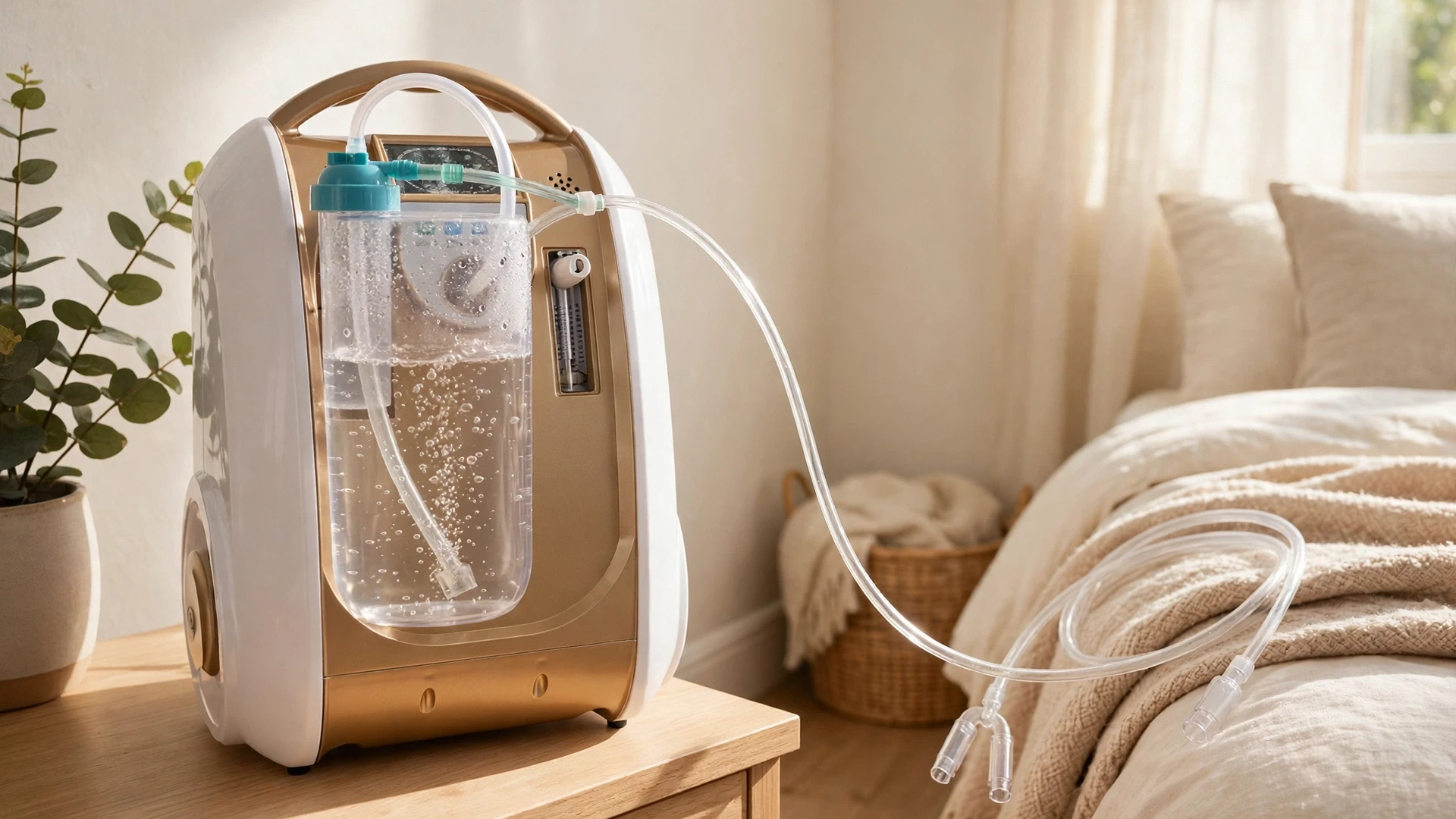
A humidifier bottle adds moisture to the dry oxygen from a concentrator, so the nose and throat do not dry out. The oxygen bubbles through distilled water in the bottle before it reaches the cannula. It is usually needed at flow rates above 4 litres per minute, or when oxygen is used for many hours a day. Change the water every day and use distilled water only.
What a Humidifier Bottle Is and How It Works
A humidifier bottle is a small plastic bottle that attaches to a home oxygen concentrator and adds moisture to the oxygen before it reaches the patient. Oxygen from a concentrator is very dry, and the dry gas strips moisture from the nose and throat. The oxygen passes through distilled water inside the bottle, picks up humidity, and arrives at the cannula feeling more comfortable. A bubble humidifier raises the relative humidity of the oxygen from near 0 percent as it leaves the source to 60 to 90 percent before inhalation, according to one respiratory equipment guide.
The bottle does not change the oxygen concentration delivered by the machine. It only adds moisture. Your flow rate and your oxygen level stay the same with or without the bottle. On Wikipedia, this device is covered under bubble humidifiers in the respiratory gas humidification article: a bubble bottle is mostly used in oxygen therapy with high flow rates to prevent drying of the mucous membranes in the nose and mouth.
The oxygen path is simple. Oxygen leaves the concentrator, goes through an adapter tube into the inlet on top of the bottle, bubbles through the water, leaves through the outlet port on the side of the cap, and travels through the cannula to the patient. Bubbles rising through the water confirm that oxygen is flowing through the bottle. If you see no bubbles while the concentrator is running, something is wrong with the bottle, the lid or the tubing.
When You Need One and When You Do Not
A humidifier bottle is not needed by every oxygen user. It is usually prescribed when the patient has dryness or discomfort from dry oxygen. Long term dry oxygen causes nasal dryness, sore throat, cracked lips and nosebleeds. If you have none of those symptoms at a low flow rate, you may not need a bottle at all.
The World Health Organization position, as reported by HealthyJeenaSikho, is that humidifiers are typically recommended when the oxygen flow rate exceeds 4 litres per minute, or if the patient reports discomfort from dryness. For flow below 2 litres per minute, humidification may not be necessary at all. The American Association for Respiratory Care guidelines, as reported by COPD.net, say bubblers are not needed for flows of 4 litres per minute or less but may help when the flow is 5 litres per minute or higher.
| Flow rate | Hours of use per day | Symptoms | Humidifier bottle recommended? |
| Under 2 litres per minute | A few hours | No dryness | Usually not needed |
| 2 to 4 litres per minute | Under 6 hours | Mild dryness | Optional, try it and see |
| Above 4 litres per minute | Any | Dry nose or sore throat | Usually recommended |
| Any flow rate | Over 6 hours a day | Nosebleeds or cracked lips | Recommended |
| Any flow rate | In dry or air conditioned rooms | Sinus sensitivity | Recommended |
Humidifier bottles work with continuous flow only, never with pulse dose. In pulse mode, water can travel backward through the tubing toward the cannula, and most small portable concentrators only deliver pulse dose, so a humidifier is not compatible with them.
One guideline disagrees with common home care practice, so it is worth knowing about. The British Thoracic Society position, as reported by a secondary source, is that bubble bottles should not be used because there is no evidence of a clinically significant benefit but there is a risk of infection, and that humidification is mainly needed for patients with a tracheostomy or artificial airway. We found this only in a secondary summary, not in the original BTS document, so treat it as a guideline disagreement, not as settled fact. In practice, most home oxygen teams still recommend a bottle for comfort at higher flows, and your own doctor’s advice comes first.
What Water to Use: Distilled, Sterile and Boiled Water Compared
Use distilled water for best results. Sterile water is also acceptable. Boiled tap water that has cooled to room temperature is acceptable according to several manuals. The WHO concentrator care checklist says to fill with distilled water or cold boiled water, and says do not use tap water even if it is safe drinking water.
Do not use regular tap water, spring water or filtered water. Minerals in these cause buildup inside the bottle and shorten its life. Tap water can also carry germs that travel through the nasal passages into the lungs and raise infection risk.
One supplier guide says purified or tap water will not affect the purity of the oxygen. That conflicts with the distilled water only advice from the WHO, the American Lung Association and the manufacturer manuals, so this article follows the distilled water advice. The oxygen purity is not the issue. The bottle, the tubing and your lungs are.
| Water type | Safe to use? | Reason |
| Distilled water | Yes, best choice | No minerals, no germs, no buildup in the bottle |
| Sterile water | Yes | Clean and mineral free, sold in pharmacies |
| Boiled tap water, cooled | Yes | Boiling kills germs, but some minerals remain |
| Tap water | No | Minerals cause buildup and germs can reach the lungs |
| Spring water | No | Minerals cause buildup inside the bottle |
| Filtered water | No | Filters remove some things but not minerals or all germs |
Distilled water is cheap and easy to find in pharmacies and medical stores in Pakistan. Buy a few litres at a time and keep a bottle at home, so you never run out and reach for the tap. If distilled water is not available for a day, boiled and cooled tap water is the safe fallback.
How to Fill the Bottle and Connect It Step by Step
Yuwell manuals say the same thing for their home models: unscrew the bottle from the humidifier, fill with pure water or distilled water to a level between the maximum and minimum marks, do not fill over the maximum level, then screw the bottle back securely. Yuwell recommends its own humidifier for its machines.
A typical standard bottle holds about 290 ml at the maximum fill line. Fill to about half an inch below the maximum line as a rule of thumb. Allied Medical says to fill the bottle to the halfway mark only, and warns that overfilling may push water into the concentrator and damage the unit.
Connect the bottle the right way round. The adapter tube from the concentrator goes into the inlet on top of the bottle, and the cannula tubing connects to the outlet port on the side of the cap. If the connections are swapped, oxygen will not bubble through the water. Screw the cap on firmly and check it is not cross threaded. A lid that is not tight lets oxygen escape, and the patient gets less oxygen than the flow meter shows.
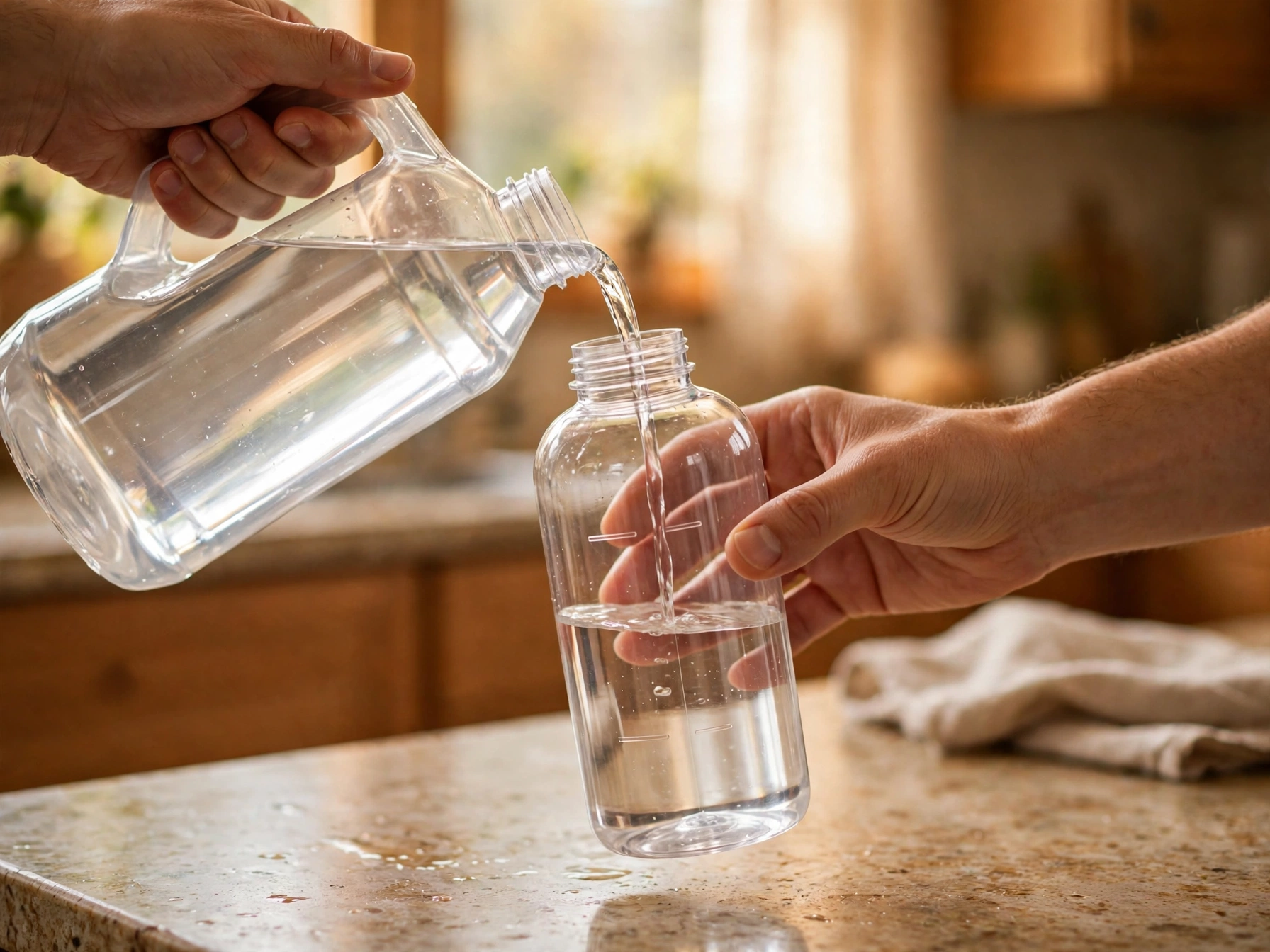
| Step | What to do | What to avoid |
| 1. Remove | Unscrew the bottle from the concentrator | Do not force a stuck cap, wiggle it gently |
| 2. Empty | Pour out any old water | Never top up old water |
| 3. Fill | Fill with distilled water between the minimum and maximum lines | Never fill above the maximum line |
| 4. Refit | Screw the bottle back securely | Do not cross thread the cap |
| 5. Connect | Concentrator to inlet, cannula to outlet | Do not swap the inlet and outlet |
| 6. Check | Switch on and look for bubbles rising | No bubbles means a leak or a loose lid |
The Besmed bottle sold on our store is a disposable single patient use bottle, and its product page says the PVC diffuser extends the life of the humidifier and eliminates clogging of the diffuser. A standard bottle holds 400CC.
How to Clean It and How Often to Change the Water
Change the water every day, completely, not just top it up. Old water left in the bottle for days lets bacteria and mould grow, and that water is then breathed in.
The American Lung Association says to clean the humidifier bottle every three days with warm water and mild dish soap, rinse out all soap with hot water, then soak it in a vinegar and water solution for a few minutes to remove extra bacteria, then dry it with a paper towel and let it air dry.
The WHO checklist says the bubble humidifier must be washed, rinsed and disinfected daily when used for the same patient. PrimeDeq says to disinfect at least once a week by soaking the bottle in antiseptic solution for 30 minutes, then rinsing with clean water and drying completely in air. Some manufacturer instructions ask for a daily rinse with a solution of 10 parts water and one part vinegar.
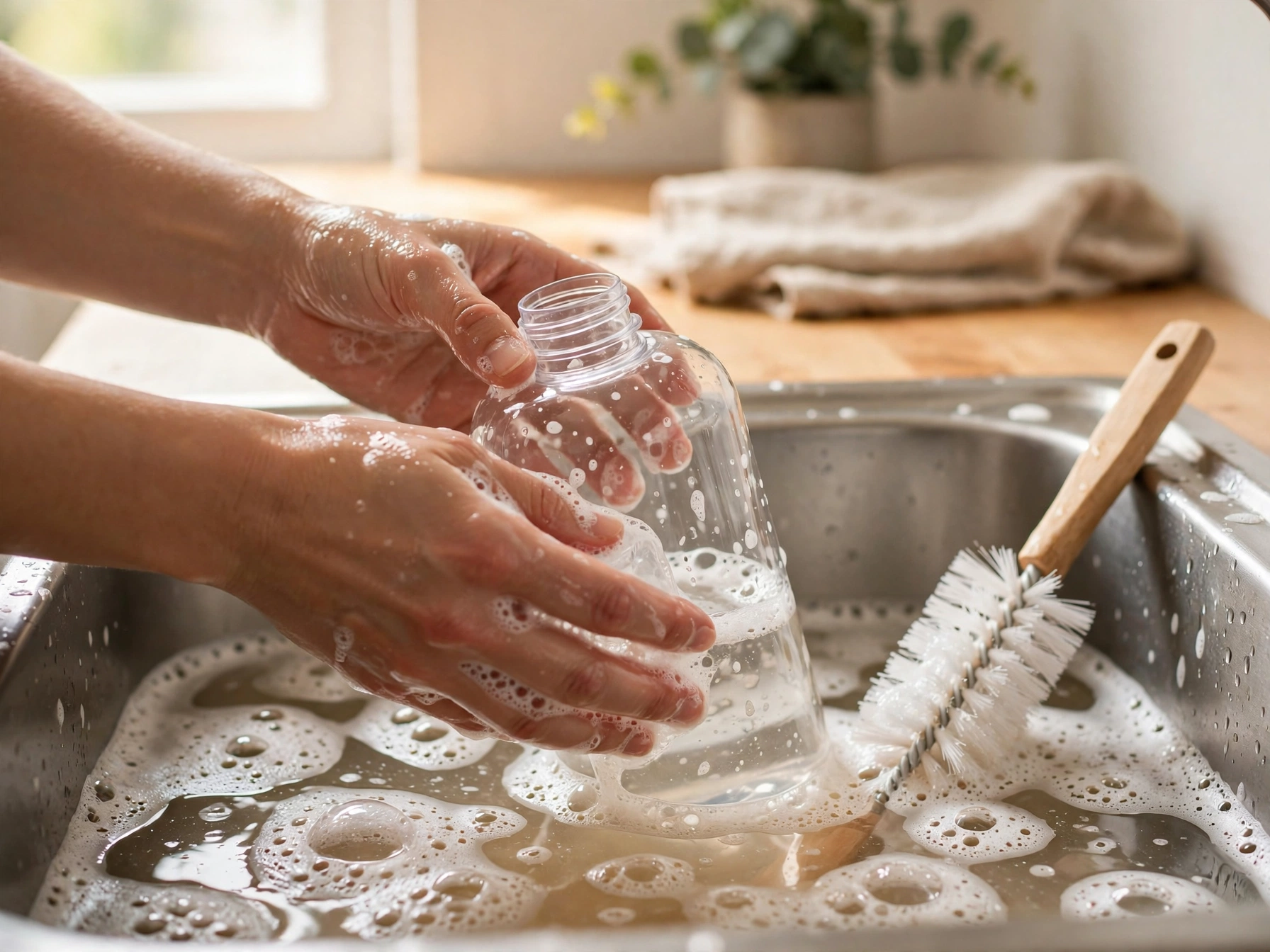
| Task | How often | How to do it |
| Change the water | Every day | Empty fully, refill with fresh distilled water |
| Wash the bottle | Every 3 days | Warm water and mild dish soap, rinse out all soap |
| Vinegar soak | Every 3 days, after washing | Soak a few minutes in vinegar and water, rinse well, air dry |
| Full disinfection | At least once a week | Soak 30 minutes in antiseptic solution, rinse, dry completely |
| Check the diffuser and lid | Every day | Look for cloudiness, scale, cracks or a lid that will not seal |
Always let the bottle air dry completely before refitting it. A damp bottle put back on the machine grows germs faster, and water left inside can travel into the tubing. Keep a spare bottle at home if you can, so one can dry while the other is in use.
Humidifier Bottles and Oxygen Concentrators We Stock
The Besmed humidifier bottle first, then the home concentrators it fits.


Common Mistakes That Damage the Bottle or the Concentrator
Overfilling is the most common mistake. Water above the maximum line can push into the tubing or the concentrator and damage the unit. Fill between the lines, never above the top one.
Using tap water is the second mistake. It leaves white mineral scale inside the bottle, clogs the diffuser, and shortens the bottle life. It can also carry germs into the lungs. Distilled water costs little and prevents all of that.
Topping up old water instead of emptying and refilling daily is the third mistake. The old water holds germs, and adding fresh water on top does not clean it. Empty the bottle fully every day.
Using a humidifier bottle with a pulse dose portable concentrator is the fourth mistake. Most small portables deliver pulse dose oxygen, and a bottle can interfere with the pulse sensor and let water travel back into the tubing. Only use one if the portable unit has a continuous flow mode and a humidifier port.
Cross threading the cap or leaving the lid loose is the fifth mistake. A loose lid leaks oxygen, so the patient gets less than the flow meter shows, and the machine may alarm for low flow. Screw the cap on straight and firmly, and check for bubbles after switching on.
| Humidifier type | How it works | Best flow range | Cleaning effort | Where it is used |
| Bubble humidifier bottle | Oxygen bubbles through water | Low to medium flow | Daily water change, wash every 3 days | Home concentrators |
| Heated humidifier | Water is heated to add more moisture | High flow | Daily water change, more parts to clean | Mostly hospitals, some home CPAP and BiPAP machines |
| No humidifier | Dry oxygen straight to the patient | Low flow under 2 litres per minute | None | Patients with no dryness symptoms |
Signs the Bottle Needs Cleaning or Replacement
Cloudiness, slime, smell, white mineral scale or visible dirt inside the bottle mean it needs cleaning right away. Do not wait for the next scheduled wash. Empty it, wash it with soap and water, soak it in vinegar and water, rinse well and let it air dry.
No bubbles while the concentrator is running, or only a few bubbles with the flow ball floating, can mean a leaking humidifier or a lid that is not tight. Check the lid first, then the tubing connections, then the bottle for a crack.
A cracked bottle, a lid that will not seal, or a clogged diffuser means the bottle should be replaced. Disposable bottles are single patient use and are thrown away when the water runs out or when the patient changes.
We could not verify a universal replacement interval for reusable bottles, so no figure is given here. Replace a reusable bottle when it shows any of the signs above, or when your supplier advises it. If in doubt, replace it. A bottle costs little, and a clean bottle protects the lungs.
| Problem | Likely cause | What to do |
| No bubbles | Lid loose, leak, or tubing disconnected | Tighten the lid and check every connection |
| Water in the tubing | Bottle overfilled | Empty to between the lines and dry the tubing |
| Leaking lid | Cross threaded cap or worn seal | Refit the cap straight, replace the bottle if the seal is worn |
| Cloudy water | Old water or germs growing | Empty, wash with soap, vinegar soak, air dry |
| Smell from the bottle | Bacteria or mould | Disinfect fully and replace if the smell stays |
| White scale inside | Tap water minerals | Clean with vinegar and switch to distilled water |
Using the Bottle During Load Shedding and Power Cuts
A home concentrator must stay plugged in at all times to work. The American Lung Association says an alarm will sound if it is not plugged in or if there is an abrupt power failure. During a power cut the concentrator stops making oxygen, so the humidifier bottle does nothing on its own.
The patient needs a backup plan, such as a filled oxygen cylinder, a battery backup or a UPS, and should follow the doctor’s advice on what to do. We could not verify a figure for how long a backup cylinder lasts, so no duration is stated here. Your supplier can tell you how long your cylinder lasts at your flow rate.
In Pakistan, load shedding is part of daily life, so keep the backup cylinder filled and within reach, and know how to switch to it without help. The CAIRE manual notes the device is not intended for life support and provides no patient monitoring, so a backup plan is not optional. It is part of the treatment.
When the power returns, wait 5 minutes before switching the concentrator back on, and never switch it on, off and on again quickly, because that can trip the circuit breaker. Refill the bottle with fresh distilled water before restarting, and check for bubbles once the machine is running. For more on choosing a machine, see how to choose the best oxygen concentrator for home use, and for current prices see best oxygen concentrator price in Pakistan.
Frequently Asked Questions
What is a humidifier bottle on an oxygen concentrator for?
It adds moisture to the dry oxygen from the concentrator so the nose and throat do not dry out. The oxygen bubbles through distilled water in the bottle before it reaches the cannula.
Do I need a humidifier bottle with my oxygen concentrator?
Not always. It is usually recommended when the flow is above 4 litres per minute, when oxygen is used for many hours a day, or when the patient has a dry nose, sore throat or nosebleeds. At low flows under 2 litres per minute, many patients do fine without one.
Can I use tap water in the humidifier bottle?
No. Use distilled water, sterile water, or tap water that has been boiled and cooled. Tap water leaves mineral deposits and can carry germs into the lungs.
How often should I change the water and clean the bottle?
Change the water every day and do not just top it up. Clean the bottle every three days with warm water and mild dish soap, then soak it briefly in a vinegar and water solution, rinse well, and let it air dry. Disinfect it fully at least once a week.
Can I use a humidifier bottle with a portable oxygen concentrator?
Usually no. Humidifier bottles work with continuous flow only. Most small portable concentrators deliver pulse dose oxygen, and a bottle can interfere with the pulse sensor and let water travel back into the tubing. Only use one if the portable unit has a continuous flow mode and a humidifier port.
