- Your cart is empty
- Continue Shopping


How to Choose the Best Oxygen Concentrator for Home Use in Pakistan: 7 Expert Tips
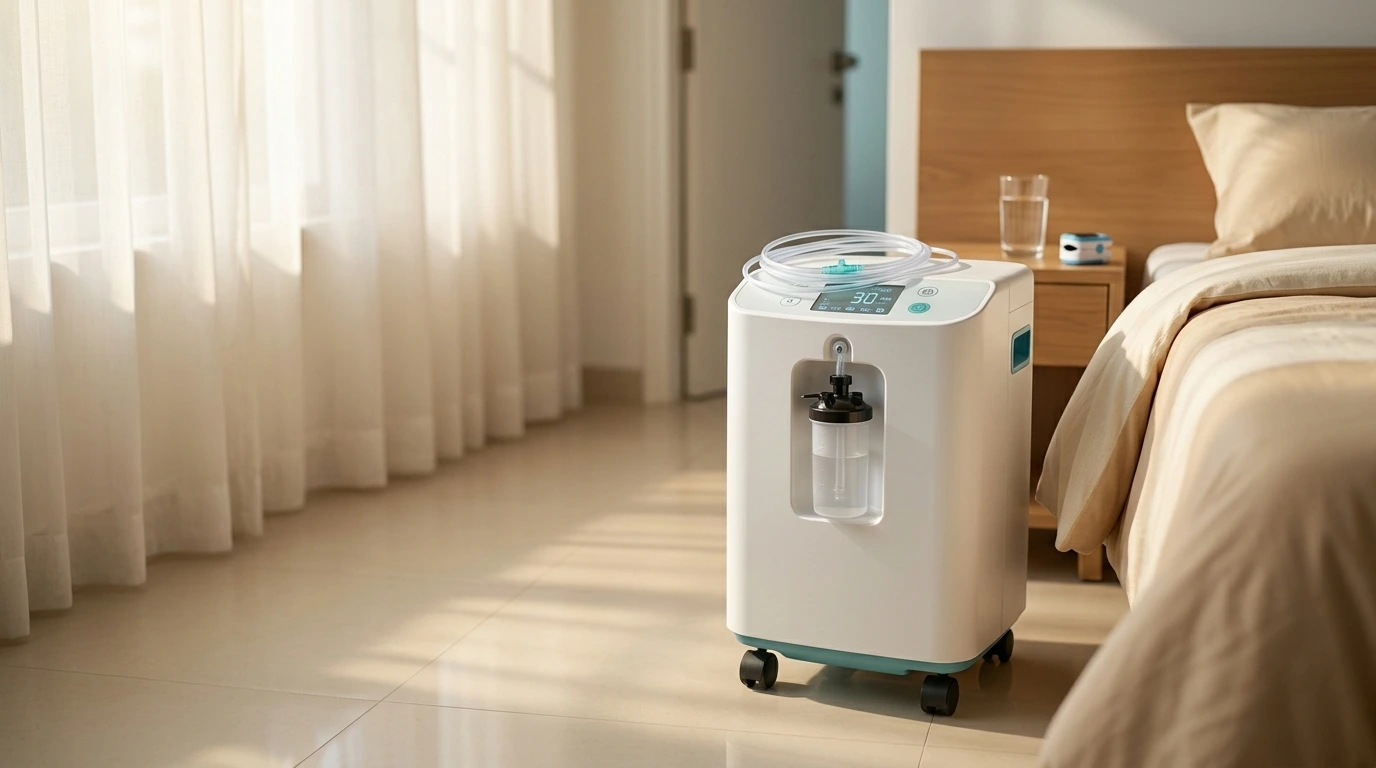
Bringing oxygen therapy into the home is one of the biggest decisions a Pakistani family makes when caring for a loved one with chronic lung disease, post-COVID complications, severe sleep apnea, or pediatric respiratory conditions. The market is now flooded with dozens of brands, models, and capacities, and most first-time buyers feel completely overwhelmed by technical jargon and dramatically different oxygen concentrator price tags. This expert guide cuts through the noise and gives you seven practical, clinically grounded tips that will help you pick a unit that genuinely serves your patient for years rather than becoming an expensive disappointment within the first six months.
Table of Contents
Tip 1: Start with the Prescribed Flow Rate, Not the Brand
Every home oxygen purchase should begin with a prescription from a pulmonologist or treating physician. The single most important number on that prescription is the flow rate in litres per minute. A patient prescribed 2 LPM at rest does not need a 10 LPM industrial unit, and a patient who desaturates badly during walking needs more than the 5 LPM that most consumer units provide at full output. Buying without a clear flow target is the fastest way to waste money on a unit that is either underpowered for the patient’s real needs or grossly oversized for them.
Tip 2: Understand the Difference Between Continuous Flow and Pulse Dose
Stationary home concentrators almost always provide continuous flow, meaning oxygen flows steadily whether the patient is inhaling or exhaling. Portable units often use pulse-dose delivery, which releases a small bolus only when inhalation is detected, conserving battery life. Pulse-dose units are excellent for active, ambulatory patients but inadequate for sleep, since breathing patterns during sleep often fail to trigger the sensor. For overnight oxygen therapy, always choose a continuous-flow unit.
Tip 3: Look at Real Oxygen Purity, Not Just the Marketing Claim
Reputable manufacturers disclose oxygen purity at every flow rate, typically guaranteeing 90 to 96 percent at all rated flows. Cheaper units often advertise 96 percent purity at 1 LPM but quietly drop to 82 percent at 5 LPM, which means the patient is breathing barely-enriched air at the very flow rate they were prescribed. Ask the supplier for the purity-versus-flow table, and walk away if they cannot provide it.
Tip 4: Pay Attention to Noise, Heat, and Footprint
Noise
Home concentrators run continuously, often through the night. Anything above 55 decibels disturbs sleep for the patient and the family. Premium units operate around 40 to 48 decibels, which is comparable to a quiet refrigerator.
Heat Output
Concentrators generate significant heat, which becomes a real problem in Pakistani summers. Look for units with efficient airflow design, and never place them in confined spaces or wardrobes.
Footprint
Unit dimensions matter when the device lives in the patient’s bedroom. Compact, wheeled units with handles are far more practical than bulky cabinet-style designs.
Tip 5: Calculate the Real Total Cost of Ownership
Sticker price is only the start. Sieve beds need replacement every three to five years and can cost 20 to 40 percent of the unit’s original price. Filters need replacement every six to twelve months. Electricity consumption for a unit running 16 to 24 hours a day adds meaningfully to monthly bills. A slightly more expensive unit with longer-lasting sieve beds and more efficient power consumption often turns out to be the cheaper choice over a five-year horizon.
Tip 6: Choose a Reliable Brand with Local Service Support
In the Pakistani market, brand reliability is just as important as headline specifications. Among Chinese-manufactured options that combine genuine clinical reliability with affordable pricing, the Longfian oxygen concentrator has built a strong reputation in Pakistan over the past decade. The popular JAY-5AW model delivers 0.5 to 5 LPM with up to 95 percent oxygen purity, runs at under 46 dB noise level, and consumes only around 550 watts, making it well-suited for continuous overnight use without dramatically increasing electricity bills. Built-in safety features include power failure alarm, high and low pressure alarms, and a cumulative working time display that helps families track sieve bed life accurately. Other reliable mid-segment brands include Yuwell and Owgels, while the premium tier includes Philips Respironics EverFlo, Inogen, and DeVilbiss. Whichever brand you choose, prioritise availability of local service technicians and replacement sieve beds, because no concentrator is immune to eventual maintenance needs.
Tip 7: Verify Warranty, Service, and Spare Parts Locally
A premium imported brand with no service representative in Pakistan is worse than a mid-tier brand with strong local service. When something goes wrong, and it eventually will, you need a phone number that picks up and a technician who can be on site within 48 hours. Always ask the supplier where the unit is serviced, what the typical repair turnaround is, and whether loaner units are provided during extended repairs. Get all of this in writing on the invoice, not just verbally.
Average Oxygen Concentrator Price Range in Pakistan (2026 Snapshot)
To set realistic expectations: a reliable 5 LPM home concentrator from a mid-tier brand currently costs between PKR 95,000 and PKR 165,000. An 8 LPM or 10 LPM unit ranges from PKR 180,000 to PKR 280,000. Premium American or European 5 LPM units run between PKR 220,000 and PKR 400,000. Portable battery-operated units start around PKR 250,000 and can exceed PKR 600,000 for FAA-approved travel models. Stay within these ranges from established suppliers, and be cautious of dramatically lower prices that almost always indicate grey-market or refurbished units.

Common Mistakes First-Time Buyers Make
The biggest mistake is assuming that all 5 LPM units are the same and choosing purely by price. The second is not factoring in voltage stabilisation, which matters enormously in areas with unstable power that can damage the compressor. The third is buying a portable unit for an elderly bedridden patient who never travels, paying double the price of a stationary unit for features the patient will never use.
Final Thoughts on Choosing a Home Oxygen Concentrator
Oxygen therapy at home is a long-term commitment, and the right concentrator quietly improves the patient’s quality of life in ways that are hard to appreciate until you see them happen. Take the time to match the unit to the prescription, plan the complete accessory setup, and choose a supplier with real local service support. Beyond the concentrator itself, do not forget the small accessories that make daily oxygen therapy genuinely comfortable, especially a quality humidifier bottle for the oxygen concentrator that prevents the dry oxygen stream from irritating the patient’s nasal passages and causing nosebleeds during long therapy sessions. Pair this with regular replacement nasal cannulas, a clean inlet filter, and a pulse oximeter for SpO2 monitoring, and your home oxygen station is genuinely complete. With the right device, the right accessories, and consistent therapy adherence, patients live noticeably better and spend far fewer days in hospital admissions.
Frequently Asked Questions (FAQs)
Q1: Which oxygen concentrator is best for home use in Pakistan?
Yuwell 7F-5 and Longfian JAY-5AW are the most popular reliable choices for home use in Pakistan. For premium quality, Philips Respironics EverFlo is widely recommended. The right pick depends on prescribed flow rate, budget, and noise level preference.
Q2: Should I buy a 5 LPM or 10 LPM oxygen concentrator?
Choose 5 LPM for stable patients on resting oxygen therapy. Choose 10 LPM for severe COPD, post-COVID lung damage, or patients who need high-flow oxygen during physical activity. Always confirm the requirement with the treating pulmonologist.
Q3: Can I use an oxygen concentrator without a doctor’s prescription?
While oxygen concentrators are sold without prescription in Pakistan, using one without medical guidance is risky. Wrong flow rates can cause oxygen toxicity in some patients or under-treatment in others. Always consult a doctor before starting home oxygen therapy.
Q4: Do oxygen concentrators consume a lot of electricity?
A 5 LPM concentrator consumes around 350 to 600 watts, similar to a small refrigerator. Running 16 hours a day costs roughly PKR 800 to PKR 1,500 per month depending on tariff. Use a voltage stabiliser to protect the compressor from power fluctuations.
Q5: Should I buy a portable or stationary oxygen concentrator?
Stationary units offer better value, higher flow rates, and quieter operation for home use. Portable battery-powered units cost 2 to 3 times more and are only worth it if the patient travels frequently or needs oxygen during outdoor activities.
