- Your cart is empty
- Continue Shopping


What Is a Normal Body Temperature Range?
Quick Answer
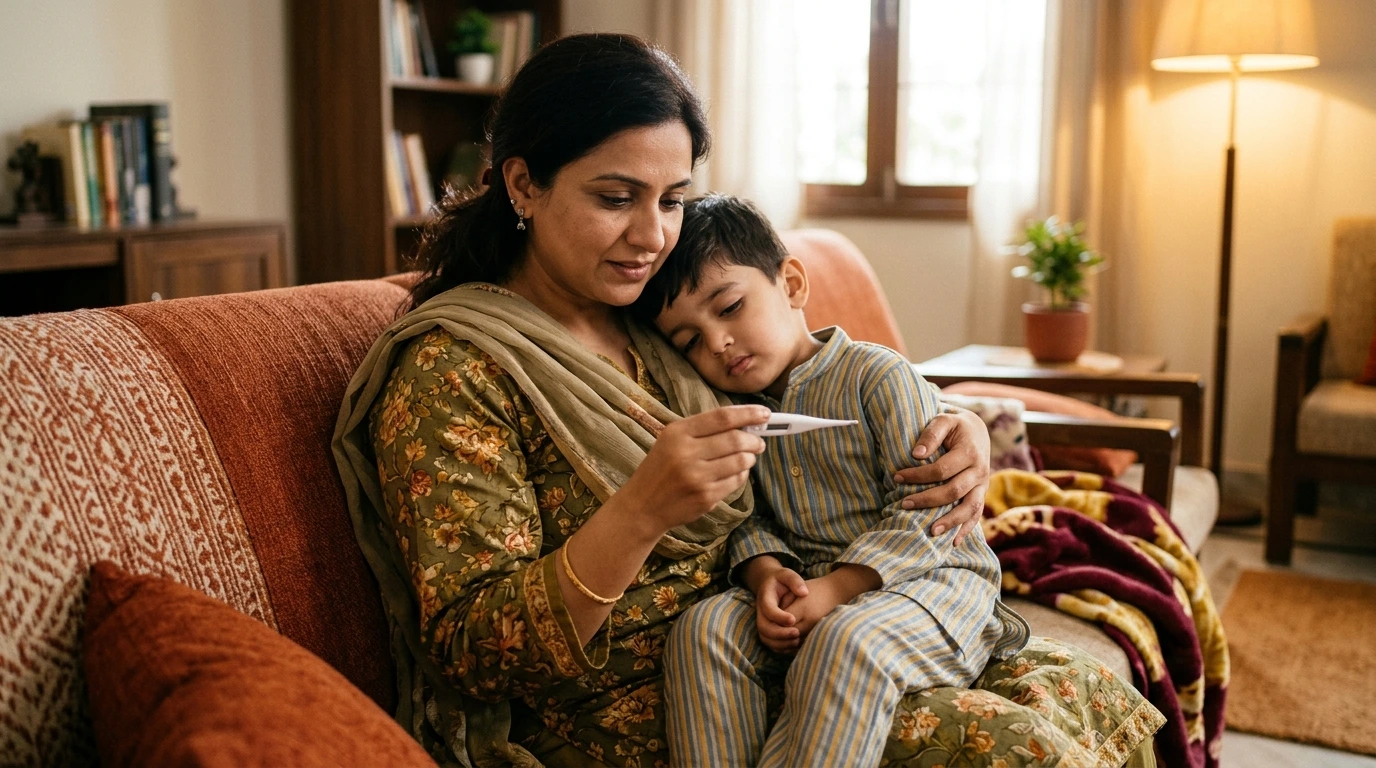
Normal body temperature for an adult is a range, roughly 36.1°C to 37.2°C (97°F to 99°F) measured in the mouth, not the single figure of 37°C (98.6°F) that most of us were taught. It is lowest in the early morning and highest in the late afternoon and evening, and it runs a little higher in children and a little lower in older adults. A fever is generally an oral reading of 38°C (100.4°F) or above; the armpit reads about half a degree lower than the mouth, and the ear or rectum about half a degree higher, so the threshold shifts with where you measure. A reading between 37.3°C and 37.9°C is a low-grade rise, worth watching but usually not treating.
Every home in Pakistan with children owns a thermometer, and almost every one of them has produced an argument over whether 37.4°C is a fever. The confusion comes from a number that was never meant to be a rule. The familiar 37°C, or 98.6°F, is an average calculated in the nineteenth century from thousands of armpit readings, and modern studies with better thermometers find the true adult average closer to 36.6°C, with healthy people ranging comfortably from about 36.1°C to 37.2°C. A person whose usual morning temperature is 36.3°C is running a real, if small, fever at 37.5°C; a person whose usual evening reading is 37.1°C is entirely normal at the same number. Knowing your own baseline is worth more than knowing the textbook figure.
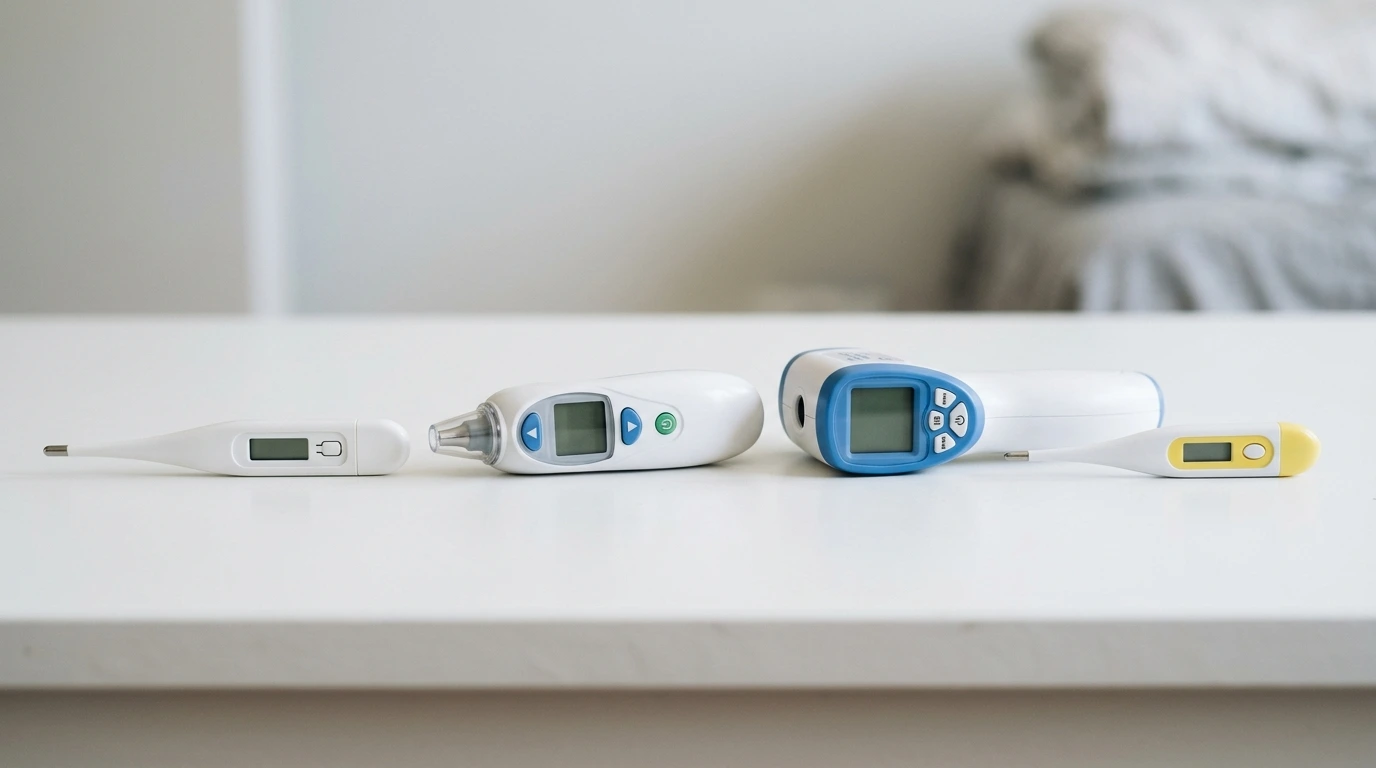
The number also depends heavily on the instrument and the site. A digital thermometer under the tongue, in the armpit, in the ear or held to the forehead gives four different readings from the same body at the same moment, and the difference between them is as large as the difference between “normal” and “fever.” This guide gives the normal range by age and by measurement site, explains what pushes the number up and down through an ordinary day, sets out what counts as a fever and a dangerously high temperature, and covers the less discussed problem of a body temperature that is too low. For the technique of getting a reliable reading in the first place, our guide on how to use a digital thermometer correctly covers each site step by step.
Normal Temperature by Age
| Age group | Typical normal range (oral or equivalent) | Note |
| Newborn (0 to 3 months) | 36.5°C to 37.5°C (rectal 97.7°F to 99.5°F) | Poor temperature control; any 38°C or above needs a doctor the same day |
| Infant and toddler (3 months to 3 years) | 36.6°C to 37.5°C | Runs slightly warmer than adults; rises quickly with infection |
| Child (3 to 10 years) | 36.4°C to 37.4°C | Ear and forehead readings common; allow for site offset |
| Teenager and adult (11 to 64 years) | 36.1°C to 37.2°C | Average about 36.6°C; women slightly higher in the second half of the cycle |
| Older adult (65 and over) | 35.8°C to 36.9°C | Baseline lower; fever may present at 37.5°C, and serious infection may cause no fever at all |
Two rows in this table matter more than the others. Newborns cannot regulate temperature well and cannot tell you they are unwell, so a rectal reading of 38°C or above in a baby under 3 months is an urgent medical assessment, not a wait-and-see. At the other end of life, older adults run cooler and mount weaker fevers, which means an 80-year-old with pneumonia may read 37.6°C, a number the family dismisses as “slightly warm,” and an older person who is simply confused, off their food or unusually sleepy can be seriously infected with no fever at all. In the elderly, a rise of 1°C above the person’s own usual reading counts as a fever whatever the absolute number.
The Same Body, Four Different Readings
| Site | Normal range | Fever threshold |
| Oral (under the tongue) | 36.1°C to 37.2°C | 38.0°C (100.4°F) |
| Armpit (axillary) | 35.6°C to 36.7°C, about 0.5°C below oral | 37.5°C (99.5°F) |
| Ear (tympanic) | 36.6°C to 37.7°C, about 0.3 to 0.5°C above oral | 38.3°C (100.9°F) |
| Forehead (temporal / infrared non-contact) | 36.0°C to 37.2°C, roughly tracks oral but varies with sweat, room temperature and distance | 38.0°C on a good device; verify with another site if borderline |
| Rectal (infants) | 36.6°C to 38.0°C, about 0.5°C above oral | 38.0°C (100.4°F) |
The armpit is the most common site in Pakistani homes and the least reliable. It reads low, it reads inconsistently depending on how tightly the arm is held and for how long, and a sweaty armpit on a hot afternoon can read lower still. A digital thermometer in the armpit needs the arm pressed firmly against the body for the full measurement time, which is often a minute or more even after the beep. The mouth is the best compromise for anyone over about 5 who can hold the tip under the tongue with lips closed for the full reading, having not eaten or drunk anything hot or cold in the previous 15 minutes. Infrared forehead thermometers became universal during the pandemic and are convenient, but they are easily fooled: a child who has just come in from the sun reads high, a forehead damp with sweat reads low, and the distance and angle change the result. A borderline forehead reading should always be checked orally or in the armpit before a decision is made.
Why Temperature Changes Through the Day
| Factor | Effect | Practical note |
| Time of day | Lowest around 4 to 6 am, highest around 4 to 6 pm; a swing of 0.5°C to 1°C | A morning reading of 37.3°C means more than an evening one |
| Exercise, climbing stairs | Up to 1°C higher for 30 to 60 minutes | Sit for 20 to 30 minutes before measuring |
| Hot weather, no fan, load-shedding | Rises, especially in children and the elderly | Very common in Pakistani summers; cool the room and retest |
| Hot or cold drink, chai | Oral reading shifts for 10 to 15 minutes | Wait 15 minutes after eating or drinking |
| Menstrual cycle | Rises about 0.3°C to 0.5°C after ovulation | Normal; the basis of ovulation tracking |
| Heavy meal | Small rise for an hour or two | Minor |
| Thick clothing, blankets, overdressed baby | Can raise a child’s reading by 0.5°C or more | Undress lightly, wait 15 minutes, remeasure |
| Age | Lower baseline after 65 | Judge against the person’s own usual reading |
Most of the “fevers” that worry parents in the evening are the daily rhythm plus a hot room plus a child who has been running around. A reading of 37.6°C at 6 pm in a warm bedroom, in a child who is playing and eating, is almost always the top of normal rather than illness; the same reading at 6 am in a child who is quiet and off food is a different matter. The useful habit is to measure at the same time each day when you are tracking a possible illness, to note what the person was doing beforehand, and to write both down. A trend over 24 hours tells you far more than any single number.
What Counts as a Fever, and When It Needs a Doctor
| Reading (oral or equivalent) | Category | What to do |
| 37.3°C to 37.9°C | Low-grade rise | Watch, fluids, rest; recheck in 2 to 4 hours |
| 38.0°C to 38.9°C | Fever | Fluids, light clothing, paracetamol if uncomfortable; doctor if it lasts over 2 to 3 days or other symptoms appear |
| 39.0°C to 39.9°C | High fever | Treat as above; doctor same or next day, sooner in children and the elderly |
| 40.0°C (104°F) and above | Very high fever | Doctor the same day; emergency if confusion, stiff neck, breathing difficulty, rash or a fit |
| Any fever in a baby under 3 months | Urgent regardless of number | Same-day medical assessment |
| Fever with no obvious cause lasting over 5 days | Needs investigation | Doctor; dengue, typhoid and malaria are common causes in Pakistan |
| Fever that keeps returning after settling | Pattern matters | Doctor; a recurring pattern is a diagnostic clue |
Two points deserve emphasis for Pakistani households. First, the number itself is rarely the danger; the cause is. A fever of 39°C from a viral cold is uncomfortable but harmless in a child who is drinking and alert, while a fever of 38.2°C with severe headache, body pain and no cough during dengue season needs a blood test. Second, the fever pattern is information. Typhoid classically climbs step by step over several days; malaria spikes and settles in cycles; dengue often runs high for 2 to 7 days then drops sharply, and the drop, not the peak, is when the dangerous phase begins. Recording the temperature with the time, twice a day, gives the doctor a chart that no verbal description can match. A fever also raises the pulse by roughly 10 beats for every degree, a relationship we explained in our guide to a normal pulse rate for adults, so a temperature log and a pulse log together tell a fuller story.

When the Temperature Is Too Low
A body temperature below 35°C (95°F) is hypothermia and is a medical emergency, but that is rare in Pakistan outside the northern winters and wet, windy exposure. The more common concern is a reading in the 35.0°C to 35.9°C band, which has three usual explanations. The first is measurement: an armpit reading taken loosely, or a forehead thermometer used in a cold room, easily reads a healthy person at 35.5°C, and an oral recheck resolves it. The second is age: many healthy older adults sit at 35.8°C to 36.2°C in the morning, and for them this is normal. The third is genuine and worth a doctor: an underactive thyroid, poor circulation, low blood sugar in a diabetic, severe infection in a frail or elderly person, which can drop the temperature rather than raise it, and some medicines. A persistently low reading in someone who also feels cold, tired, slow or confused should be checked, particularly in an elderly relative who has stopped eating.
Frequently Asked Questions
What is a normal body temperature for an adult?
About 36.1°C to 37.2°C (97°F to 99°F) measured in the mouth, with an average near 36.6°C. It is lowest in the early morning and highest in the late afternoon, so a reading of 37.2°C at 5 pm is normal for most people while the same reading at 6 am is at the top of the range.
What temperature is a fever?
An oral reading of 38.0°C (100.4°F) or above. Because the armpit reads about half a degree lower, an armpit reading of 37.5°C counts as a fever; an ear reading of 38.3°C or a rectal reading of 38.0°C also count. Readings from 37.3°C to 37.9°C orally are a low-grade rise, not a true fever.
Is 37.5°C a fever?
Orally, no: it is a low-grade rise at the top of normal, especially in the evening or after activity. In the armpit, yes, because the armpit reads about 0.5°C lower than the mouth. In a baby under 3 months or a frail elderly person, 37.5°C is worth a doctor’s call regardless of site.
What is a normal armpit temperature?
About 35.6°C to 36.7°C, roughly half a degree below the oral range. The armpit is the least reliable site; hold the arm firmly against the body for the full reading and, if the result is borderline or surprising, confirm it with an oral reading.
Why is my temperature always low, around 35.8°C? For many healthy people, especially older adults, a morning temperature of 35.8°C to 36.2°C is their normal baseline. If it is a new finding, or comes with feeling cold, tired, slow or gaining weight, have it checked, as an underactive thyroid and some medicines can lower body temperature.
