- Your cart is empty
- Continue Shopping


How to Use a Digital Thermometer Correctly
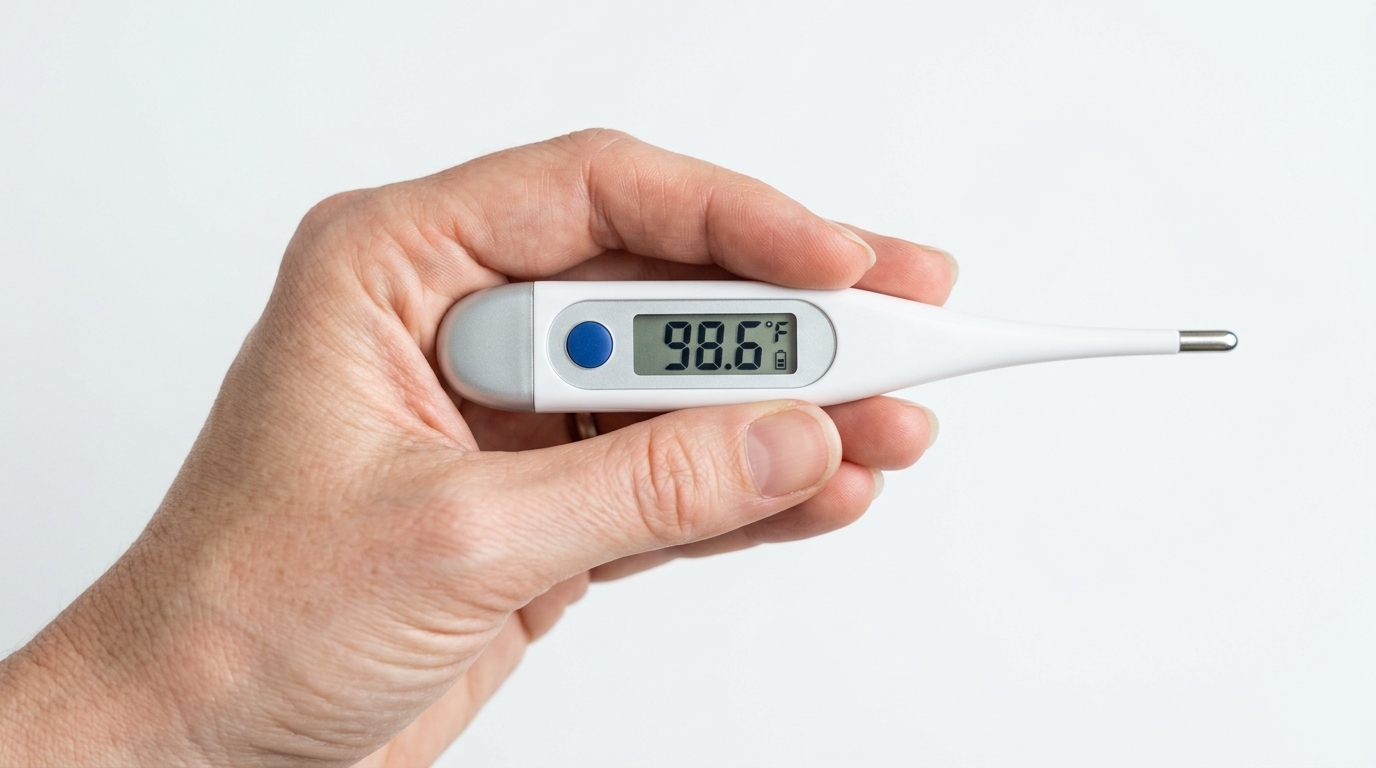
| Quick Answer For the most accurate digital thermometer reading, place the tip under the tongue, close the mouth fully, and wait for the beep, usually 30 to 60 seconds. Underarm readings run about 0.5 degrees Celsius lower than oral and need the arm held firmly closed for the full cycle. Forehead and ear readings are faster but more sensitive to technique, distance, and sweat, so a second check with an oral reading is worth doing if a result looks unusual. |
A digital thermometer looks simple enough to use without instructions, and that assumption is exactly why so many households get inconsistent readings from the same device on different days. The thermometer itself is rarely the problem, technique is. Before getting into the details, it helps to see the actual digital thermometers available at Medical Supplies Pakistan so you know what type you are working with, since oral, underarm, and forehead thermometers are not always interchangeable in how they should be used.
The Correct Reading Technique
For an oral reading, the probe tip should sit under the tongue, toward the back on either side, with the mouth closed completely around it for the entire cycle. Breathing through the mouth, talking, or opening slightly partway through the reading introduces outside air temperature and skews the result lower than the person’s actual temperature. Most digital oral thermometers beep automatically once the reading has stabilized, usually within 30 to 60 seconds, and pulling the thermometer out before that beep is one of the most common reasons for an inaccurate reading.
Oral, Underarm and Forehead Methods Compared
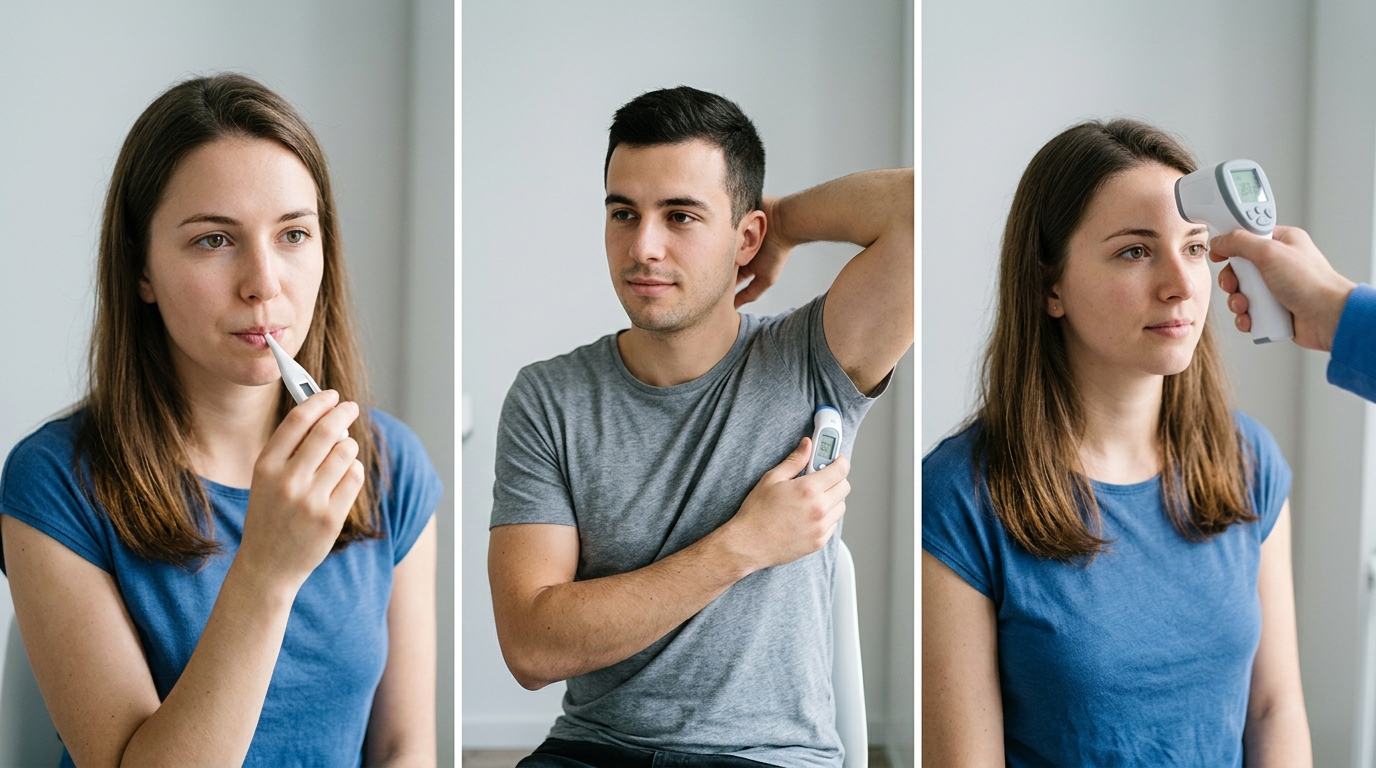
| Method | Typical Reading Time | Accuracy Notes |
| Oral | 30 to 60 seconds | Most accurate for home use when the mouth stays closed the full time |
| Underarm (axillary) | 60 to 90 seconds | Runs about 0.5 degrees Celsius lower than oral, needs a firm, still seal |
| Forehead (infrared) | 1 to 3 seconds | Fast but sensitive to distance, sweat, and room temperature |
Underarm readings are the gentlest option for a squirming child but are also the least precise of the three, since a loose seal or a moved arm partway through the reading throws the number off more than people expect. Forehead readings are the most convenient for a sleeping baby or an uncooperative toddler, but sweat on the skin or holding the device at the wrong distance from the manual’s instructions can shift the reading enough to matter for a borderline fever.
How Long to Wait for an Accurate Reading
Removing a thermometer too early is the single most common technique mistake across all three methods. An oral or underarm reading that beeps early because it was interrupted, or one manually stopped because the number looked done, is frequently lower than the actual temperature since the reading had not fully stabilized yet. If a reading seems surprisingly low compared to how the person actually feels, the most likely explanation is that the full cycle was not completed rather than the thermometer being faulty.
Getting an Accurate Reading From a Sick or Restless Child
Children are the hardest patients to get a clean reading from, since they rarely hold still for the full cycle a thermometer needs. For an oral reading with a child old enough to cooperate, distraction, letting them hold a favorite toy or watch something briefly, works better than instructing them to simply sit still. For infants and toddlers who cannot reliably keep a thermometer under the tongue, an underarm reading or a forehead reading is more practical, with the understanding that the underarm number should be read about half a degree lower than what would show orally. Trying to force an oral reading on a squirming toddler usually produces a worse result than simply switching to a method suited to their age.

When to Confirm a Reading With a Second Method
Any single reading that seems unusually high, unusually low, or simply does not match how the person looks and feels is worth double checking with a second method rather than acted on immediately. A forehead reading taken right after someone came in from cold weather, for example, can read artificially low, while a reading taken right after a hot shower can read artificially high. Confirming with an oral reading once the person has been resting indoors for ten to fifteen minutes gives a more reliable number for deciding next steps, particularly before giving fever medicine based on the result.
Common Mistakes That Give False Readings
Taking a reading immediately after eating, drinking something hot or cold, or physical activity is one of the most frequent causes of an inaccurate oral reading, since it takes about 15 to 20 minutes for mouth temperature to settle back to a true baseline afterward. For forehead thermometers, holding the device too far from the manufacturer’s specified distance, usually a few centimeters, produces a lower reading than the person’s actual temperature. Not cleaning the probe tip between uses on different family members is another overlooked issue, both for hygiene and because leftover residue can occasionally interfere with the sensor.
If you are shopping for a specific model, the Omron Digital Thermometer is a commonly used oral thermometer that follows the same technique guidance covered here, and pairs well with items from the wider Home Care Products range for a complete home health kit.
Caring for Your Thermometer Between Uses
A digital thermometer that is stored carelessly tends to drift out of accuracy faster than one that is properly maintained. Wiping the probe tip with an alcohol swab before and after each use keeps it hygienic for shared family use and prevents residue buildup that can occasionally interfere with the sensor over time. Storing the thermometer in its original protective case, rather than loose in a drawer or bathroom cabinet, protects the tip from small impacts that can throw off future readings even when the damage is not visible to the eye. Extreme heat, such as leaving a thermometer in a car during a hot afternoon, can also affect the internal sensor over repeated exposure, so a stable, room temperature storage spot is worth choosing deliberately.
Frequently Asked Questions
How long should I hold a digital thermometer for an accurate reading?
For an oral reading, wait for the automatic beep, usually 30 to 60 seconds, and avoid removing it early even if the number appears to have stopped changing.
Why do I get different readings from the same digital thermometer?
Inconsistent results are almost always technique related, an incomplete mouth seal, recent food or drink, or an interrupted cycle, rather than a fault in the thermometer itself.
Is a forehead thermometer as accurate as an oral one?
It is reliable for quick everyday checks but more sensitive to distance and sweat than an oral reading. If a forehead reading looks unusual, confirming with an oral reading is worth the extra minute.
Why is my underarm reading lower than an oral reading?
Underarm temperature naturally runs about 0.5 degrees Celsius lower than oral temperature, this is expected and not a sign of a faulty thermometer.
Should I wait before taking a temperature after eating or drinking? Yes, waiting about 15 to 20 minutes after eating, drinking, or physical activity gives a more accurate oral reading, since these activities temporarily raise or lower mouth temperature.
