- Your cart is empty
- Continue Shopping


What Is a Normal Pulse Rate for Adults?
Quick Answer
A normal resting pulse for an adult is 60 to 100 beats per minute, and most healthy adults sit between 60 and 80. Regularly active people often run lower, 50 to 60, and that is a sign of fitness, not a problem. A resting pulse consistently above 100 (tachycardia) or below 60 in someone who is not fit (bradycardia) deserves a doctor’s look, especially with dizziness, breathlessness or chest discomfort. The pulse should also be regular; a rhythm that skips, stumbles or races unpredictably matters more than the number itself.
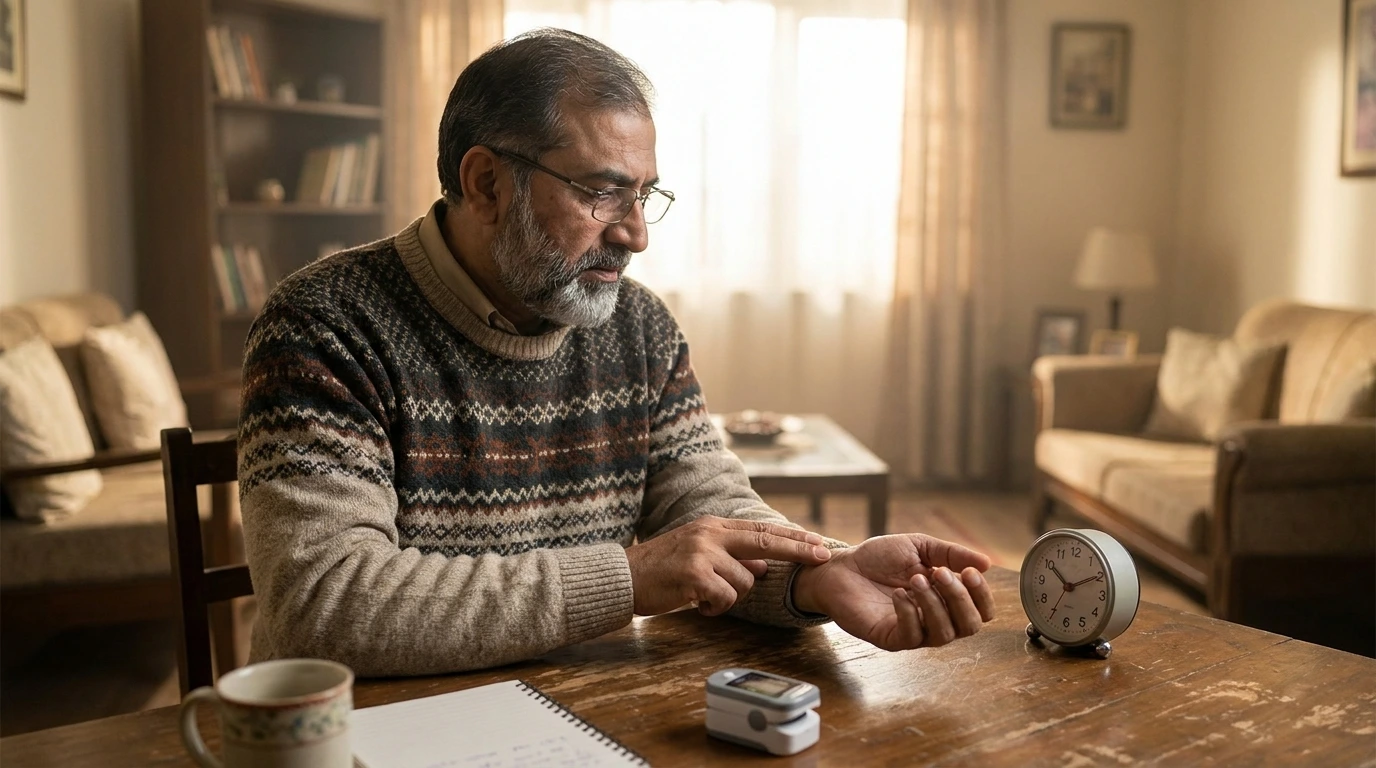
Every pulse oximeter, blood pressure monitor and smartwatch in Pakistan now shows a heart rate, which means millions of people see a number several times a day without knowing what it should be. The number is your heart’s pace at that moment: how many times per minute it contracts to push blood around the body. At rest, a healthy adult heart needs to beat only 60 to 100 times a minute to do that job, and how close you sit to the lower end of that range says something about how efficiently your heart works. A stronger heart moves more blood per beat and therefore needs fewer beats, which is why athletes idle at 50 and a person who has been unwell in bed for a week idles at 90.
The word to hold onto is “resting.” The pulse is not a fixed trait like height; it is a live response to whatever you are doing, feeling, drinking and fighting off. Climb the stairs and it rises to 120 legitimately. Finish a cup of strong chai, argue with someone, or run a fever, and it rises too. That is why a single reading at a pharmacy counter, taken after walking in from the heat, tells you very little, and a reading taken after five quiet minutes of sitting, or on waking in the morning, tells you a lot. This guide gives the ranges, what shifts the number up and down, how to check it properly by hand or with a fingertip pulse oximeter, and the patterns that mean a doctor should see the log.
Normal Resting Pulse by Age
| Age group | Typical resting range (beats per minute) | Note |
| Newborn (0 to 1 month) | 100 to 160 | Fast is normal; small hearts beat faster |
| Infant (1 to 12 months) | 100 to 150 | Slows steadily through the first year |
| Toddler (1 to 3 years) | 90 to 140 | |
| Child (4 to 10 years) | 70 to 120 | Approaches adult range by about 10 |
| Teenager (11 to 17 years) | 60 to 100 | Adult range reached |
| Adult (18 and over) | 60 to 100 | Most healthy adults 60 to 80 |
| Fit or athletic adult | 40 to 60 | Normal for that person; a sign of an efficient heart |
| Older adult (65 and over) | 60 to 100 | Same range; medicines often push it lower |
The adult range does not change with age; what changes is the company it keeps. In older adults, blood pressure medicines such as beta blockers deliberately slow the heart, so a pulse of 55 on treatment is expected rather than alarming. The pulse also has less headroom with age: the maximum a heart can safely reach during exertion falls by roughly one beat per year, which is why a 65 year old hits breathlessness on stairs at a pulse a 25 year old barely notices.
What Pushes the Pulse Up or Down
| Factor | Effect on resting pulse | Honest note |
| Fever | Roughly 10 beats higher per 1°C of fever | Expected; settles as the fever does |
| Chai, coffee, energy drinks, nicotine | 5 to 15 beats higher for 1 to 3 hours | Test before, not after, the morning cup |
| Anxiety, stress, pain | Can add 20 to 40 beats | The pharmacy-counter effect |
| Dehydration, hot weather, load-shedding nights without a fan | Higher, sometimes above 100 | Very common in Pakistani summers; rehydrate and retest |
| Anemia | Higher, as the heart compensates for thin blood | Common in women; a blood test settles it |
| Thyroid overactivity | Persistently high, often with weight loss and tremor | Needs a doctor and a simple blood test |
| Regular exercise | Lower over weeks and months | The healthiest reason for a slow pulse |
| Beta blockers and some heart medicines | Lower by design | Tell the doctor if it falls below 50 or you feel faint |
| Sleep | 10 to 20 beats lower than daytime | Why smartwatches show 50s overnight |
The practical lesson: a high pulse has a reason, and the reason is usually visible. Before worrying about a reading of 105, ask whether you have a fever, just drank chai, walked in from the heat, or are anxious about the reading itself. Correct the obvious cause, sit for five minutes, and measure again.
How to Check Your Pulse Properly
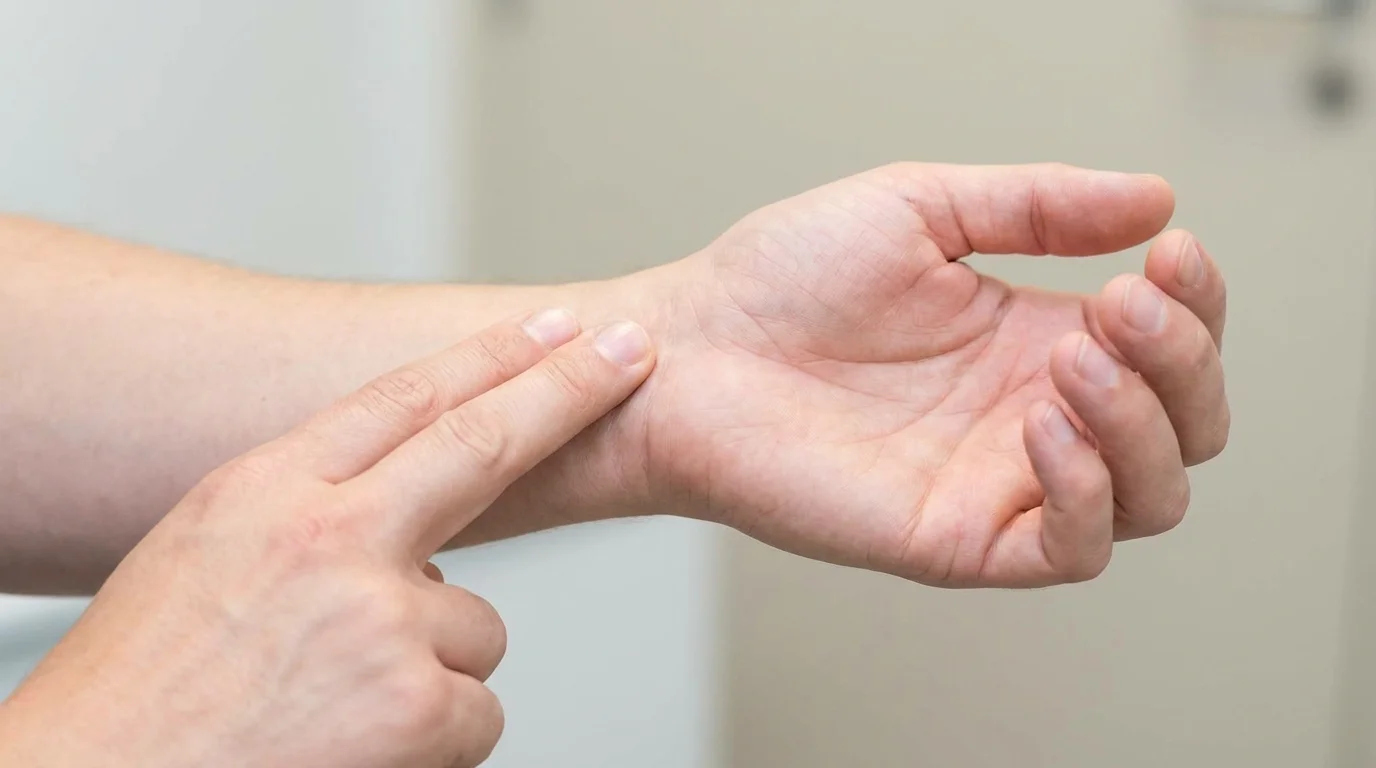
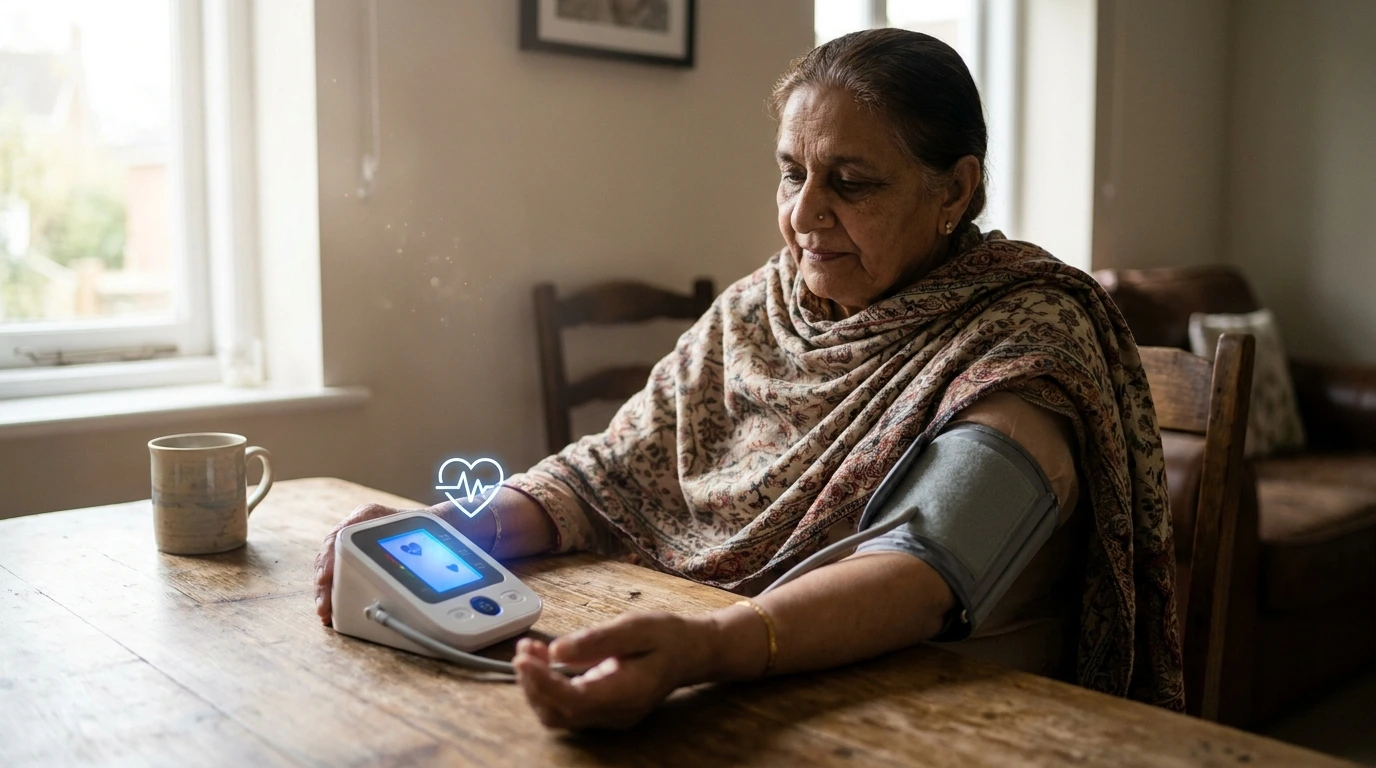
By hand: sit quietly for five minutes, then place two fingertips, not the thumb, on the inside of the wrist just below the base of the thumb, or on the side of the neck beside the windpipe. Press lightly until you feel the beat, count for 30 seconds and double it, or count a full 60 seconds if the rhythm feels uneven. Note whether the beats arrive evenly, like a clock, or stumble and skip; the rhythm is information the number alone does not carry. By device: a fingertip pulse oximeter shows pulse rate alongside oxygen saturation within a few seconds and is accurate for a regular rhythm on a warm, still hand; cold fingers, nail polish and movement all distort it, causes we worked through in our guide on a pulse oximeter that will not show a reading. A digital blood pressure monitor also reports pulse with every reading, and many models flag an irregular heartbeat with a small symbol, which is a useful prompt to have the rhythm checked. Whichever method you use, the reading that means something is the resting one: same time, same posture, before caffeine, logged alongside how you felt.
When a Pulse Rate Needs a Doctor
| Pattern | Why it matters | What to do |
| Resting pulse repeatedly above 100 with no obvious cause | Thyroid, anemia, infection, heart rhythm problem | Log a week of resting readings; see a doctor with the log |
| Resting pulse below 50 in someone who is not fit, with dizziness or fatigue | Slow conduction in the heart or medicine effect | Doctor visit; bring the medicine list |
| Irregular rhythm: skipping, fluttering, chaotic beats | Possible atrial fibrillation, which raises stroke risk | Doctor soon; an ECG confirms it in minutes |
| Sudden racing above 150 at rest, or a pulse that will not settle | Rhythm disturbance | Same-day medical attention |
| Any fast or slow pulse with chest pain, fainting, or severe breathlessness | Possible cardiac emergency | Hospital emergency now, not a logbook |
Irregularity deserves a specific word. Atrial fibrillation, where the upper chambers of the heart quiver instead of beating, produces a pulse that feels chaotic under the finger and often reads inconsistently on a device from one minute to the next. It is common after 60, frequently silent, and one of the leading preventable causes of stroke, because blood pools and clots in the quivering chamber. Blood pressure monitors that flag irregular beats catch a large share of undiagnosed cases at home; if yours shows the symbol on repeated readings, that is worth an ECG regardless of how you feel. Pulse and blood pressure are separate measurements that are often confused, and a normal pulse does not mean normal pressure or the reverse, a distinction we explained alongside the reading categories in our normal blood pressure by age chart.
Frequently Asked Questions
What is a normal pulse rate for an adult at rest?
60 to 100 beats per minute, with most healthy adults between 60 and 80. Fit people commonly run 50 to 60. The reading must be taken at rest: seated for five minutes, before chai or exertion, and ideally at the same time each day.
Is a pulse of 110 dangerous?
Not in itself; after exercise, stress, fever, dehydration or caffeine, 110 is a normal response. It becomes worth investigating when it persists at rest over several days with no cause, or when it comes with chest pain, breathlessness or fainting, which needs urgent care.
Why is my resting pulse always high?
Common causes are anemia, an overactive thyroid, ongoing anxiety, poor sleep, dehydration, heavy chai or nicotine use, and lack of regular exercise. A week of logged morning readings plus a basic blood test usually finds the reason; persistent readings above 100 deserve that check.
Is a pulse of 50 too low?
For a regularly active person, 50 is a normal, healthy resting pulse. For someone who is not fit, or who feels dizzy, faint or unusually tired at that rate, it should be checked, especially if they take blood pressure or heart medicines that slow the heart.
What is the difference between pulse rate and blood pressure?
Pulse rate is how many times the heart beats per minute; blood pressure is the force of blood against artery walls, written as two numbers. They are measured separately and one can be normal while the other is not. A home blood pressure monitor reports both, but only the pulse reading tells you about heart pace and rhythm.
