- Your cart is empty
- Continue Shopping


What Is a Suction Machine Used for at Home?
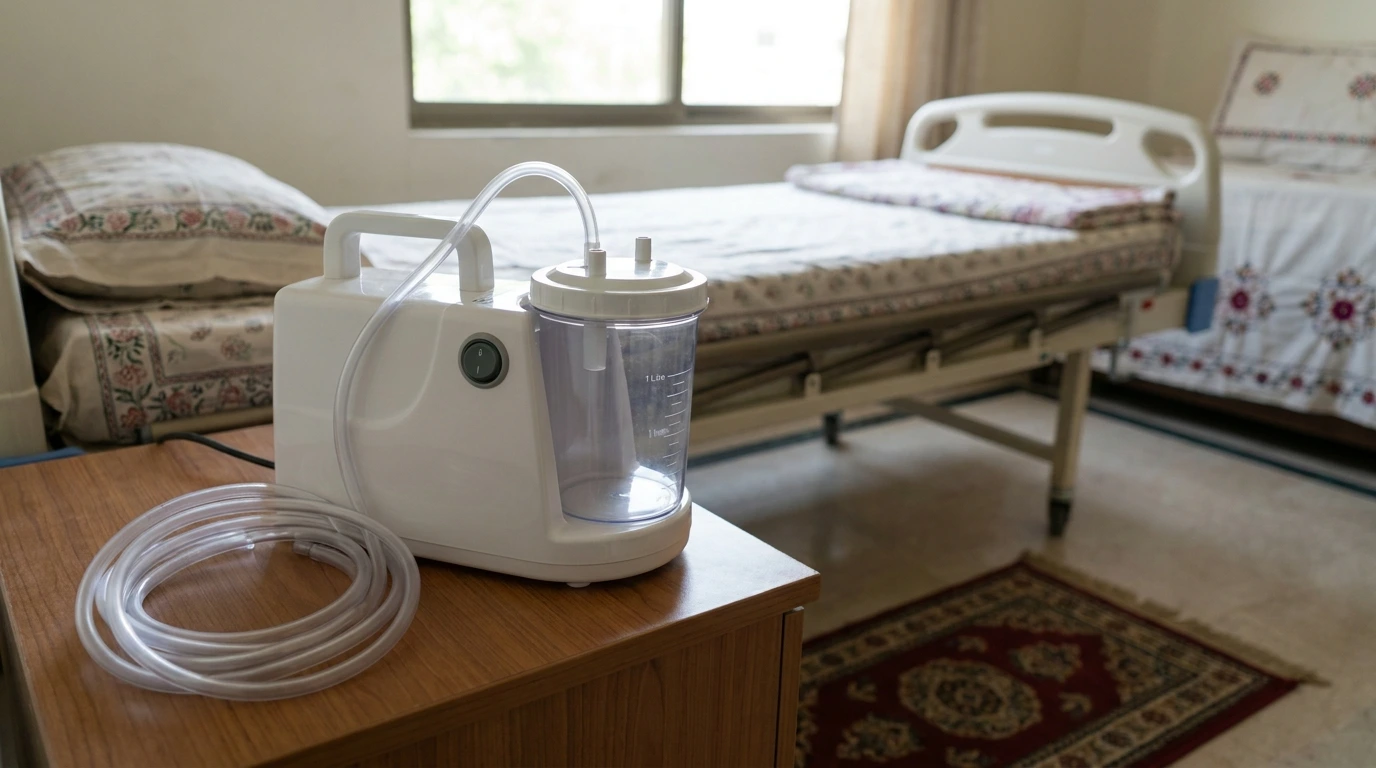
Quick Answer
A medical suction machine, also called an aspirator or phlegm suction unit, uses a small electric pump to draw saliva, mucus, phlegm or vomit out of the mouth and throat through a tube, for patients who cannot cough or swallow it away themselves: stroke patients, people with tracheostomies, the bedridden elderly, and patients recovering from serious illness. At home it is used for mouth and throat suctioning only, at a gentle setting of about 100 to 150 mmHg for adults, in passes of no more than 10 to 15 seconds. Portable home units cost roughly Rs 12,000 to 20,000 in Pakistan. Deep airway suctioning is a trained skill and should be taught to the family by a nurse or physiotherapist before it is attempted.
Families who have nursed a stroke patient or an elderly parent through a chest infection know the sound: the wet, rattling breath of someone whose throat is filling with secretions they cannot clear. Healthy people swallow saliva and cough phlegm dozens of times an hour without noticing. When a stroke weakens the swallowing muscles, when a patient is drowsy or unconscious, or when a breathing tube in the neck bypasses the mouth entirely, that automatic clearing stops. Secretions pool at the back of the throat, breathing becomes noisy and laboured, and every pool is a chance for fluid to slip into the lungs and start a pneumonia. The suction machine exists to do, mechanically, the job the patient’s own reflexes no longer do.
It is a straightforward device and a genuinely life-easing one, which is why it appears in home care in Pakistan the moment a patient is discharged with a tracheostomy or a feeding tube. It is also a device that hurts people when used carelessly: too much vacuum tears the delicate lining of the mouth and throat, too long a pass starves the patient of oxygen, and a dirty jar or tube becomes a source of the very infection it was meant to prevent. This guide explains what the machine does and who actually needs one, how to use it safely for the mouth and throat suctioning that families can do, how to keep it clean, what to do during load shedding, and what to look for when buying from our suction machine range.
How a Portable Suction Machine Works
| Part | What it does |
| Oil-free vacuum pump | Creates the negative pressure that draws secretions in |
| Pressure regulator knob and gauge | Sets how strong the suction is, shown in mmHg or kPa; the most important control |
| Collection jar (usually 1 litre) | Holds what is suctioned; has an overflow float that stops liquid reaching the pump |
| Bacterial filter | Sits between jar and pump; protects the machine and the room air from contamination |
| Tubing | Connects the jar to the suction tip; about 1.5 metres on most home units |
| Suction tip: rigid Yankauer or soft catheter | Rigid tip for the mouth and cheeks; soft flexible catheter for the throat or a tracheostomy |
Most home units in Pakistan, from brands such as Yuwell and Contec, draw around 15 to 22 litres of air per minute and reach a maximum vacuum well above what a patient should ever receive, which is exactly why the regulator matters. The machine is capable of far more suction than is safe; the caregiver sets the limit.
Who Genuinely Needs One at Home
| Patient situation | Why suction is needed | Level of suctioning |
| Stroke with swallowing difficulty | Saliva pools; cannot clear it; aspiration risk | Mouth and throat; family can be trained |
| Tracheostomy at home | Mucus builds inside the tube and airway | Tracheal suction; nurse-taught skill, family performs after training |
| Bedridden elderly with a chest infection | Too weak to cough phlegm up fully | Mouth and throat |
| Unconscious or heavily sedated patient | No swallow or cough reflex | Mouth and throat, sometimes deeper |
| Neurological conditions (motor neurone disease, advanced Parkinson’s, cerebral palsy) | Progressive loss of swallow | Mouth and throat; frequency rises over time |
| End-of-life care | Comfort; reduces the distressing “rattle” | Gentle mouth suction only |
Two honest exclusions. A child or adult with a normal cough and a normal swallow does not need suction for a cold or chest infection; steam, fluids and a nebulizer help them clear it themselves, and suctioning a person who can cough is both unpleasant and unnecessary. And babies with blocked noses need a small manual nasal aspirator, not a medical suction machine, whose pressures are far too strong for an infant’s nose.
How to Suction the Mouth and Throat Safely
Wash your hands and wear disposable gloves. Sit the patient up or turn them onto their side so secretions drain toward the mouth rather than the airway. Switch the machine on, pinch or occlude the end of the tubing, and read the gauge: set it to roughly 100 to 150 mmHg for an adult, 80 to 120 mmHg for a child, and 60 to 80 mmHg for an infant, never higher, because pressures above 150 mmHg have been shown to injure the lining and drop oxygen levels. Attach a clean tip. For the mouth, use the rigid Yankauer tip: glide it along the inside of the cheeks, under the tongue and along the gums where saliva pools, keeping the tip moving and never resting it against one spot. For the back of the throat, use a soft catheter: insert it gently without suction applied, only as far as the back of the mouth, then apply suction while slowly withdrawing and rotating it. Each pass should last no more than 10 to 15 seconds; count out loud if it helps. Let the patient rest and breathe for 30 seconds to a minute between passes, watch their colour and, if you have one, their oxygen reading on a pulse oximeter, and stop after two or three passes even if some gurgling remains; you can return in a few minutes. Suction only when there is something to remove, gurgling breath, visible pooling, or distress, not on a schedule, because every pass irritates the tissue a little. Afterwards, flush the tubing by suctioning a little clean water through it, give the patient a sip or a mouth swab if they are allowed, and record how much came out and its colour; thick yellow or green phlegm, or blood, is information the doctor will want.
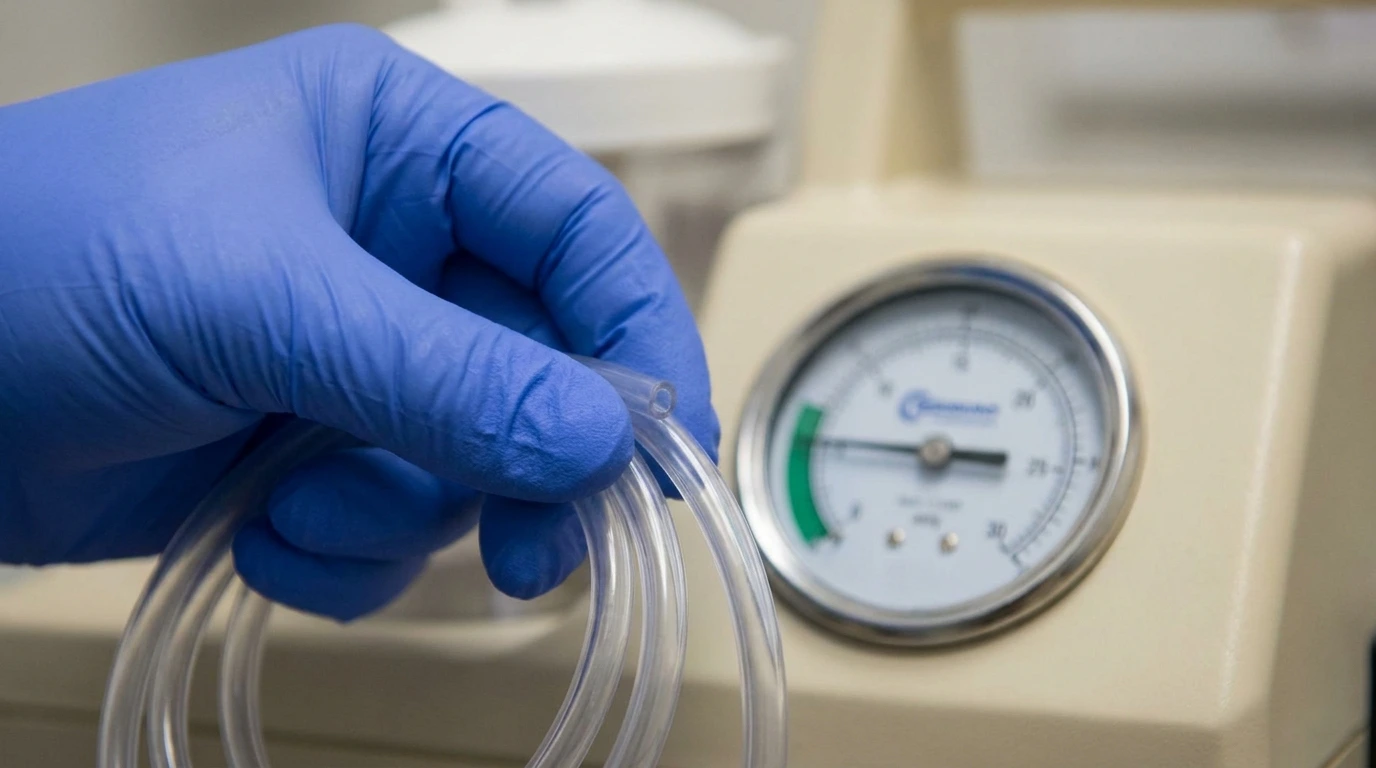
Tracheostomy suctioning is different: it enters the airway itself, the depth and technique matter, and the wrong pass can cause bleeding or a dangerous drop in oxygen. It is a skill the hospital or a home nurse should teach hands-on before discharge, with the family performing it under supervision until confident. A written guide is a reminder of that training, not a replacement for it.
Cleaning, Load Shedding and Everyday Care
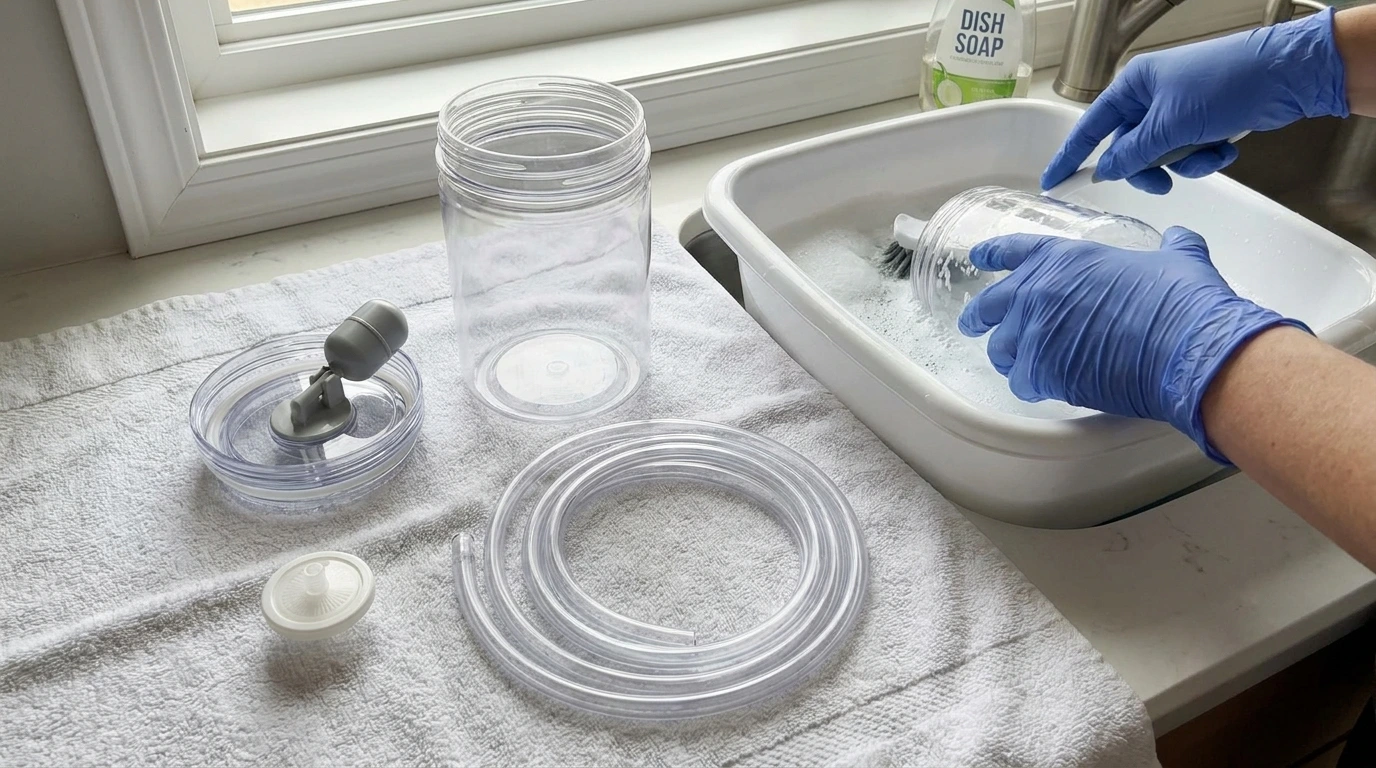
Empty the collection jar when it reaches about two-thirds full and at least once a day, wearing gloves, flushing the contents down the toilet. Wash the jar, lid and tubing in warm water with detergent, rinse, then disinfect by soaking in a diluted bleach solution or boiling the parts that the manual says tolerate it, and let everything air-dry before reassembly. Change the bacterial filter as soon as it looks wet or discoloured, and on the schedule in the manual otherwise; a wet filter blocks suction and lets contamination through. Suction catheters are single use; the rigid Yankauer tip can be washed and disinfected between uses on the same patient and replaced when it clouds or cracks. Keep the machine on a stable surface below the level of the patient’s head so that gravity helps the tubing drain toward the jar, and check that the overflow float in the lid moves freely, because a stuck float is the commonest reason a pump is ruined by liquid.
Load shedding is the practical worry in Pakistan. Most electric home units draw around 90 watts, a small load that a household UPS running fans and lights can usually carry, so ask the UPS installer to put the suction socket on the backed-up line. For a patient who cannot go an hour without suction, a manual foot-pedal or hand-operated suction unit as a backup is cheap insurance; it produces less vacuum and tires the operator, but it works when nothing else does. Buying a portable unit with a built-in rechargeable battery solves the same problem more elegantly at a higher price.
Choosing a Unit and What It Costs in Pakistan
For home use, the features that matter are a clearly marked pressure gauge and a regulator that adjusts smoothly to low settings, a 1 litre jar with a working overflow float, quiet operation below about 65 decibels for a shared bedroom, a spare filter or two in the box, and easy availability of tubing and tips locally. Portable electric units suitable for home care generally cost around Rs 12,000 to 20,000; battery-backed portable models and hospital-grade high-flow units cost considerably more, and manual pedal units used as backups cost less. Prices move with imports, so treat these as ranges. Whichever you choose, ask the supplier to demonstrate setting the pressure with the tubing occluded, because a caregiver who has seen the gauge move once is a caregiver who will never guess. A suction machine sits alongside the air mattress, hospital bed and other home care essentials for a bedridden patient, and like the mattress it protects the patient only as well as the hands that use it.
Frequently Asked Questions
What is a suction machine used for at home?
To remove saliva, mucus, phlegm or vomit from the mouth and throat of a patient who cannot swallow or cough it away: stroke patients, people with tracheostomies, unconscious or very weak bedridden patients, and those with progressive neurological disease. It prevents choking and reduces the risk of secretions entering the lungs.
What pressure should a suction machine be set to?
Roughly 100 to 150 mmHg for adults, 80 to 120 mmHg for children, and 60 to 80 mmHg for infants, measured with the tubing pinched closed before use. Never exceed 150 mmHg; higher pressures injure the lining of the mouth and throat and lower oxygen levels.
How long can you suction a patient at a time?
No more than 10 to 15 seconds per pass, with 30 seconds to a minute of rest between passes, and usually no more than two or three passes in one session. Suction only when secretions are present, not on a fixed schedule.
Can a family member do suctioning at home?
Yes, for the mouth and back of the throat, after being shown the technique once by a nurse or physiotherapist. Tracheostomy suctioning enters the airway and should be taught hands-on before discharge, with the family practising under supervision before doing it alone.
What is the price of a suction machine in Pakistan? Portable electric units for home care are generally around Rs 12,000 to 20,000. Battery-backed portable models and hospital-grade units cost more; manual pedal or hand-operated units, useful as a load-shedding backup, cost less. Prices vary with imports and brand.
