- Your cart is empty
- Continue Shopping


Can an Oxygen Concentrator Be Used Continuously for 24 Hours
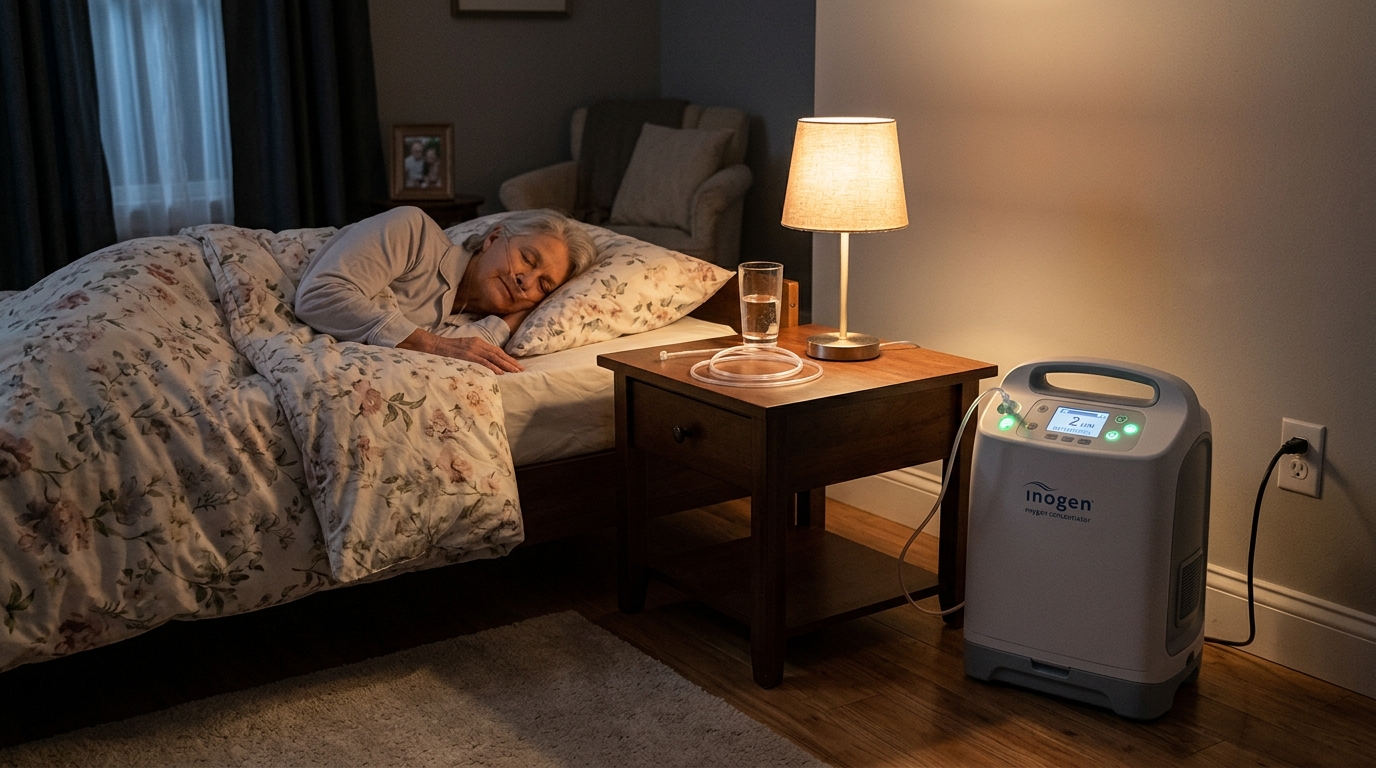
For patients with chronic respiratory conditions, oxygen therapy is often not a part time need but a round the clock requirement. This naturally raises a common question among new users and caregivers alike, can an oxygen concentrator actually run for twenty four hours a day without stopping. The short answer is yes, most home oxygen concentrators are specifically engineered for continuous, long term operation, but there is more to understand about how this works safely, what maintenance it requires, and what to watch for. This guide walks through everything you need to know about running an oxygen concentrator around the clock.
How Oxygen Concentrators Are Designed for Continuous Use
Unlike many household appliances that are built for occasional use, home oxygen concentrators are specifically engineered as durable medical devices intended for extended, uninterrupted operation. Manufacturers design the internal compressor, sieve beds, and cooling systems to handle continuous cycling for months and years at a time. Most reputable home concentrators are tested and rated for twenty four hour daily use, which is reflected in their technical specifications and warranty terms. This is fundamentally different from a portable fan or a small kitchen appliance, since the entire mechanical and electronic design accounts for sustained operation from the start.
Caregiver Routines for Continuous Oxygen Therapy
Families managing round the clock oxygen therapy often find it helpful to build a simple daily routine around the device rather than treating maintenance as an occasional afterthought. A short morning check of the flow setting, tubing condition, and filter cleanliness takes only a couple of minutes but catches small issues before they become bigger problems. Keeping a spare nasal cannula on hand means a worn or damaged one can be swapped immediately rather than leaving the patient without oxygen while a replacement is sourced. Writing the prescribed flow rate somewhere visible near the device, such as on a small card taped to the unit, also helps every caregiver in the household stay consistent, particularly when multiple family members share care duties across different shifts of the day.
What Continuous Use Actually Means
Continuous use means the device is drawing in air, filtering out nitrogen, and delivering concentrated oxygen without being switched off for extended stretches. For patients prescribed long term oxygen therapy, this is often exactly what is needed, since many chronic conditions require a steady oxygen supply during sleep as well as waking hours. It does not mean the device never needs attention. Filters need regular cleaning, water bottles on humidified setups need refilling, and the unit benefits from periodic visual and audible checks to confirm it is functioning within its normal range, even while running nonstop.
Home Concentrators Compared to Portable Units for Round the Clock Use
Home concentrators, which plug directly into a wall outlet, are generally the better option for true twenty four hour, non stop use, since they do not depend on battery life and are built with larger, more robust components for sustained output. Portable oxygen concentrators are designed primarily for mobility and shorter stretches away from a power source, and while many can technically run continuously when plugged in, their battery powered operation away from an outlet is time limited. If your prescription calls for genuinely continuous oxygen therapy at home, a stationary home unit is typically the primary device, with a portable unit reserved for trips outside the house.
Maintenance Needed for Round the Clock Operation
Running a concentrator continuously does increase the importance of regular maintenance, simply because the components are working more hours per day compared to intermittent use. The external air filter, usually a foam or mesh cover near the intake, should be checked and cleaned roughly once a week to prevent dust buildup from restricting airflow. If your device uses a humidifier bottle, the water level should be checked daily and the bottle cleaned regularly to prevent bacterial growth. Internal filters, which are not usually user serviceable, typically need professional replacement on a schedule specified by the manufacturer, often every one to two years depending on usage hours and environment.
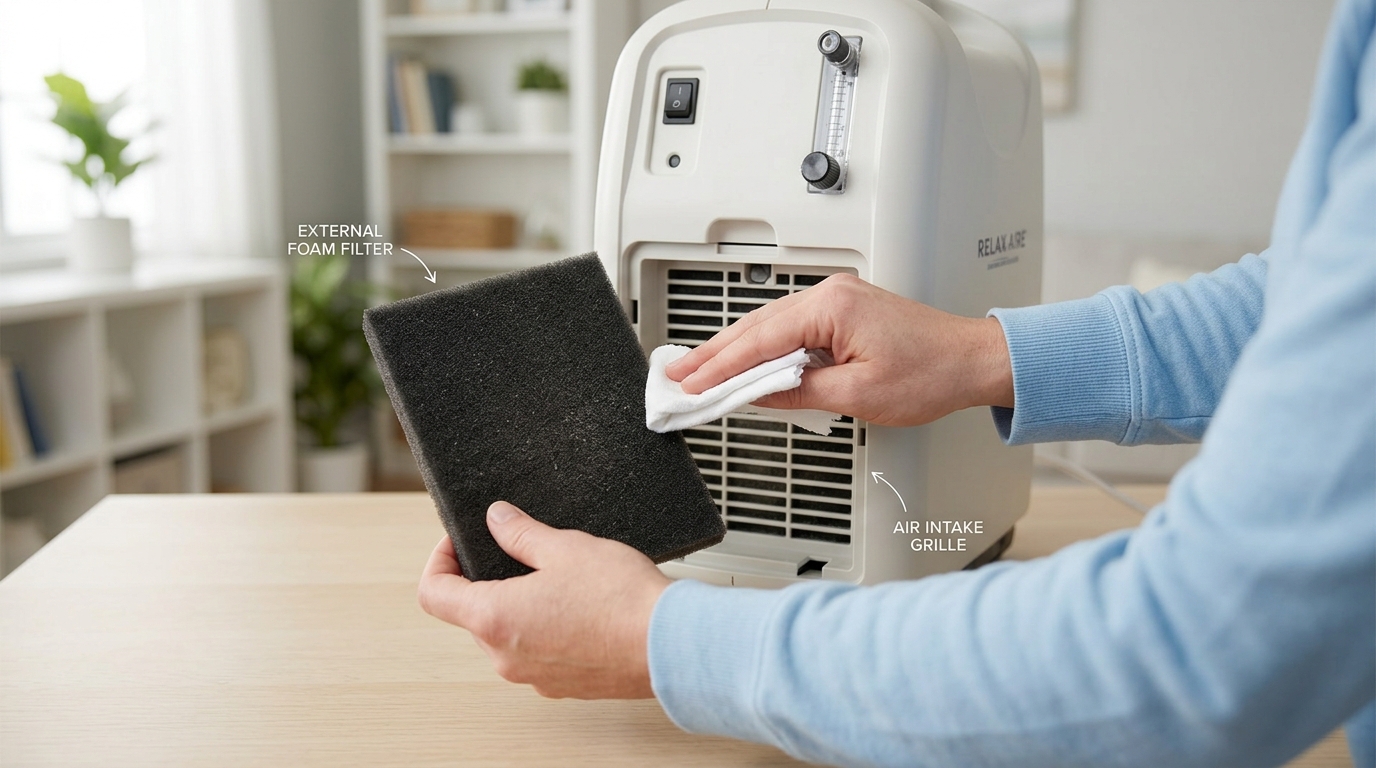
It is also worth keeping a simple log of operating hours if your device does not track this automatically, since many manufacturers base service intervals on total run time rather than calendar time alone. A device running continuously will reach its service milestones faster than one used only a few hours a day, and staying ahead of scheduled maintenance is one of the best ways to avoid unexpected breakdowns.
Traveling and Continuous Oxygen Needs
Patients on continuous oxygen therapy who need to travel face an additional layer of planning. A home concentrator is not designed to be carried around during a trip, so a portable unit, extra battery packs, or arrangements with an oxygen supplier at the destination become necessary to maintain uninterrupted therapy while away from home. Airlines and long distance transport services often have specific requirements for traveling with oxygen equipment, including documentation from a doctor confirming the therapy is medically necessary, so patients and caregivers should plan well ahead of any trip rather than assuming equipment can simply be packed at the last minute.
Cleaning and Hygiene for Continuously Running Devices
Beyond the mechanical filter, general hygiene around a continuously operating concentrator deserves attention. The nasal cannula or mask should be replaced periodically, generally every two to four weeks for standard cannulas, since prolonged use can harbor bacteria and reduce comfort. Wiping down the exterior casing of the device with a slightly damp cloth on a weekly basis helps prevent dust accumulation, and keeping the immediate area around the unit free of clutter supports both airflow and easy access during checks. For patients with weakened immune systems, more frequent cleaning schedules may be recommended by their care team.
Comparing Concentrators to Cylinders for Nonstop Use
Before concentrators became widely available, oxygen cylinders were the standard option for home therapy, and they remain in use today, particularly as backup. For genuinely continuous, long duration use, concentrators generally have a practical advantage, since they draw oxygen from the surrounding air indefinitely rather than relying on a finite, refillable supply. A detailed oxygen concentrator versus oxygen cylinder comparison shows that cylinders eventually run out and need replacement or refilling, which becomes a recurring logistical task for round the clock therapy, whereas a concentrator simply needs a power source and routine filter maintenance to keep running indefinitely.
Noise and Comfort During Extended Operation
One practical consideration many families overlook before committing to continuous oxygen therapy is noise. Concentrators do produce an audible hum from their internal compressor, and while modern models are considerably quieter than older generations, this constant sound can take some adjustment, especially for light sleepers in the same room. Placing the unit slightly further from the bed, using the manufacturer approved tubing length, or choosing a model specifically marketed for lower decibel operation can all help. Comfort matters over the long run, since a device that feels intrusive is more likely to be used inconsistently, which works against the entire purpose of continuous therapy.
Signs Your Concentrator Needs a Break or Service
While the devices are built for continuous operation, certain warning signs should never be ignored. An unusual rise in operating temperature, a noticeable change in the sound of the motor, a drop in delivered oxygen concentration, or an increase in alarm frequency all indicate the unit needs professional attention rather than simply being left to keep running. Most home concentrators include an oxygen purity sensor or indicator light that will alert you if concentration falls below a safe threshold, and this alarm should always be treated as a signal to check the device immediately, not something to silence and ignore.
Power and Backup Considerations for Continuous Use
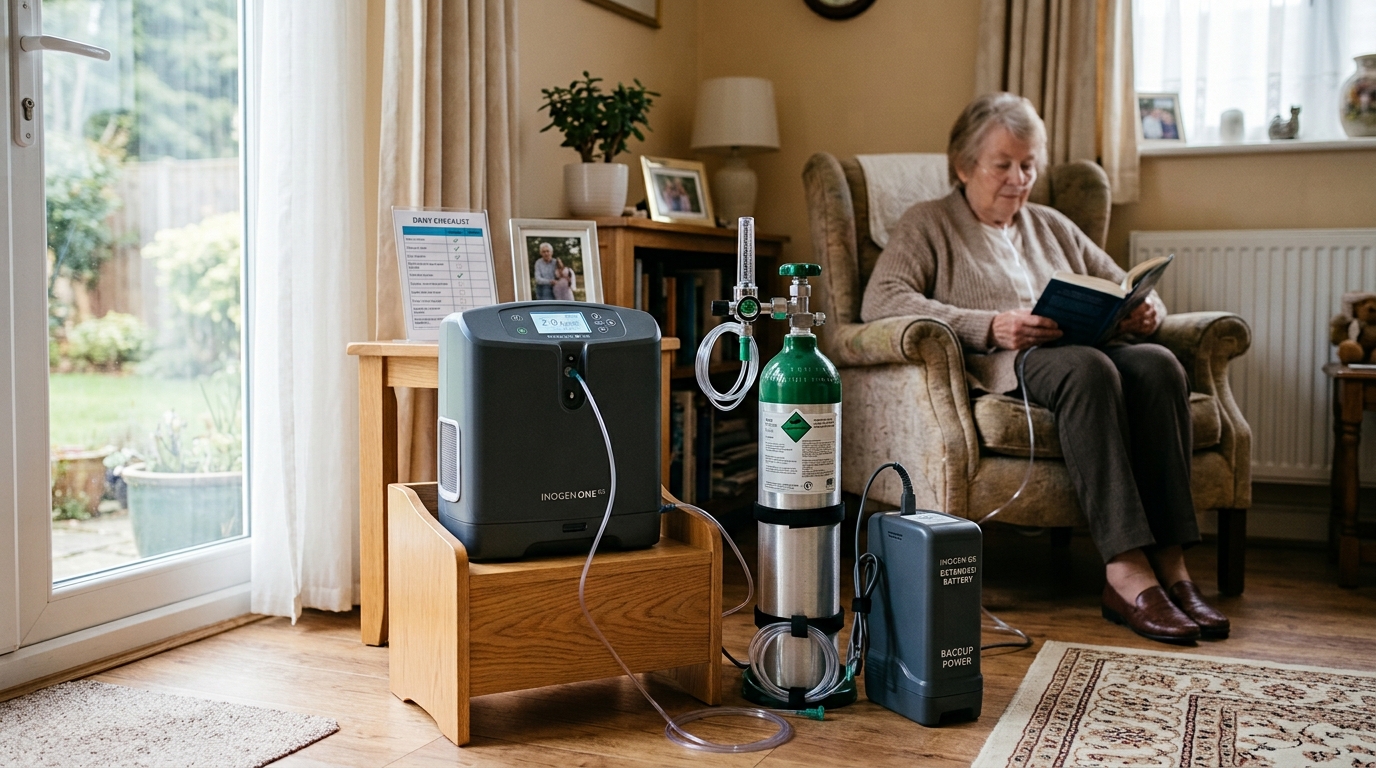
Since continuous therapy depends entirely on a steady power supply, patients relying on round the clock oxygen should have a backup plan for power outages, which are common in many parts of Pakistan. Options include a backup battery system, an uninterruptible power supply rated for the concentrator’s wattage, or access to oxygen cylinders as a temporary bridge during outages. Discussing this backup plan with your flow meter and equipment supplier ahead of time, rather than during an actual outage, ensures you are not caught without oxygen support when the power grid fails.
Safety Tips for 24 Hour Oxygen Therapy
A few practical habits make continuous oxygen use considerably safer. Keep the concentrator at least a few feet away from open flames, gas stoves, candles, and anyone smoking nearby, since oxygen enriched environments support combustion far more readily than normal air. Avoid covering the unit with blankets or placing it in an enclosed cabinet, since airflow around the intake and exhaust is essential for both performance and cooling. Position the device on a stable, flat surface where it will not be knocked over during the night, and keep the tubing routed in a way that avoids tripping hazards, especially if the patient moves around the house while connected.
When Continuous Use Is Medically Necessary
Continuous, twenty four hour oxygen therapy is typically prescribed for patients with chronic conditions such as advanced COPD, certain lung diseases, or other conditions where blood oxygen levels remain low throughout both waking and sleeping hours. This differs from patients who may only need supplemental oxygen during specific activities, exercise, or sleep alone. The decision to prescribe continuous therapy is based on repeated oxygen level testing over time, not a single reading, and patients on this type of therapy are usually monitored more closely with regular follow up appointments to confirm the prescribed flow rate and duration remain appropriate as their condition evolves.
Continuous oxygen therapy, when set up correctly and maintained consistently, allows patients to manage serious respiratory conditions safely at home rather than requiring extended hospital stays. Treating the concentrator as a piece of essential daily equipment, worthy of the same consistent attention as any other part of a treatment plan, is what makes round the clock use both effective and safe over the months and years many patients rely on it. A well maintained device, a clear backup plan, and a family that understands the basics of how the machine works together make continuous therapy a manageable part of everyday life rather than a constant source of worry.
Keeping a Simple Emergency Checklist
Households relying on continuous oxygen therapy often benefit from a short, written checklist kept near the device covering what to do if the alarm sounds, who to call for technical support, where the backup cylinder is stored, and the nearest hospital with respiratory support. Having this written down means any family member or caregiver, even one who does not usually manage the equipment, can respond confidently if the primary caregiver is unavailable during an issue.
Frequently Asked Questions
Can an oxygen concentrator run all day and night without being switched off?
Yes, most home oxygen concentrators are specifically designed and rated for continuous twenty four hour operation, which is common for patients on long term oxygen therapy.
Does continuous use shorten the lifespan of an oxygen concentrator?
Continuous use does mean components accumulate run hours faster, which affects when servicing and filter replacement are due, but the devices are built to handle sustained operation for years with proper maintenance.
What happens if the power goes out during continuous oxygen therapy?
Without backup power or an alternative oxygen source such as a cylinder, the concentrator will stop producing oxygen, which is why patients on continuous therapy are strongly advised to have a backup plan in place.
How often should filters be cleaned on a continuously running concentrator?
The external filter should generally be checked and cleaned about once a week, though this can vary by model and by how dusty the environment is, so checking the manufacturer guidance is recommended.
Is it safe to sleep with an oxygen concentrator running all night? Yes, this is a common and safe use case when the flow rate has been prescribed by a doctor, the device is positioned safely, and the alarms are functioning correctly to alert you to any issues.
