- Your cart is empty
- Continue Shopping


Oxygen Concentrator vs Ventilator: What Is the Difference
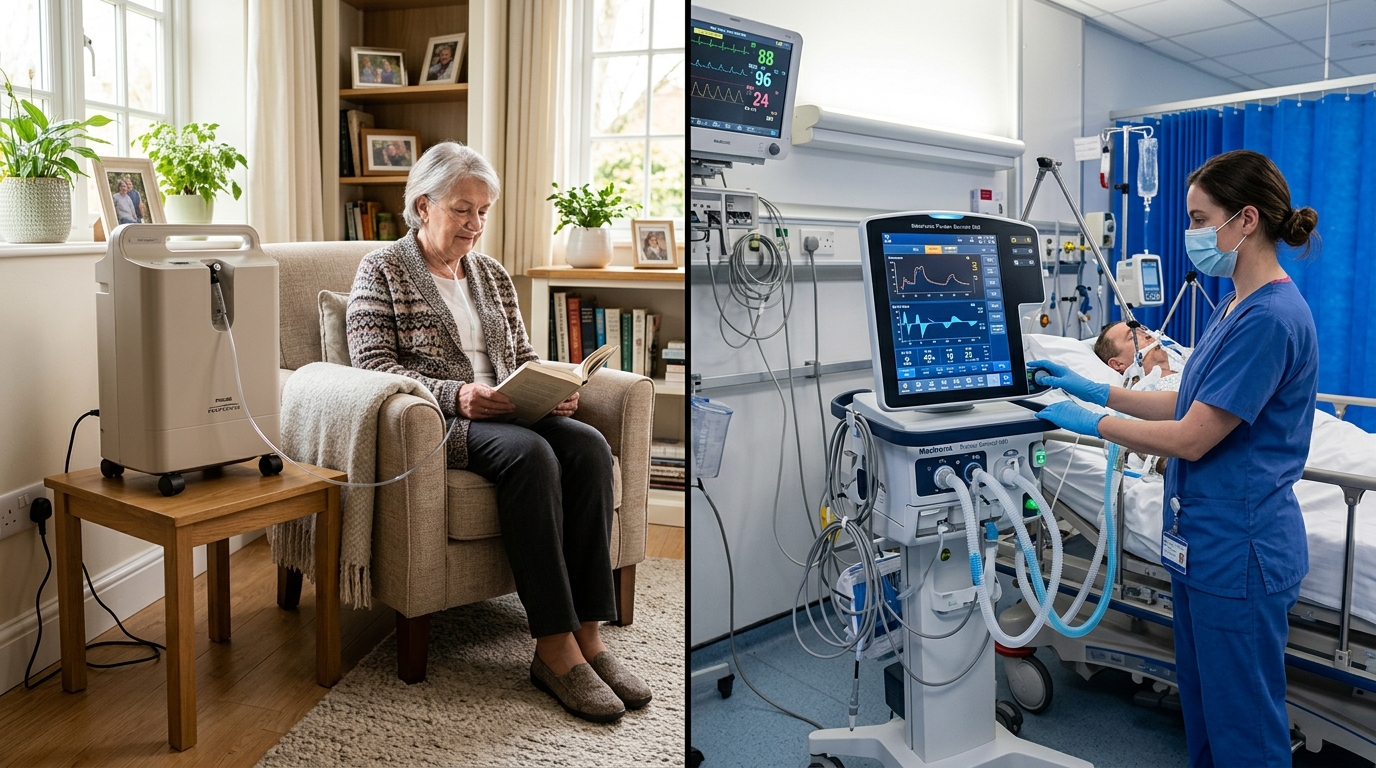
When a family is suddenly navigating a loved one’s respiratory illness, medical terms can blur together quickly, and two devices that get confused often are the oxygen concentrator and the ventilator. Although both devices are connected to breathing support, they work in completely different ways and are used for very different levels of medical need. Understanding this difference matters, both for making informed decisions about home care equipment and for knowing what to expect if a doctor recommends one over the other. This guide breaks down exactly what each device does, who typically needs which one, and how to think about the choice between them.
What Is an Oxygen Concentrator
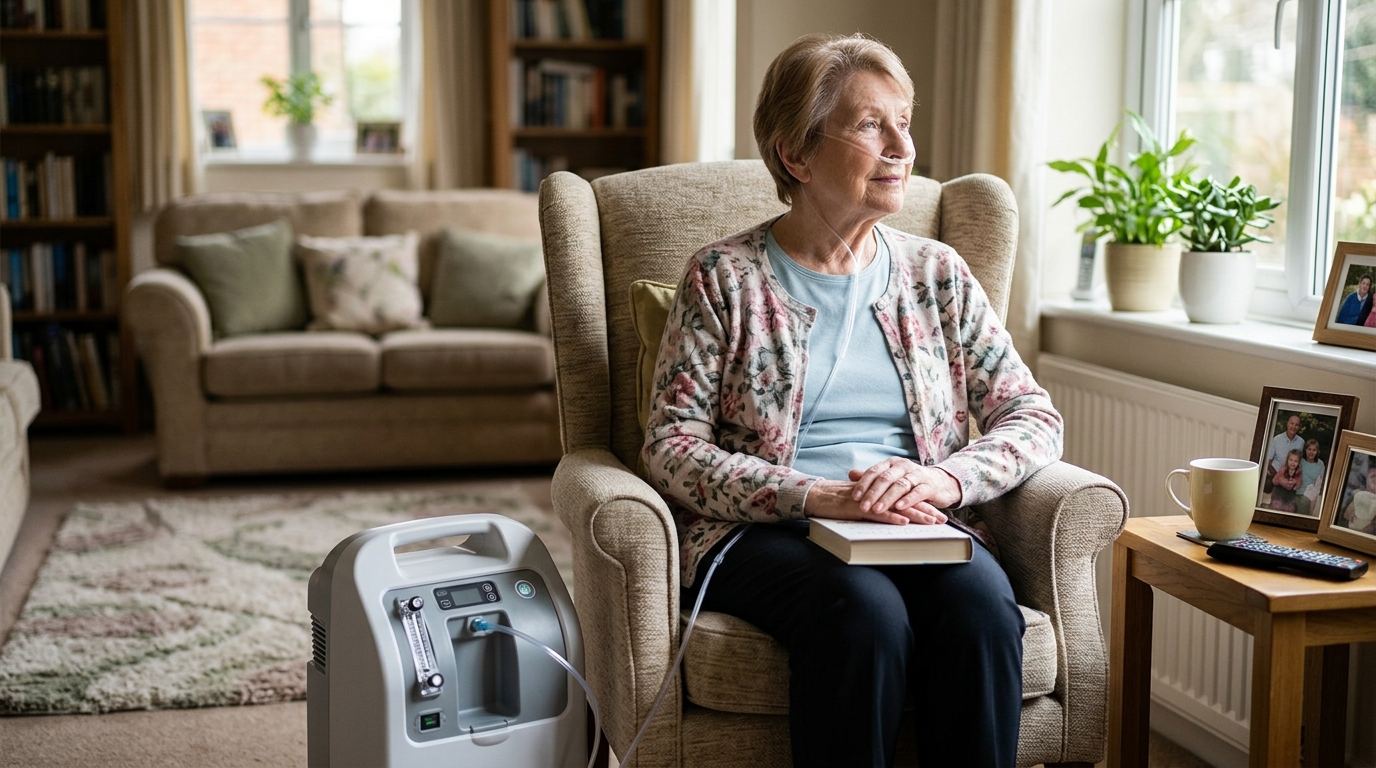
An oxygen concentrator is a device that pulls in ordinary room air, which is about twenty one percent oxygen, and filters out nitrogen and other gases to produce air enriched to roughly ninety percent oxygen or higher. It then delivers this oxygen enriched air to the patient through a nasal cannula or mask, at a flow rate prescribed by a doctor. Critically, a concentrator does not breathe for the patient. It simply enriches the air available for the patient to breathe in on their own, supplementing their natural breathing effort rather than replacing it.
Concentrators are widely used at home for patients with chronic conditions such as COPD, certain lung diseases, or recovery periods where blood oxygen levels need support but the patient is still able to breathe independently. They are relatively simple to operate, require only electricity to run, and are considered one of the more accessible pieces of respiratory equipment for home use.
What Is a Ventilator
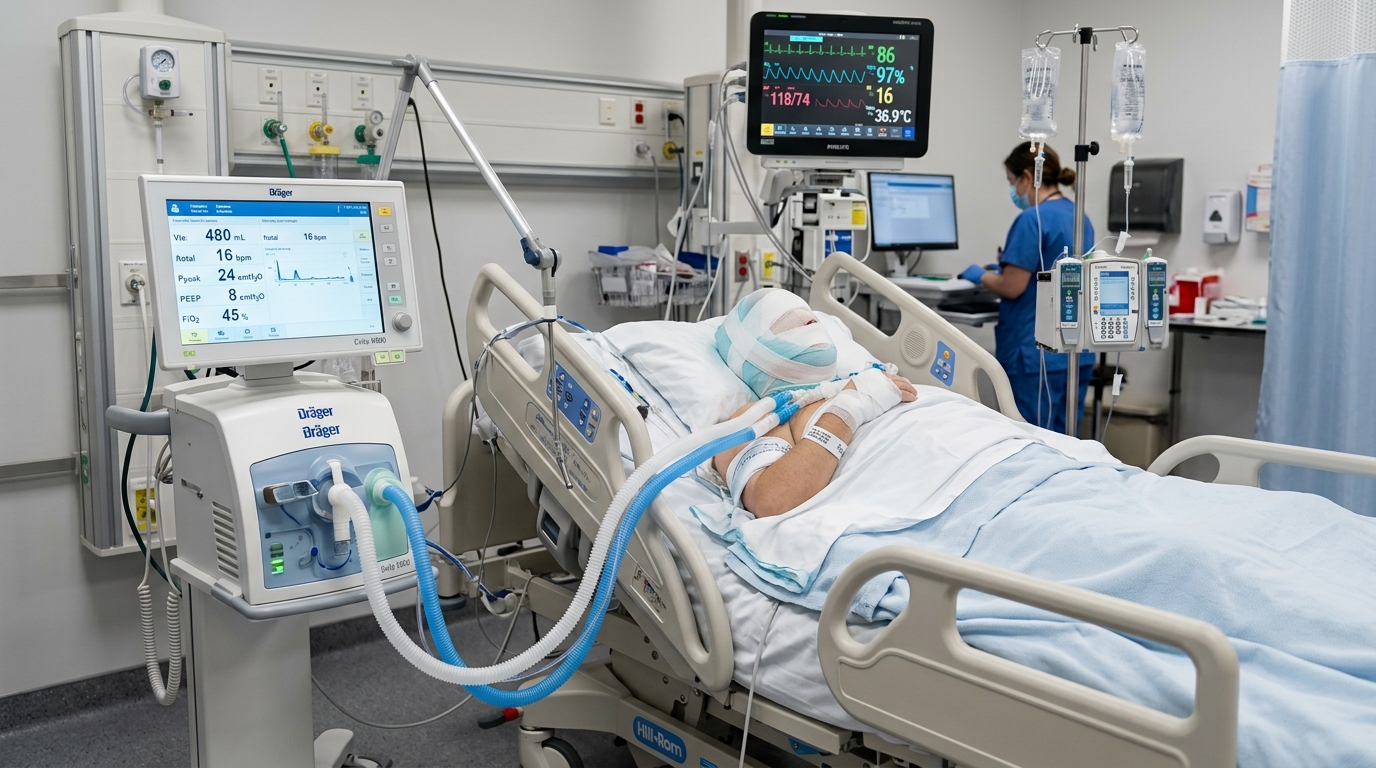
A ventilator is a far more advanced and invasive piece of equipment designed to fully or partially take over the physical act of breathing for a patient. Instead of simply enriching the air a patient breathes on their own, a ventilator mechanically pushes air, often a controlled oxygen and air mixture, into the lungs and manages the breathing cycle itself. This can be delivered invasively through a tube inserted into the airway, commonly used in intensive care settings, or non invasively through a tightly fitted mask in less severe cases. Ventilators are used when a patient cannot breathe adequately on their own at all, or when their breathing muscles are too weak or damaged to sustain life without mechanical support.
Key Functional Differences
The most fundamental difference is this. An oxygen concentrator enriches the air a patient breathes in on their own effort. A ventilator physically breathes for the patient, controlling the timing, pressure, and volume of each breath. This is not a difference of degree but a difference of function entirely. A concentrator cannot take over breathing if a patient stops breathing effectively, and a ventilator is a far more complex, monitored, and typically hospital or ICU based piece of equipment compared to the relatively simple home use design of a concentrator.
Another key difference lies in complexity and monitoring. Concentrators are generally safe for a trained family member or caregiver to manage at home with basic instruction. Ventilators require close, ongoing clinical monitoring, specialized training, and are usually managed by respiratory therapists, nurses, or doctors, even in home ventilation cases where a patient has a long term need. The cost, complexity, and level of medical supervision required for a ventilator are significantly higher than for an oxygen concentrator.
How the Two Devices Are Monitored Differently
An oxygen concentrator is typically monitored through simple, visible indicators, an oxygen purity light, a flow rate display, and basic alarms for power loss or low output. A caregiver or patient can learn to check these within a short training session. A ventilator, by contrast, is monitored through a much more detailed set of parameters, including tidal volume, respiratory rate, inspiratory pressure, and oxygen concentration, all of which are adjusted based on continuous clinical assessment. This level of monitoring generally requires trained medical staff, which is a major reason ventilators remain concentrated in hospital, ICU, or specialized home ventilation programs rather than being used as freely as home oxygen concentrators.
Transitioning Between the Two Devices
In some clinical situations, a patient may move from one device to the other as their condition changes. Someone recovering from a serious respiratory illness might start on a ventilator in the ICU, then be weaned off mechanical ventilation as their own breathing strengthens, eventually transitioning to supplemental oxygen through a concentrator once they can breathe independently again. This progression, sometimes called weaning, is a carefully managed medical process and is a good illustration of why the two devices sit at very different points on the spectrum of respiratory support rather than being interchangeable options for the same problem.
Who Typically Needs an Oxygen Concentrator
Patients who are breathing on their own but whose blood oxygen levels are lower than they should be are the typical candidates for an oxygen concentrator. This includes many people with chronic obstructive pulmonary disease, certain stages of pulmonary fibrosis, some heart conditions affecting oxygen circulation, and patients recovering from certain respiratory infections who need supplemental oxygen support during recovery. The defining factor is that the patient’s own breathing effort is present and functional, it simply needs a boost in the oxygen concentration of the air they are inhaling.
Who Typically Needs a Ventilator
Ventilators are reserved for patients whose breathing is inadequate or absent altogether, whether due to severe respiratory failure, certain neuromuscular diseases that weaken the muscles used for breathing, major surgery requiring temporary breathing support under anesthesia, or critical illness in an intensive care setting. Some patients with chronic conditions do use non invasive ventilators at home for portions of the day, particularly overnight, but this is a distinctly different and more closely supervised situation compared to standard oxygen concentrator use.
Can One Device Replace the Other
No, an oxygen concentrator cannot replace a ventilator, and a ventilator is not simply used as a more powerful oxygen concentrator. They serve fundamentally different medical purposes. A patient who genuinely needs mechanical ventilation will not have their needs met by an oxygen concentrator, regardless of how high the flow rate is set, since the core problem in that situation is inadequate breathing effort or mechanics, not simply a lack of oxygen concentration in the air. Conversely, using a ventilator for a patient who only needs supplemental oxygen would be an unnecessary and inappropriate level of intervention. The decision between the two is made by a doctor based on a full clinical assessment, never by the patient or family choosing based on preference or cost.
Common Misunderstandings Between the Two Devices
A frequent misunderstanding is assuming that any breathing machine seen in a hospital is a ventilator, when in fact many patients on general wards are simply using oxygen concentrators or masks connected to wall oxygen outlets, not mechanical ventilation. Another common mix up is confusing a ventilator with a BiPAP or CPAP machine, which support breathing through pressure assistance during sleep but do not fully take over the breathing cycle the way an ICU ventilator does. Being clear on these distinctions helps families ask more precise questions when speaking with doctors and reduces unnecessary alarm when a loved one is simply using supplemental oxygen rather than being placed on full mechanical ventilation.
Cost and Availability Differences in Pakistan
In Pakistan, oxygen concentrators are considerably more affordable and widely available for home purchase compared to ventilators, which are typically higher cost, more specialized equipment usually found in hospitals, ICUs, and specialized home care setups for patients with long term ventilation needs. Suppliers offering a respiratory care range that includes concentrators, BiPAP and CPAP machines, and ventilators allow families and clinicians to compare the appropriate level of support needed for a specific patient, though the final decision on which device is medically necessary should always rest with the treating physician.
How Families Can Prepare Before a Doctor Visit
If a loved one’s breathing has become a concern, families often feel more confident walking into a doctor’s appointment with some basic observations ready to share. Noting how breathing changes with activity compared to rest, whether there is visible effort or use of extra muscles to breathe, any bluish tint to the lips or fingertips, and how alert or confused the person seems can all help the doctor form a faster, clearer picture of whether supplemental oxygen or more advanced support might be needed. None of these observations are a substitute for professional evaluation, but they do help the conversation move efficiently toward the right diagnostic tests and, ultimately, the right equipment decision.
Renting or Buying Equipment Based on Expected Duration
Because oxygen concentrators are often needed for months or years with a chronic condition, purchasing the device outright is common and often more cost effective over time. Ventilators, given their higher cost, complexity, and the fact that many patients only need them temporarily during an acute illness or recovery period, are more frequently rented or provided through a hospital or specialized home care program rather than purchased outright by a family. Discussing expected duration of use with your doctor can help clarify which acquisition approach makes the most sense for your specific situation, whether that means an outright purchase, a rental arrangement, or a hospital managed program for more intensive equipment.
Making the Right Choice
If you are trying to determine which device is right for a loved one, the starting point is always a proper medical evaluation rather than researching products first. A doctor will assess breathing effort, blood oxygen and carbon dioxide levels, and the underlying condition before recommending either supplemental oxygen through a concentrator or full or partial breathing support through a ventilator. Once that medical direction is clear, the next step is comparing suitable devices and, if you have any questions about specific models or specifications, you can contact us for guidance on finding equipment that matches your doctor’s specific recommendation.
Understanding the difference between these two devices ultimately comes down to understanding the difference between supporting a breath and replacing it entirely. An oxygen concentrator gives extra strength to breathing that is already happening. A ventilator steps in when breathing on its own is no longer enough. Keeping that distinction clear helps families, caregivers, and patients navigate what can otherwise feel like an overwhelming and unfamiliar set of medical choices, and it makes conversations with doctors and equipment suppliers considerably more productive from the very first appointment.
A Quick Reference Summary
If you remember only one thing from this comparison, let it be this. An oxygen concentrator supports a breath that is already happening by enriching the air. A ventilator creates the breath itself when a patient cannot do so adequately on their own. Every other difference, in cost, complexity, monitoring, and setting, flows directly from that single core distinction.
Whether the need is a home concentrator for daily comfort or a hospital ventilator for critical care, the underlying goal remains the same, giving the body the support it needs to keep every organ and tissue supplied with oxygen while recovery or long term management takes place.
Frequently Asked Questions
Is an oxygen concentrator the same as a ventilator?
No, they are different devices. A concentrator enriches the air a patient breathes on their own, while a ventilator mechanically breathes for the patient when their own breathing is inadequate or absent.
Can an oxygen concentrator be used instead of a ventilator?
No, an oxygen concentrator cannot replace a ventilator for a patient who needs mechanical breathing support, since the two devices serve entirely different medical functions.
Which device is used at home more commonly?
Oxygen concentrators are far more commonly used at home since they are simpler to operate, while ventilators typically require closer clinical supervision and are more often used in hospital or specialized home ventilation settings.
Do both devices require a doctor’s prescription?
Yes, both oxygen concentrators and ventilators should only be used based on a doctor’s assessment and prescription, since incorrect use of either device can be harmful.
Is a ventilator more expensive than an oxygen concentrator? Generally yes, ventilators are more advanced, more closely monitored medical devices and typically cost significantly more than home oxygen concentrators.
