- Your cart is empty
- Continue Shopping


CPAP vs BiPAP: What Is the Difference?
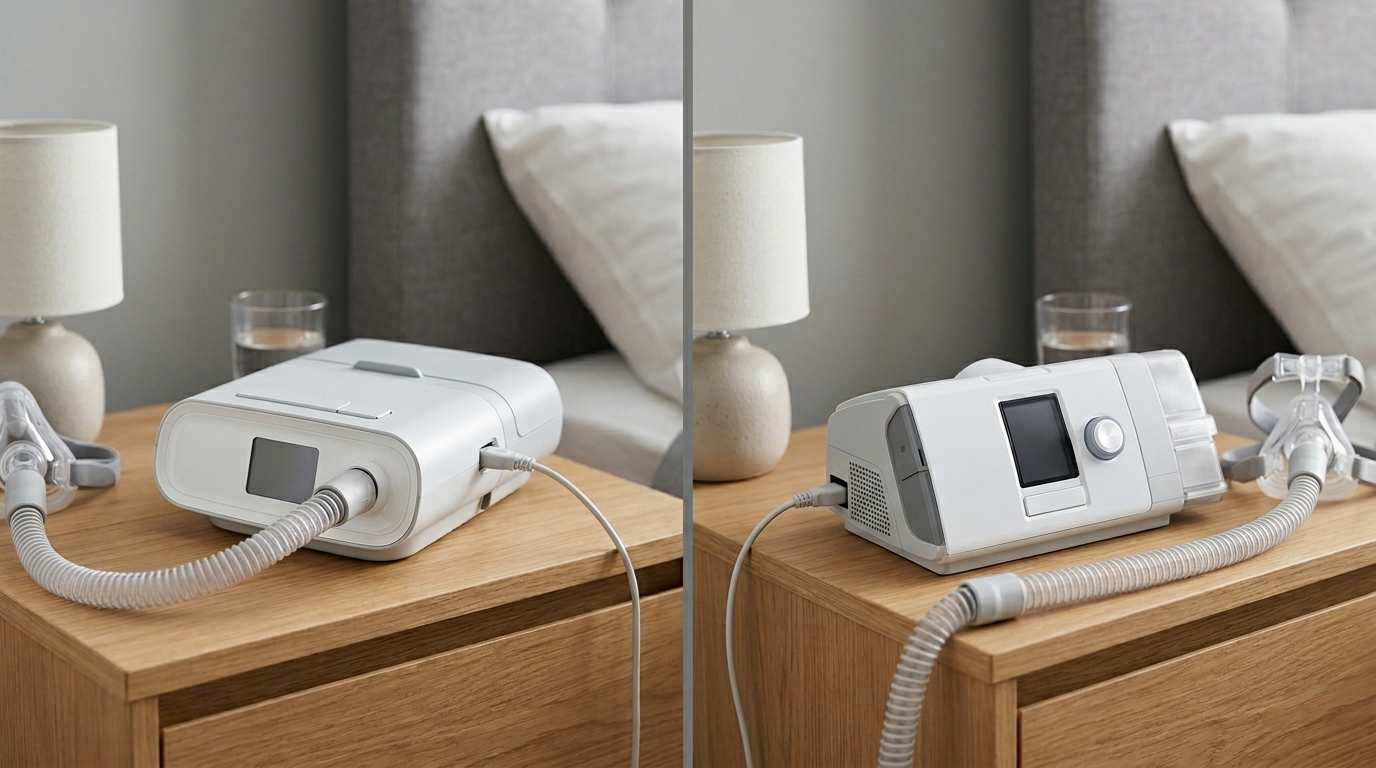
Quick answer: The main difference is pressure. A CPAP machine delivers one constant pressure for both breathing in and breathing out. A BiPAP machine delivers two pressures, a higher one when you breathe in and a lower one when you breathe out, which makes exhaling easier. CPAP is the standard for most sleep apnea. BiPAP is used when CPAP is not enough or is hard to tolerate.
CPAP and BiPAP look almost identical on the bedside table, and many people use the names as if they mean the same thing. They do not. Both are positive airway pressure devices and both treat breathing problems during sleep, but they work differently and they are prescribed for different reasons. If you are comparing CPAP and BiPAP machines before a purchase, understanding this one difference will save you money and frustration.
What CPAP and BiPAP have in common
Both machines are non invasive. That means they push air through a hose and a mask rather than through a tube placed in the body. Both keep the airway open and steady oxygen during sleep, and both rely on a good mask fit to work. In fact a CPAP machine and a BiPAP machine often share the same masks, hoses and humidifier style parts. The hardware around them is similar. The difference is entirely in how they handle the pressure.
The key difference: one pressure or two
A CPAP machine sets a single pressure and holds it. Whether you are breathing in or out, the pressure stays the same. For most people with obstructive sleep apnea this is exactly what is needed, and it is simple and reliable.
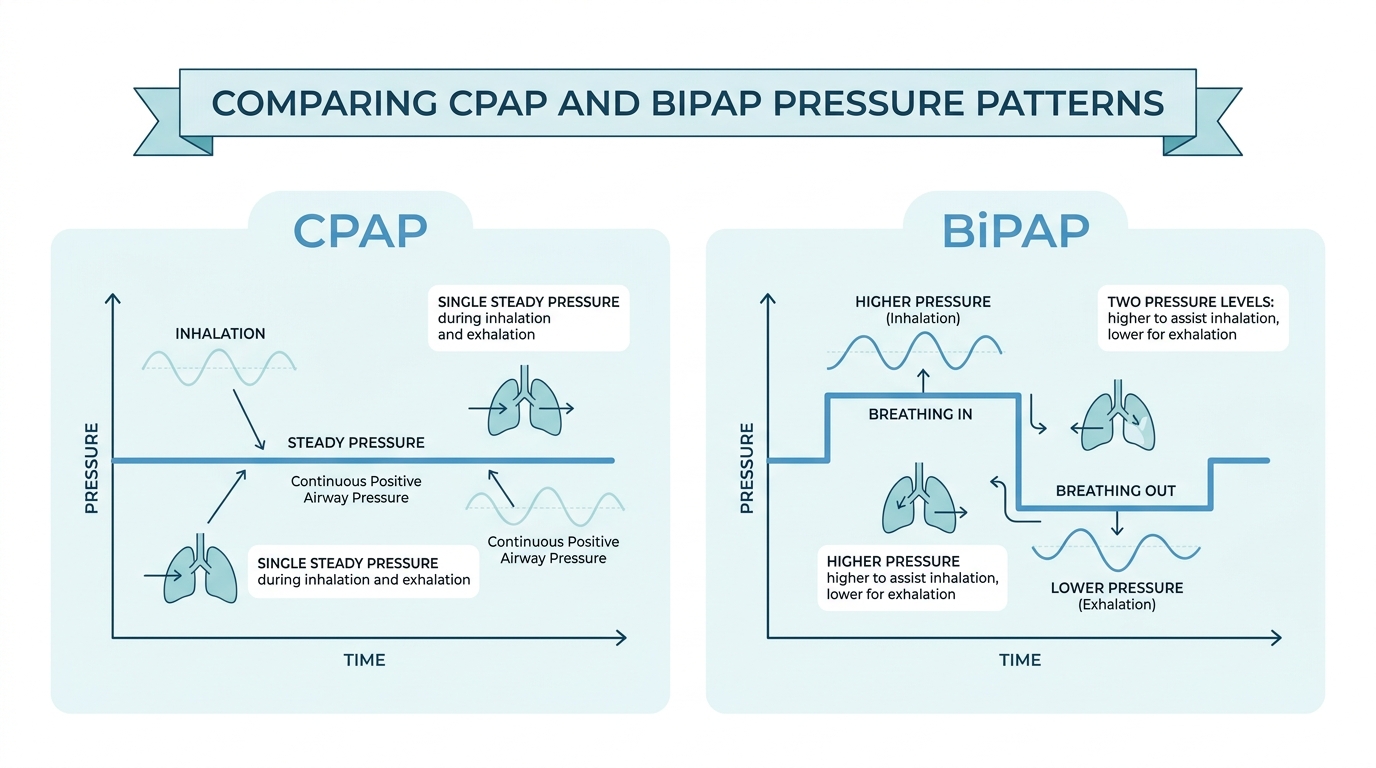
A BiPAP machine, sometimes written bilevel, uses two separate pressures. The higher pressure helps you breathe in, and the lower pressure lets you breathe out more easily. That drop on the exhale is the whole point. Some people find it hard to breathe out against a high constant CPAP pressure, and for them the lower exhale pressure of BiPAP feels far more natural and comfortable.
What is a BiPAP machine used for?
BiPAP is not simply a fancier CPAP. Doctors choose it for specific reasons. It is used when a person needs high pressures that are uncomfortable on CPAP, when they cannot tolerate CPAP, or when they have conditions beyond simple sleep apnea such as certain lung diseases, weak breathing muscles, or central sleep apnea where the brain signal to breathe is the problem. A BiPAP machine can also support people who are not moving enough air on their own. Because of these uses, BiPAP is generally prescribed more carefully and tends to cost more than CPAP.
CPAP vs BiPAP at a glance
The table below sums up the practical differences. Note that both still need a CPAP or BiPAP mask that fits well, which is the single biggest factor in whether either device succeeds.
| Feature | CPAP | BiPAP |
| Pressure | One constant pressure | Two pressures, inhale and exhale |
| Exhaling | Against full pressure | Easier, lower exhale pressure |
| Best for | Most obstructive sleep apnea | High pressure needs, CPAP intolerance, some lung and central conditions |
| Complexity | Simple | More advanced, set more carefully |
| Typical cost | Lower | Higher |
Who needs CPAP and who needs BiPAP?
Most people with obstructive sleep apnea start on CPAP and do very well. It is simpler, cheaper, and proven. BiPAP enters the picture when CPAP does not fit the situation. That includes people who need pressures so high that exhaling against them is a struggle, people who simply cannot get used to CPAP after a fair try, and people whose breathing problem is more complex than a collapsing airway. This is a medical decision, not a shopping preference. The right machine is the one your sleep study and doctor point to.
What about APAP?
You will also see the term APAP, which means auto adjusting positive airway pressure. APAP is still a single pressure system like CPAP, but instead of one fixed number it moves up and down within a range as your needs change through the night. It is not a third category between CPAP and BiPAP. Think of APAP as a smart version of CPAP, while BiPAP remains the two pressure option for different needs.
Comfort, cost and getting used to it
Beyond the pressure difference, the everyday experience matters more than most buyers expect. CPAP is simpler to live with and to replace parts for, and it is the more affordable option, which is why it suits the majority of people. BiPAP costs more both to buy and to maintain, and because it is set more carefully, it usually comes with closer follow up from a provider. Comfort is where people often switch. Someone who feels they are fighting the machine to breathe out on CPAP may settle quickly once moved to the lower exhale pressure of BiPAP. The lesson is that the better machine is not the more expensive one, it is the one you will actually wear every night. A device left unused, however advanced, treats nothing at all.
How to choose between them
Do not choose based on price or on which one a friend uses. Start with your diagnosis. If you have straightforward obstructive sleep apnea, CPAP is almost always the answer and the better value. If you have tried CPAP honestly and cannot tolerate it, or your doctor has flagged a more complex condition, BiPAP is worth discussing. Either way, browse the full respiratory care range only after you know which therapy you actually need, and put your energy into a comfortable mask. The device sets the pressure, but the mask decides whether you keep using it.
Medical disclaimer: This article is for general information only and is not a substitute for professional medical advice. Sleep apnea and its treatment must be assessed by a qualified doctor. Do not start, stop or change any therapy without talking to your physician.
Frequently Asked Questions
Is BiPAP better than CPAP?
Not in general. BiPAP is better only for specific needs, such as high pressure requirements or CPAP intolerance. For most sleep apnea, CPAP is the right and cheaper choice.
Can I switch from CPAP to BiPAP myself?
No. Switching is a medical decision based on your symptoms and a doctor review. The settings are different and must be prescribed.
Do CPAP and BiPAP use the same mask?
Often yes. Many masks work with both. Mask fit matters far more than which machine you use.
Is BiPAP more expensive than CPAP?
Usually yes. BiPAP is a more advanced device and tends to cost more than a standard CPAP machine.
What is the difference between BiPAP and a ventilator? A BiPAP supports your own breathing through a mask. A ventilator can fully take over breathing, often through a tube, and is used for far more serious situations.
