- Your cart is empty
- Continue Shopping


What Is CPAP Machine and How Does It Work?
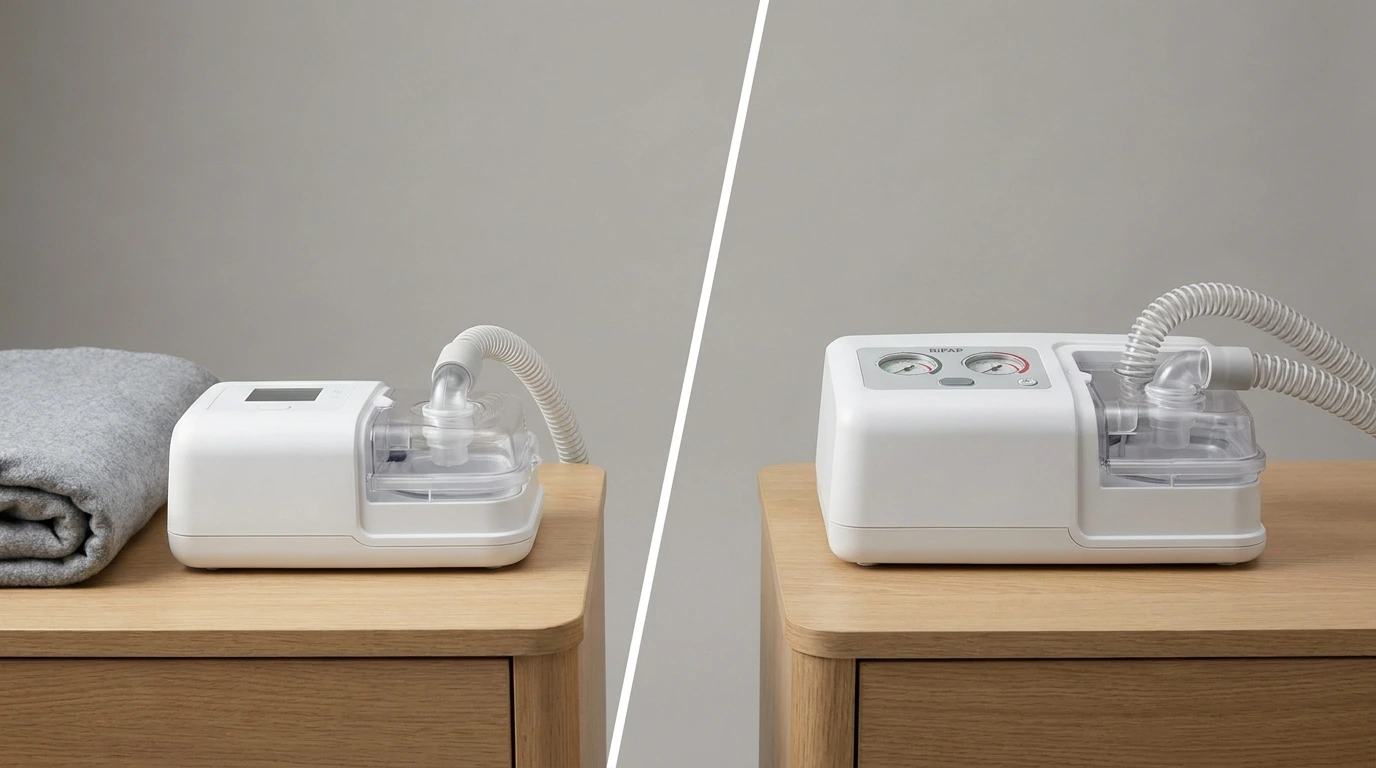
Quick answer: A CPAP machine is a small bedside device that treats obstructive sleep apnea. It blows a steady stream of air through a hose and mask into your airway while you sleep. That constant pressure acts like a splint and keeps the throat from collapsing, so breathing does not stop and your sleep is no longer broken.
If a doctor has told you that you have sleep apnea, the word CPAP usually comes up within minutes. It is the most common and most studied treatment for the condition, yet most people have no idea what the device actually does. This guide explains it in plain language, without the fluff. A CPAP machine is not a cure and it is not magic, but for the right person it can be the difference between exhausted mornings and waking up rested.
What is a CPAP machine?
CPAP stands for Continuous Positive Airway Pressure. The machine is a quiet motor that draws in room air, filters it, and pushes it out at a set pressure through a flexible hose and a mask that you wear over your nose or nose and mouth. The pressure is gentle but constant. Most CPAP machines are about the size of a small lunchbox and sit on a side table next to your bed. They do not add oxygen and they are not ventilators. They simply deliver ordinary air at a pressure high enough to hold your airway open all night.
How a CPAP machine works
To understand why it helps, you have to understand the problem. In obstructive sleep apnea, the soft tissues at the back of the throat relax during sleep and collapse inward. The airway narrows or closes completely, breathing pauses, oxygen drops, and the brain briefly wakes you to restart breathing. This can happen dozens or even hundreds of times a night, which is why people with sleep apnea feel tired no matter how long they stayed in bed.
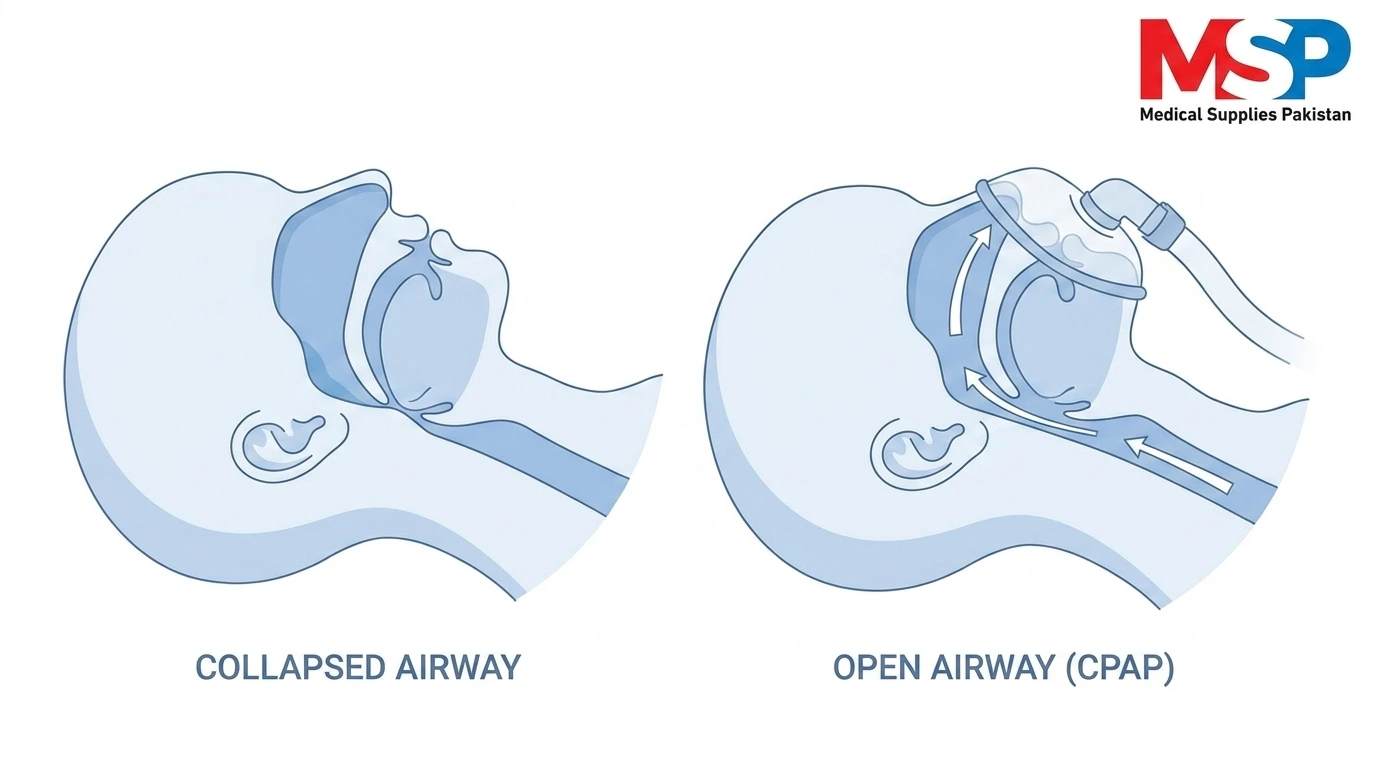
The CPAP machine fixes this mechanically. The steady air pressure works like an invisible splint inside the throat. It holds the soft tissue open so the airway cannot collapse. Breathing stays smooth, oxygen levels stay stable, and the constant night time awakenings stop. You are not aware of the pressure once you are used to it. You simply sleep through the night the way you are supposed to.
The main parts of a CPAP machine
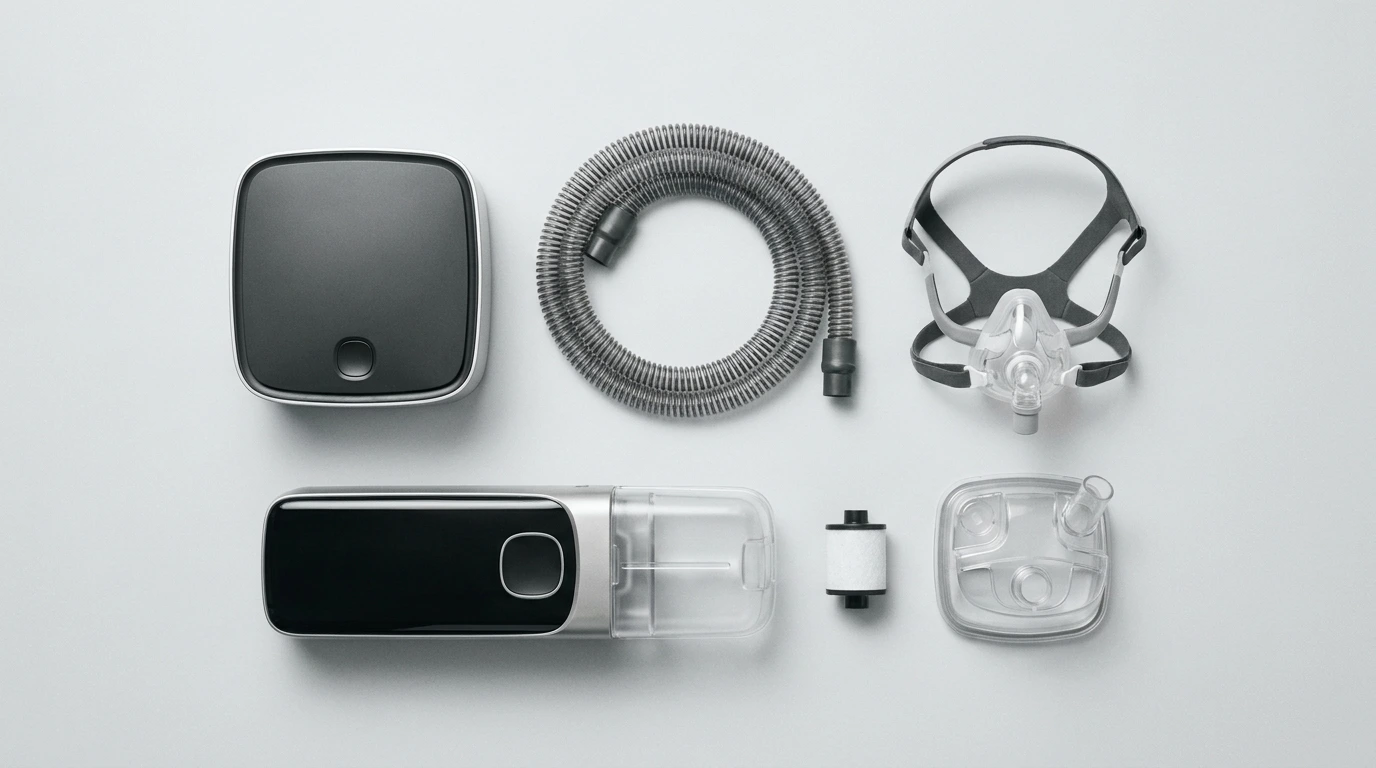
A complete CPAP setup has a few simple parts, and each one matters for comfort and results.
- The motor unit. The bedside box that draws in air and sets the pressure.
- The hose. A flexible tube that carries the air from the motor to your mask.
- The mask. The part you wear. A good CPAP mask can be a small nasal cushion, nasal pillows, or a full face mask that covers nose and mouth. Fit matters more than anything else.
- The humidifier. A small water chamber that warms and moistens the air so your nose and throat do not dry out.
- Filters. Cheap, replaceable pieces that keep dust out of the air you breathe.
Who needs a CPAP machine?
CPAP is the first line treatment for moderate to severe obstructive sleep apnea, and it is often used for mild cases too when symptoms are bad. A doctor decides this after a sleep study, which measures how many times your breathing pauses each hour. You should never buy a machine and set your own pressure based on guesswork. The pressure has to match your body, which is why a proper diagnosis comes first. If you are exploring the wider respiratory care equipment available, CPAP sits alongside oxygen and bilevel devices, but each one treats a different problem and is not interchangeable.
The real benefits of using CPAP
When it is used consistently, CPAP does more than stop snoring. Good quality sleep returns, so daytime sleepiness fades and concentration improves. Because oxygen levels stay steady through the night, the strain that untreated apnea puts on the heart and blood pressure is reduced. Many people report that morning headaches disappear and that their mood lifts within a few weeks. Partners usually sleep better too, because the loud snoring and the frightening pauses in breathing stop.
Here is the honest part. The benefits only come if you actually wear it. CPAP works every night you use it and does nothing on the nights it sits in the cupboard. The biggest reason CPAP fails is not the machine, it is that people give up in the first few weeks before they get used to it.
Possible side effects and how to handle them
CPAP is safe, but the early days can be awkward and nobody should pretend otherwise. The common complaints are a dry nose or mouth, a stuffy feeling, marks from the mask, air leaks, and a bloated stomach from swallowing air. Most of these are fixable. A humidifier solves dryness. A better fitting mask solves leaks and pressure marks. A gentler ramp setting, which starts the pressure low and builds it up as you fall asleep, makes the first hour easier. If a problem does not settle within a couple of weeks, that is a signal to go back to your provider and adjust the setup, not to abandon the therapy.
How to choose and set up a CPAP machine
Start with the diagnosis and the prescribed pressure, then choose a machine and mask around that. Auto adjusting models, sometimes called APAP, change the pressure through the night within a range your doctor sets, which suits people whose needs vary. A fixed pressure CPAP is simpler and often cheaper. Whatever you choose, spend the most effort on mask fit, because the most advanced auto CPAP model in the world will fail if the mask leaks or hurts. Clean the mask and hose regularly, change filters on schedule, and refill the humidifier with clean water. Treat it as a nightly habit and it quietly does its job for years.
Medical disclaimer: This article is for general information only and is not a substitute for professional medical advice. Sleep apnea and its treatment must be assessed by a qualified doctor. Do not start, stop or change any therapy without talking to your physician.
Frequently Asked Questions
Is a CPAP machine the same as oxygen?
No. A CPAP machine delivers ordinary room air at pressure to keep the airway open. It does not add extra oxygen the way an oxygen concentrator does.
Can I use a CPAP machine without a sleep study?
You should not. The pressure must be set to your needs, which is decided after a sleep study. Using the wrong pressure can be ineffective or uncomfortable.
How many hours a night should I use CPAP?
Aim for the whole night, every night. Most guidelines suggest at least four hours a night to see benefit, but more is better.
Is CPAP noisy?
Modern machines are very quiet, often quieter than a fan. Loud noise usually means a mask leak or a part that needs cleaning.
Do I have to use CPAP forever? Often yes, because it manages the condition rather than curing it. If the cause improves, for example with significant weight loss, a doctor may reassess your need.
