- Your cart is empty
- Continue Shopping


Manual vs Electric Breast Pump: Which Is Better?
Quick Answer
Neither is better for everyone; each is better for a different mother. A manual breast pump is better if you will express occasionally, once a day or less, to relieve fullness, build a small backup supply or leave a feed while you go out, and it is the more sensible choice where electricity is unreliable and budgets are tight. An electric breast pump is better if you will express several times a day, if you are returning to work, if your baby is premature or in hospital and cannot feed directly, or if you need to build or protect your milk supply, because it empties the breast faster, more completely and with far less effort. A double electric pump halves the time again. Whatever you choose, the flange size, correct fitting, and the way milk is stored afterwards affect the result far more than the brand.
The question comes up in almost every conversation with a new mother in Pakistan who is thinking about expressing, and the answer she usually gets is a price. Manual pumps cost a fraction of electric ones, so the family buys the manual, and it is the right buy for many mothers and the wrong buy for others, who abandon it within a fortnight because expressing 20 minutes a side by hand, six times a day, while a newborn cries, is not sustainable. The other mistake runs the opposite way: an expensive double electric pump bought for a mother who expresses once a week and would have been better served by a simple manual and the money spent elsewhere.
The honest comparison depends on how often you will pump, why, where, and for how long. This guide explains how each type works, sets the two side by side on the points that actually matter, matches each to the situations it suits, gives the actual prices of the breast pumps on our store, and covers three things that decide whether any pump succeeds: the flange fit, cleaning, and how expressed milk is stored in a Pakistani kitchen through summer and load-shedding.
How Each Type Works
| Feature | Manual breast pump | Electric breast pump |
| Power | Your hand squeezes a lever or handle to create suction | A motor creates suction; mains adapter, batteries or rechargeable |
| Suction rhythm | Set by you; naturally irregular | Fixed cycles; most have a fast “let-down” phase then slower “expression” phase |
| Suction strength | Adjustable by how hard you squeeze; harder to keep constant | Adjustable in numbered levels; constant once set |
| Sides at a time | One | Single pumps one; double pumps both simultaneously |
| Time per session | 20 to 30 minutes per breast | 15 to 20 minutes single; 10 to 15 minutes double for both |
| Effort | Significant; hand and forearm tire | Minimal; hands free with a pumping bra |
| Noise | Silent | Quiet hum to noticeable whir depending on model |
| Portability | Very small, light, no power needed | Bulkier; needs charging or power; rechargeable models travel well |
| Parts to wash | 4 to 6 | 6 to 10, plus tubing on some models |
| Durability | Few moving parts; valves and membranes wear | Personal-use motors are rated for a limited number of hours, often around a year of regular use; check the warranty; valves, membranes and tubing replaceable |
| Price on our store (September 2026) | Rs 2,000 to 3,000 | Rs 5,500 for a basic single electric; Rs 18,500 to 25,000 for hospital-grade Bistos (Korea) units |
The two-phase rhythm of a good electric pump is the feature that makes the biggest difference and the one most mothers do not know to look for. A baby at the breast sucks quickly and lightly for the first minute or two to trigger the let-down, then switches to slow, deep sucks once milk flows. An electric pump that imitates this, fast and shallow then slow and deep, releases milk faster and more completely than one with a single fixed cycle, and it is the reason a decent electric pump often collects more milk in ten minutes than a manual does in twenty-five, not because the suction is stronger but because it is timed better.
Which One Suits Which Mother
| Situation | Better choice | Why |
| Occasional expressing, a few times a week or less | Manual | Cheap, quick to set up, easy to clean, nothing to charge |
| Relieving engorgement or a blocked duct | Manual | Gentle, controlled, used for a few minutes at a time |
| Leaving one bottle for an evening out | Manual or single electric | One session; either works |
| Returning to work, expressing 2 to 4 times in the working day | Double electric, rechargeable | Halves the time per session; consistency protects supply |
| Baby premature or in the nursery, unable to breastfeed yet | Hospital-grade or good double electric | Needs 8 or more sessions a day to establish supply; manual is not realistic |
| Twins | Double electric | Volume and time |
| Low milk supply, trying to increase it | Double electric with two-phase cycling | More frequent, more complete emptying signals the body to make more |
| Exclusive pumping (baby fed only expressed milk) | Double electric, ideally hospital-grade rented or bought | 6 to 8 sessions a day for months; a manual is physically impossible to sustain |
| Frequent load-shedding, no generator or UPS | Manual, or rechargeable electric with a battery | A mains-only pump is useless during a two-hour outage at feeding time |
| Travel, weddings, village visits | Manual as a backup even if you own an electric | No power, no noise, fits in a handbag |
| Very tight budget | Manual, spending the saving on a correct-size flange | A well-fitted manual outperforms a badly-fitted electric |
Many mothers who pump regularly end up owning both: an electric for the daily routine and a manual in the bag for the car, the office when the adapter is forgotten, or the load-shedding hour. That is not an extravagance; the manual costs less than a few months of formula, and the mother who has a working pump within reach when she needs it is the one who keeps breastfeeding longest.
Cost in Pakistan and What Drives It
On our own store at the time of writing, manual breast pumps are priced at Rs 2,000 and Rs 3,000, a basic digital single electric pump at Rs 5,500, and the hospital-grade Bistos BT-150 and BT-100S electric pumps from Korea at Rs 18,500 and Rs 25,000. That spread is typical of the Pakistani market as a whole: a manual costs roughly what a family spends on nappies in a fortnight, a basic electric two to three times that, and a hospital-grade or branded double electric several times more again. The better manuals, with a soft silicone cushion around the flange and a two-position handle, are worth the small premium because the cushion is what makes them comfortable. Unbranded pumps at the bottom of the electric range are the least good value in the whole category: motors fail early, suction is often either weak or painfully strong with nothing in between, replacement valves and membranes are unobtainable, and the flange usually comes in one size. If the budget only stretches to an unbranded electric, a branded manual is the better buy.
Running costs are small but real. Valves and membranes on both types stretch and lose suction after a few months of daily use and should be replaced; a pump that “has become weak” almost always needs a new valve, not a new pump. Rechargeable batteries lose capacity after a year or two. Bottles, storage bags and, for working mothers, a small insulated bag and ice packs are part of the real cost of pumping and should be counted when comparing options.
Getting the Flange Size Right
The flange, or breast shield, is the funnel that sits over the nipple, and it comes in sizes measured by the diameter of the tunnel in millimetres. Most pumps ship with a 24 mm flange, sometimes a 27 or 28 mm as well, but flanges and silicone inserts are made from about 13 mm to 40 mm, and most mothers assume the size in the box is the size. It is not; nipple size varies widely, and the wrong flange is the single biggest cause of pain, low output and the belief that “pumping does not work for me.” Measure the diameter of the nipple itself, not the areola, at its base in millimetres, before a feed or pumping session when it is in its normal resting state, and add a small margin; manufacturers and lactation consultants variously advise adding 1 to 4 mm, and many lactation consultants now lean toward the smaller end of that range. During pumping the nipple should move freely in the tunnel without rubbing the sides, and little or no areola should be pulled in. If the nipple rubs, blanches white or is sore afterwards, the flange is too small; if a large area of areola is drawn into the tunnel, it is too large. Many mothers need a different size on each side. A flange that fits turns a mediocre pump into an effective one, and no amount of suction compensates for one that does not.
For a first session, wash your hands, sit somewhere comfortable and private, and warm the breast with a cloth or a few minutes of gentle massage. Centre the nipple in the flange, start on the lowest suction and increase only to the strongest level that is still comfortable; pumping should never hurt, and pain reduces output. Expect a small volume, sometimes only a few millilitres, at the first few sessions; the body learns to respond to the pump over a week or two, and looking at a photo or video of the baby, or pumping while the baby feeds on the other side, genuinely helps let-down. Fifteen to twenty minutes, or two minutes after the flow stops, is enough; longer sessions do not yield more and cause soreness.
Cleaning Both Types
Every part that touches milk, the flange, connector, valve, membrane and bottle, must be taken apart and washed after every session in hot water with dish soap, using a dedicated brush and basin rather than the family sink and sponge, then rinsed and left to air dry on a clean cloth or a drying rack, not wiped with a tea towel. Once a day, sterilise the milk-contact parts by boiling for five minutes, in a steam steriliser, or in a microwave steam bag; for a baby under two months, premature or with a weak immune system, sterilise at least once a day without fail (CDC guidance); for older healthy babies, thorough washing after every session with daily sterilising is the standard. Tubing on an electric pump should never have milk in it; if condensation appears, run the pump for a minute with nothing attached to dry it, and replace any tubing that develops mould. The motor unit is wiped, never washed. Manual pumps are quicker to clean because there are fewer parts and no tubing, which is a real advantage at 3 am, and it is one more reason the manual suits occasional use.
Storing Expressed Milk in a Pakistani Home
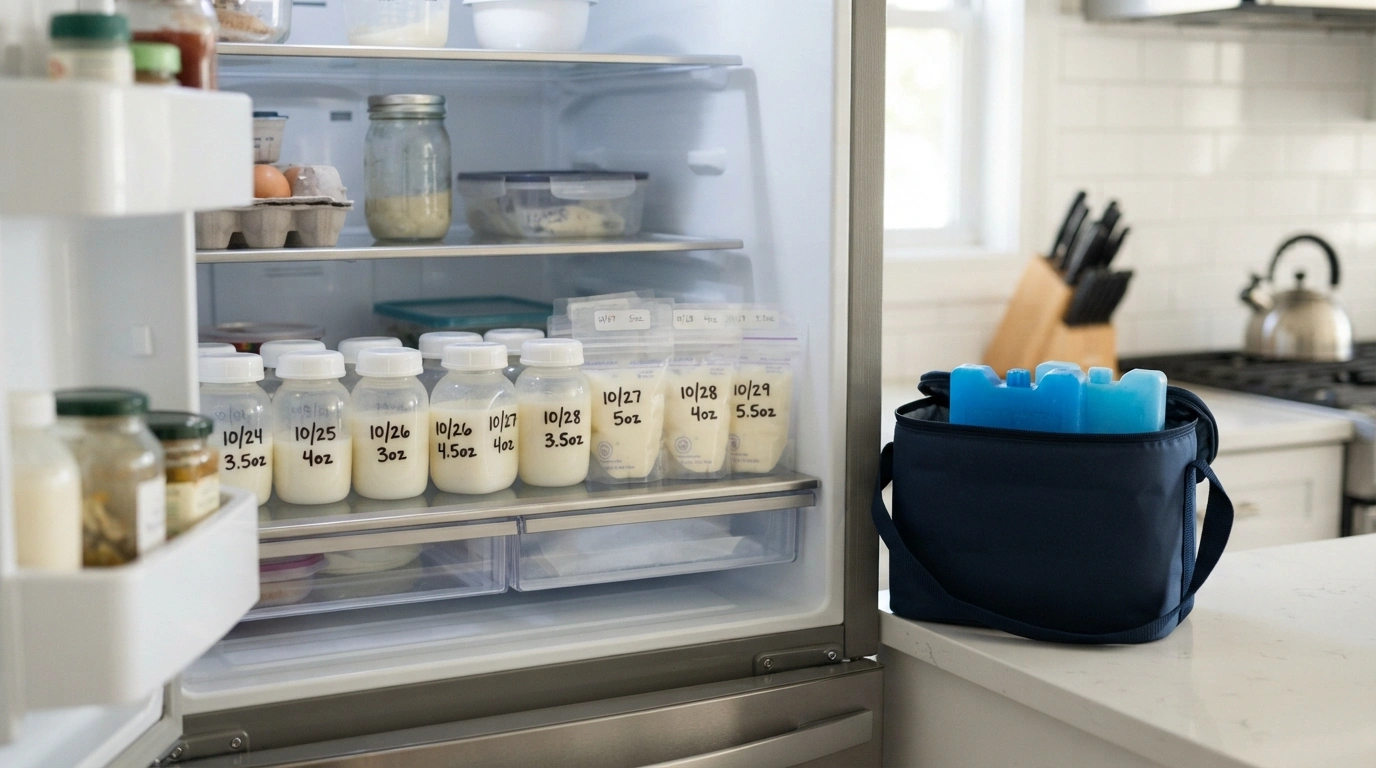
| Where | Fresh milk keeps for | Notes |
| Room temperature up to 25°C | Up to 4 hours | Pakistani rooms exceed 25°C for much of the year; in a hot room, treat 2 hours as the limit |
| Insulated bag with ice packs | Up to 24 hours | Keep packs touching the bottles; useful for the commute |
| Refrigerator, 4°C, back shelf | Up to 4 days | Not in the door; door temperature swings with every opening |
| Refrigerator during long load-shedding | Reduce to the same day | A fridge off for 2 to 3 hours in summer rises above 8°C; do not open it during the outage |
| Freezer compartment inside a fridge (no separate door) | About 2 weeks (older WIC guidance; CDC does not give a separate figure) | Small compartment, temperature swings every time the fridge opens; use sooner rather than later |
| Separate deep freezer, -18°C | 6 months best; up to 12 months acceptable | Store in 60 to 120 ml portions; label with date; use oldest first |
| Thawed milk, previously frozen | 1 to 2 hours at room temperature; 24 hours in the fridge, counted from when it is fully thawed | Never refreeze |
| Leftover in the bottle after a feed | Use within 2 hours of the feed ending, then discard | Bacteria from the baby’s mouth are now in the milk |
Cool freshly expressed milk in the fridge before adding it to already chilled milk from the same day, and never add warm milk to frozen. Thaw frozen milk overnight in the fridge or under warm running water, never in a microwave or on the stove, which destroys nutrients and creates hot spots that burn. Swirl rather than shake to mix the separated fat. Milk that smells sour or that a baby refuses should be discarded; a soapy or metallic smell in frozen milk, however, is usually a harmless enzyme effect and the milk is safe. In summer, for a working mother without a reliable office fridge, a good insulated bag with two frozen ice packs is not optional; it is the piece of equipment that decides whether the day’s milk reaches home usable. If you also use a steamer or humidifier for the baby’s room, it can double as a steam steriliser for pump parts on some models; check the manual.
Breast Pumps We Stock
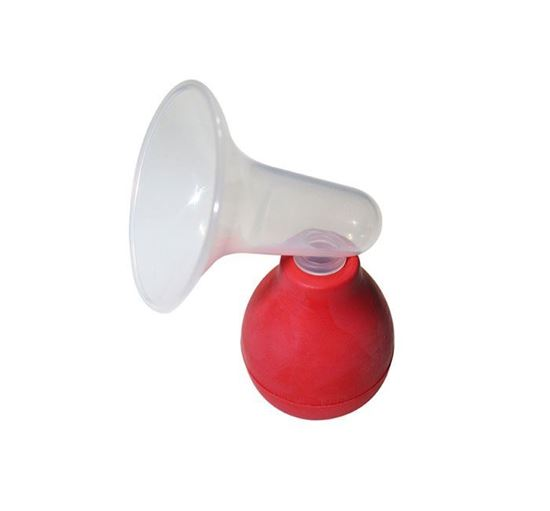
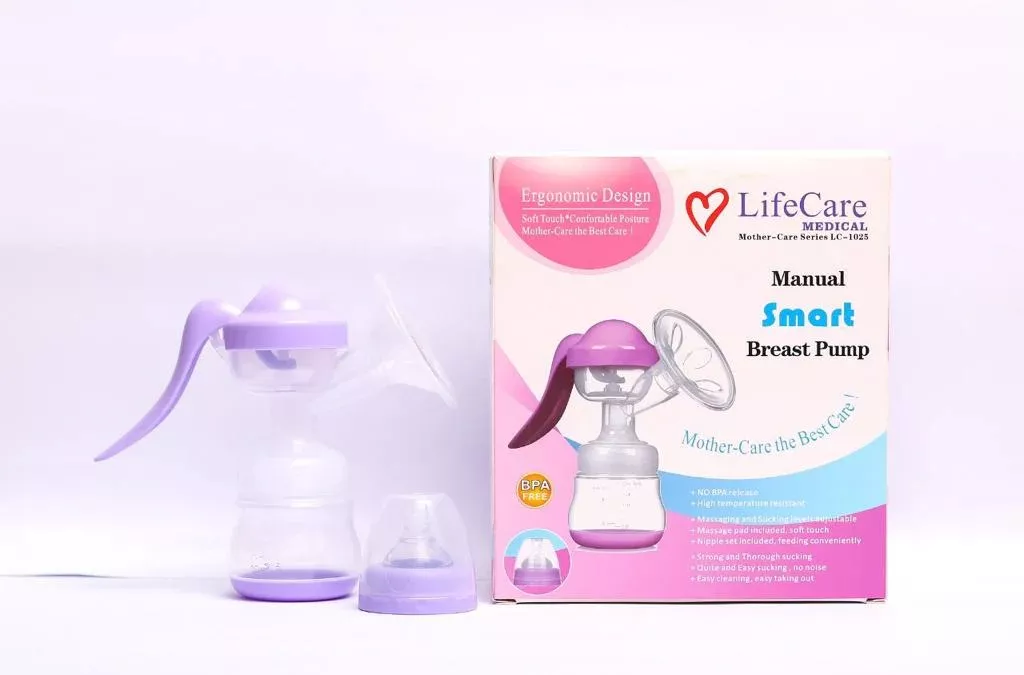
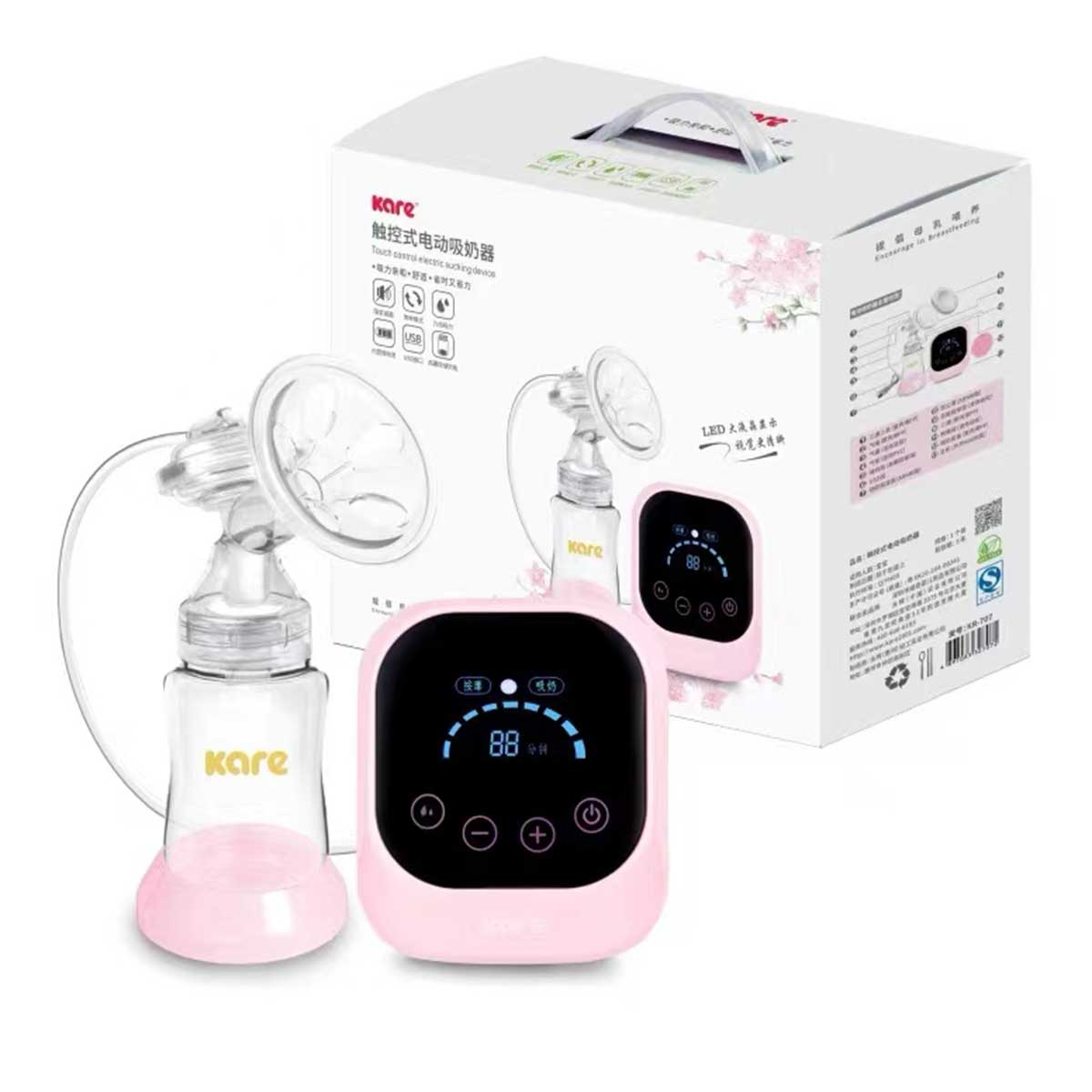
Three manual and three electric pumps, from a Rs 400 spare for the bag to the hospital-grade Bistos units this guide recommends for premature babies and exclusive pumping. Most ship with a 24 mm flange; measure your nipple before ordering.
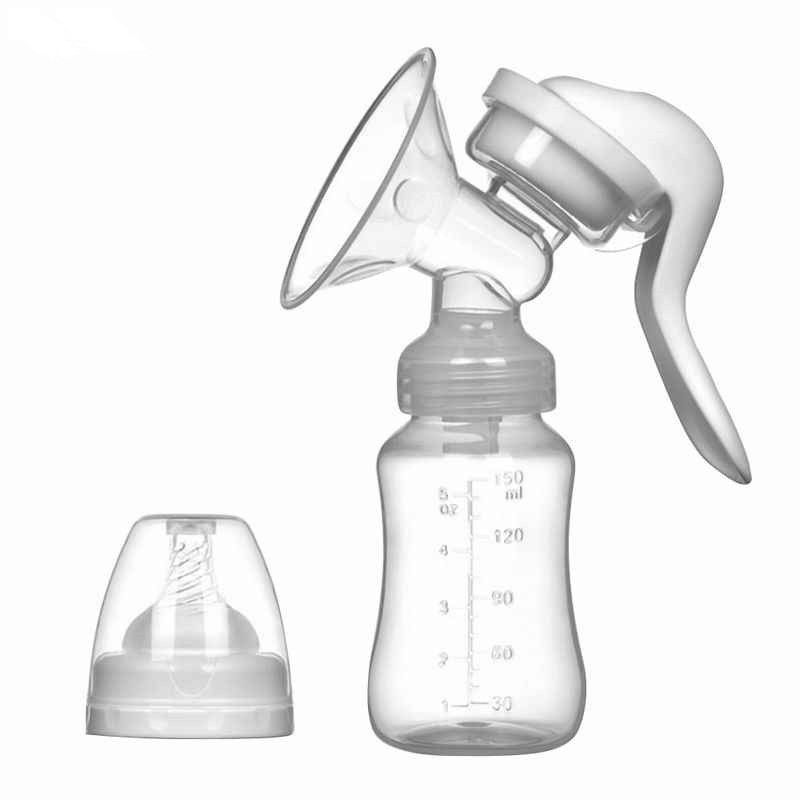


Electric, hospital-grade, Korea
Bistos BT-150 HiBebe Plus Hospital-Grade Electric Breast Pump (Korea)
₨ 25,000
Add to cart
Frequently Asked Questions
Is an electric breast pump better than a manual one?
For frequent pumping, yes: it empties the breast faster and more completely with no effort, and a double electric halves the session time. For occasional use, travel or unreliable electricity, a manual is the better buy. Frequency of use, not budget alone, should decide.
Which breast pump is best for a working mother in Pakistan?
A double electric pump with a rechargeable battery, two-phase cycling and a correctly sized flange, plus a manual pump in the bag as a backup for load-shedding or a forgotten charger. Add an insulated bag with two ice packs for carrying milk home in summer.
Does a manual breast pump get less milk?
Per minute, usually yes, because it is slower and the rhythm is less consistent. Over a full session a well-fitted manual can collect a similar volume to a single electric, but it takes longer and tires the hand. Output depends more on flange fit, relaxation and frequency than on the pump type.
How do I know if my breast pump flange is the right size?
The nipple should move freely in the tunnel without rubbing the sides, little or no areola should be pulled in, and pumping should not hurt. Measure the nipple diameter before a feed or pumping session and add 1 to 4 mm as a starting point. Rubbing, white blanching or soreness means the flange is too small; a lot of areola drawn in means it is too large.
How long can breast milk stay out in Pakistan’s heat?
Up to 4 hours at 25°C or below, but in a room above that, which is most of the year, treat 2 hours as the limit and refrigerate sooner. In the fridge it keeps 4 days at the back shelf; during long load-shedding use it the same day. Thawed milk keeps 24 hours in the fridge and must never be refrozen.
