- Your cart is empty
- Continue Shopping


CGM vs Glucometer: What Is the Difference?
Quick Answer
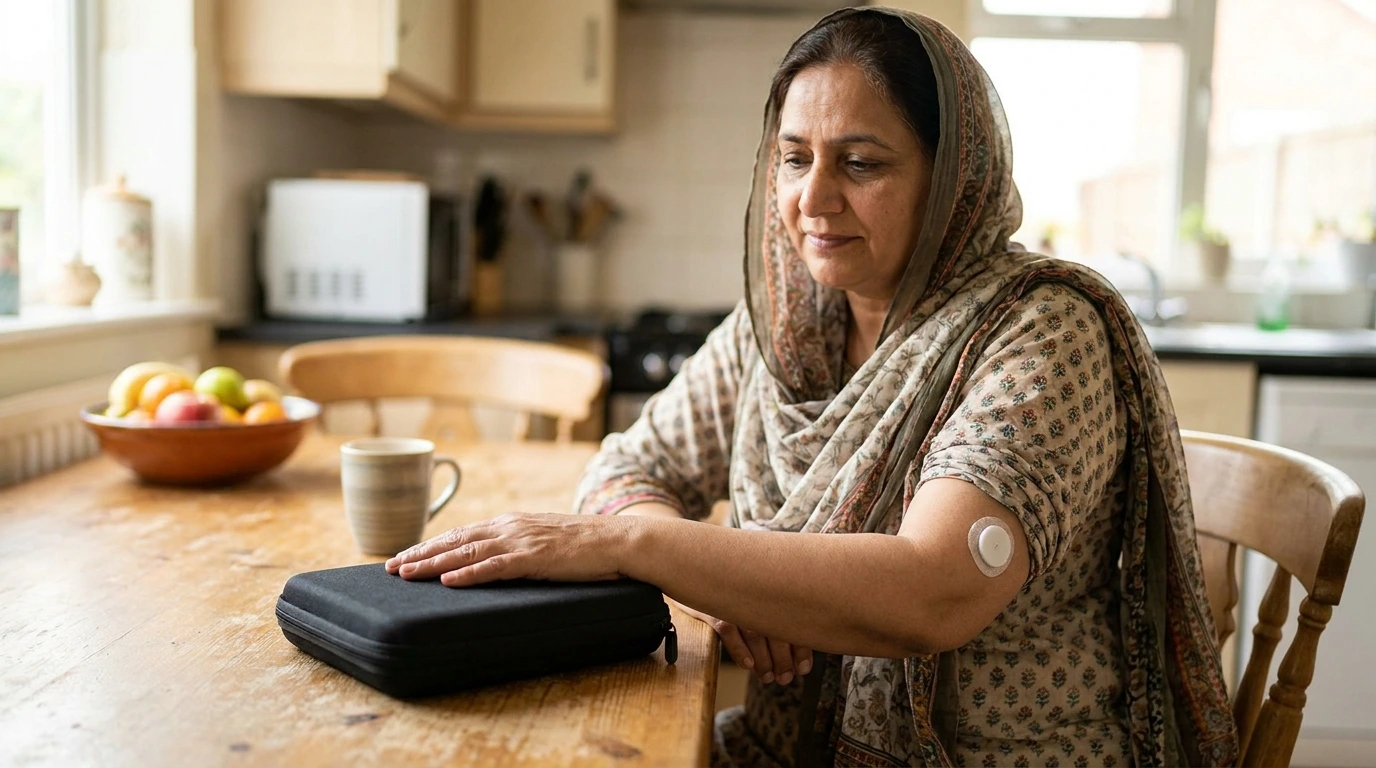
A glucometer measures the glucose in a drop of blood from a finger prick at one moment. A continuous glucose monitor (CGM) is a small sensor worn on the back of the arm for about 14 days that measures glucose in the fluid under the skin every few minutes, showing the trend, the direction and alarms for highs and lows, without routine finger pricks. CGM readings lag blood by 5 to 15 minutes and cost roughly Rs 35,000 to 40,000 a month in Pakistan, against a few thousand rupees for strips. CGM is transformative for people on insulin, especially those with type 1 diabetes or unpredictable lows; for most people with type 2 diabetes on tablets, a good glucometer used properly is enough.
Ten years ago the choice did not exist in Pakistan: sugar was checked by pricking a finger, full stop. Today the small white disc on the back of someone’s arm is a familiar sight in Lahore and Karachi clinics, and the question arrives at every diabetes appointment: is the sensor better than the meter, and should I switch? The honest answer is that they are different instruments answering different questions. A glucometer answers “what is my sugar right now?” A CGM answers “what has my sugar been doing, where is it going, and will it warn me before it goes somewhere dangerous?” For some people the second question is the one that keeps them safe. For many others the first question, asked at the right moments, is all they need.
The distinction matters more in Pakistan than in richer markets because of price. A CGM sensor costs as much as a month of strips does in a year, and a household that stretches to buy sensors it does not medically need has less left for the medicines and consultations that do more for its diabetes. This guide explains how the two devices actually work and why their numbers differ, compares accuracy, cost and practicality honestly, sets out who gains most from each, and shows how the two work together, because even the most devoted CGM user still needs a glucometer in the drawer.
How Each One Measures Sugar
| Glucometer | Continuous glucose monitor (CGM) | |
| What it measures | Glucose in capillary blood from a finger prick | Glucose in interstitial fluid, the fluid between cells under the skin |
| How | A drop of blood on a disposable strip, read by the meter | A hair-thin filament under the skin of the upper arm, read by a sensor and sent to a reader or phone |
| Frequency | One reading each time you test | A reading every 1 to 5 minutes, day and night |
| Output | A single number | Number, trend arrow, 8 to 24 hour graph, alarms for high and low |
| Sensor or strip life | Strip is single use | Sensor lasts about 14 days, then is replaced |
| Lag behind blood | None; it is blood | 5 to 15 minutes; longer when sugar is changing fast |
| Finger pricks | Every reading | None routinely; occasionally to confirm |
The lag is the fact people find hardest to accept. Glucose reaches the blood first and diffuses into the fluid around the cells a few minutes later, so a CGM is always describing the recent past. After a sweet lassi, blood sugar may be climbing steeply while the sensor still shows the calmer number from ten minutes earlier; during a fast-falling low, the blood may already be at 60 while the sensor reads 80. This is not a fault; it is physiology, and it is why every CGM manufacturer tells users to confirm with a finger prick when symptoms do not match the screen or when the arrow shows rapid change.

Accuracy, Honestly Compared
| Aspect | Glucometer | CGM |
| Accuracy standard | ISO 15197: 95 percent of readings within 15 percent of the lab | Reported as MARD; leading sensors around 8 to 10 percent average deviation |
| Best at | The exact number right now, especially when sugar is stable | Direction and pattern; catching night-time lows and post-meal peaks nobody would have tested |
| Weakest at | Showing what happened between tests; a single reading can mislead | Exact number during rapid rise or fall; the first 12 to 24 hours after a new sensor is applied |
| Common user errors | Unwashed hands, squeezed finger, heat-damaged strips | Sensor placed over a scar or muscle, pressed on while sleeping (“compression low”), dehydration |
| Where the two disagree | Expected, by 10 to 20 mg/dL, especially after meals | Expected; not a sign either is broken |
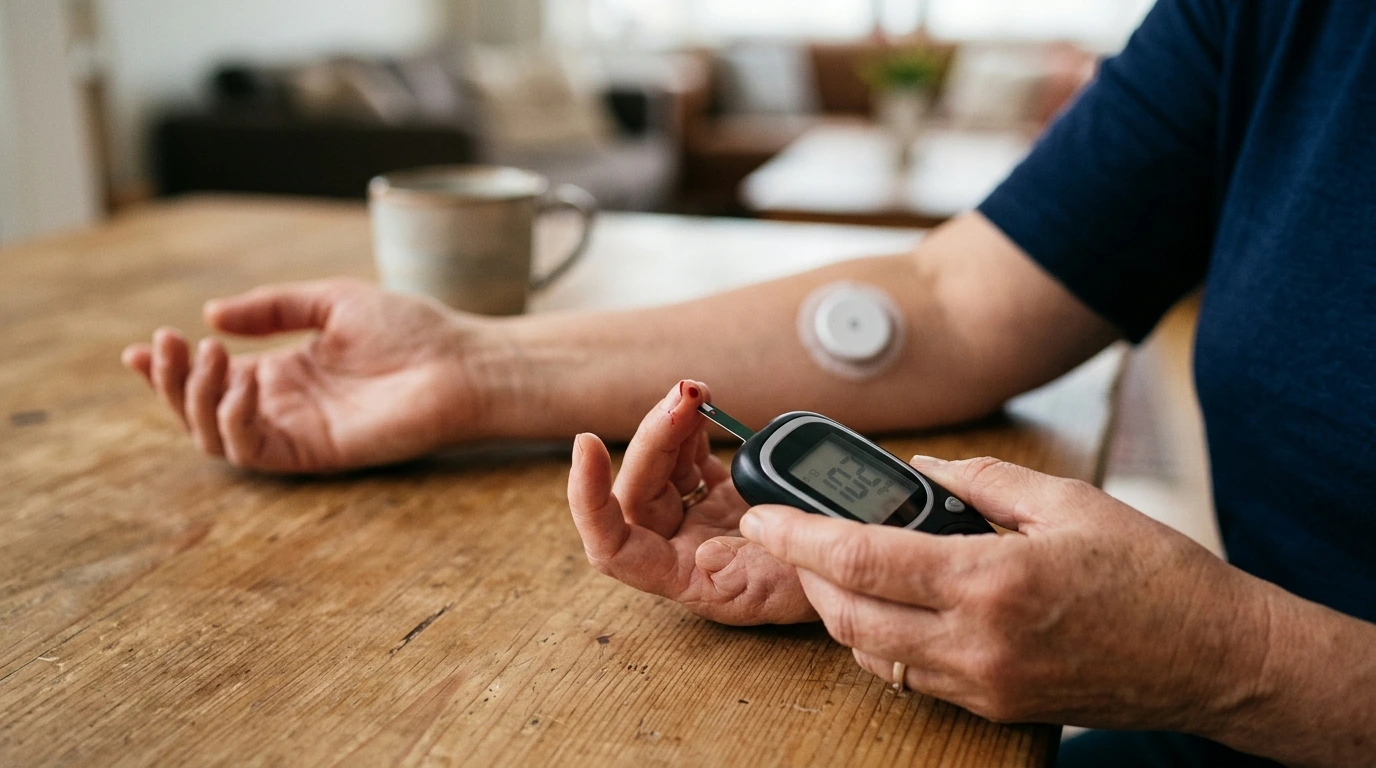
Neither device is a laboratory. A meter that reads 128 and a sensor that reads 142 at the same moment, after breakfast, are both performing within specification; we explained the meter side of that in our guide on why glucometer readings differ each time. The advantage of CGM is not that each number is more accurate than a finger prick; often it is slightly less. The advantage is that there are hundreds of numbers a day, so the shape of the day becomes visible: the 3 am dip nobody tests for, the two-hour peak after biryani that a single 2 hour reading catches only by luck, the slow morning climb that explains a stubborn fasting number. That shape is what changes treatment.
Cost in Pakistan: The Deciding Factor for Most Families
| Item | Typical cost | Monthly running cost |
| Glucometer | Rs 2,500 to 6,000 one-time | |
| Test strips | Roughly Rs 20 to 40 per strip depending on brand | Rs 1,200 to 4,800 for 2 tests a day |
| Lancets | Rs 5 to 10 each | A few hundred rupees |
| CGM sensor (14 days) | Roughly Rs 17,000 to 19,000 each | Rs 35,000 to 40,000 for two sensors |
| CGM reader | Rs 10,000 to 15,000 one-time, or a compatible smartphone |
At roughly ten times the running cost of finger-prick testing, a CGM has to earn its place. For a person whose insulin doses change with every meal, whose lows arrive without warning, or who is pregnant with diabetes, it does: a single avoided severe hypoglycaemia or a well-controlled pregnancy is worth more than the sensors. For a person with type 2 diabetes on tablets whose sugar is stable and whose HbA1c sits near target, the extra information rarely changes a decision, and the money is better spent elsewhere. Some families take a middle path that doctors increasingly suggest: one sensor, worn for 14 days once or twice a year, to see the full pattern and adjust the plan, then back to the meter. Prices move with the rupee and imports, so treat all figures as ranges.
Who Should Use Which
| Situation | Better fit | Why |
| Type 1 diabetes, any age | CGM, with a meter as backup | Multiple daily insulin doses; lows are frequent and dangerous |
| Type 2 on insulin, especially several injections a day | CGM if affordable, otherwise structured meter testing | Dose decisions benefit from trends |
| Type 2 on tablets, stable, HbA1c near target | Glucometer | A few well-timed tests a week give all the needed information |
| Newly diagnosed type 2, learning which foods spike sugar | Either; a temporary 14 day CGM teaches fastest | Seeing the peak after each food changes habits quickly |
| Hypoglycaemia unawareness (lows without symptoms) | CGM | Alarms replace the warning the body no longer gives |
| Pregnancy with diabetes | CGM strongly favoured | Tight targets, frequent checks, fast-changing needs |
| Elderly patient managed by family | Glucometer, or CGM if phone alarms can reach the caregiver | Depends on who is watching the data |
| Prediabetes or curiosity | Glucometer | CGM adds cost without changing management |
The pattern in the table is simple: the more often a decision about insulin depends on where sugar is heading in the next hour, the more a CGM earns its cost. The fewer such decisions a person makes, the more a meter, used at consistent times and logged honestly, does the job. Our normal blood sugar chart by age gives the targets those readings should be compared against, whichever device produces them.
Using Both: The Practical Reality
A CGM does not retire the glucometer. Manufacturers and diabetes guidelines are consistent: confirm with a finger prick when symptoms do not match the sensor, when the arrow shows a rapid rise or fall, before treating a suspected low if there is any doubt, during the first day of a new sensor while it settles, and whenever the sensor shows an error or reads implausibly. A CGM user therefore still needs a meter, strips that are in date and stored properly, and the habit of washing hands before pricking. In practice this means keeping a small, reliable glucometer kit alongside the sensor, checking it against the sensor once or twice a week when sugar is stable so that both are trusted, and logging the pattern the sensor reveals rather than reacting to every wobble on the graph. The person who gets the most from a CGM is the one who looks at the daily graph for its shape and shows that shape to their doctor; the person who gets the least is the one who checks the number every ten minutes and adjusts everything by it. The goal of either device is the same as it always was: a steadier line, fewer surprises, and a decision made on evidence rather than guesswork.
Frequently Asked Questions
What is the difference between a CGM and a glucometer?
A glucometer tests a drop of blood from a finger prick and gives one number at that moment. A CGM is a sensor worn on the arm for about 14 days that measures glucose in the fluid under the skin every few minutes, showing trends, graphs and alarms without routine finger pricks. CGM readings lag blood by 5 to 15 minutes.
Is a CGM more accurate than a glucometer?
Not for the exact number at one moment; a good glucometer is at least as accurate, and often slightly more. A CGM is far better at showing the pattern: night-time lows, meal peaks and the direction sugar is moving. Both are within their accuracy standards when they differ by 10 to 20 mg/dL.
How much does a CGM cost in Pakistan?
A 14 day sensor is roughly Rs 17,000 to 19,000, so about Rs 35,000 to 40,000 a month, plus a reader of around Rs 10,000 to 15,000 or a compatible smartphone. Finger-prick testing twice daily costs roughly Rs 1,200 to 4,800 a month in strips. Prices change with imports.
Do I still need finger pricks if I use a CGM?
Yes, occasionally: when symptoms do not match the sensor, when sugar is rising or falling fast, before treating a low if unsure, during the first day of a new sensor, and when the sensor errors. Keep a glucometer and in-date strips available at all times.
Is a CGM worth it for type 2 diabetes?
For people with type 2 diabetes on insulin, especially several injections a day, often yes. For those on tablets with stable sugar, a glucometer used at consistent times is usually enough, and a single 14 day sensor once or twice a year can reveal the pattern without the ongoing cost.
