- Your cart is empty
- Continue Shopping


What Is an Air Mattress and How Does It Prevent Bed Sores?
Quick Answer
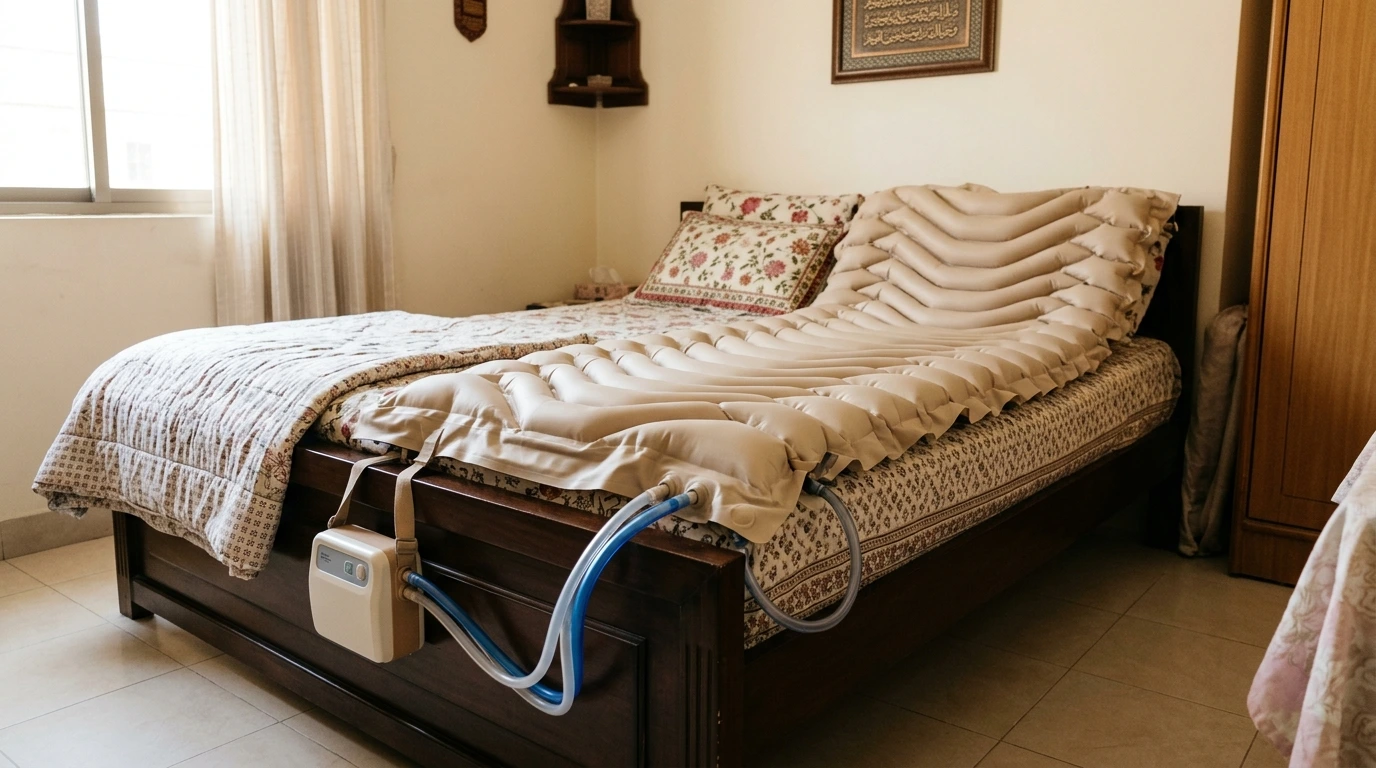
A medical air mattress, also called a ripple or alternating pressure mattress, is a plastic mattress of air cells connected to a small electric pump that inflates and deflates the cells in alternating cycles, usually every 10 to 12 minutes. This constantly shifts the patient’s weight so no area of skin stays under pressure long enough for blood flow to be cut off, which is exactly how bed sores begin. In Pakistan a home unit costs roughly Rs 6,500 to 15,000. It sharply reduces bed sore risk, but it does not replace turning the patient every 2 hours, dry bedding and good nutrition.
Bed sores are one of the cruelest problems in home care because they are easier to prevent than almost any other complication, yet once formed they can take months to heal. The mechanism is pure physics. When a person lies still, their body weight presses the skin between bone and bed at points like the tailbone, hips, heels, shoulder blades and the back of the head. Sustained pressure squeezes the tiny blood vessels shut, and skin that receives no blood begins to die in as little as 2 to 4 hours. That is the entire disease. It is not caused by dirt or bad luck; it is caused by unrelieved pressure on the same patch of skin, hour after hour.
An alternating pressure air mattress attacks that mechanism directly. Its rows of air cells take turns holding the body: one set inflates while the neighbouring set deflates, then the pump swaps them, over and over, all day and all night. The pressure point keeps moving even when the patient cannot. For a family caring for a stroke patient, an elderly parent with a fracture, or anyone spending weeks in bed, it is one of the highest-value purchases in home care, which is why it sits alongside the essentials in our home care products range. But it is a tool, not a miracle, and this guide is honest about both halves: what the mattress genuinely does, and the care tasks it absolutely does not replace.
How an Alternating Pressure Mattress Works
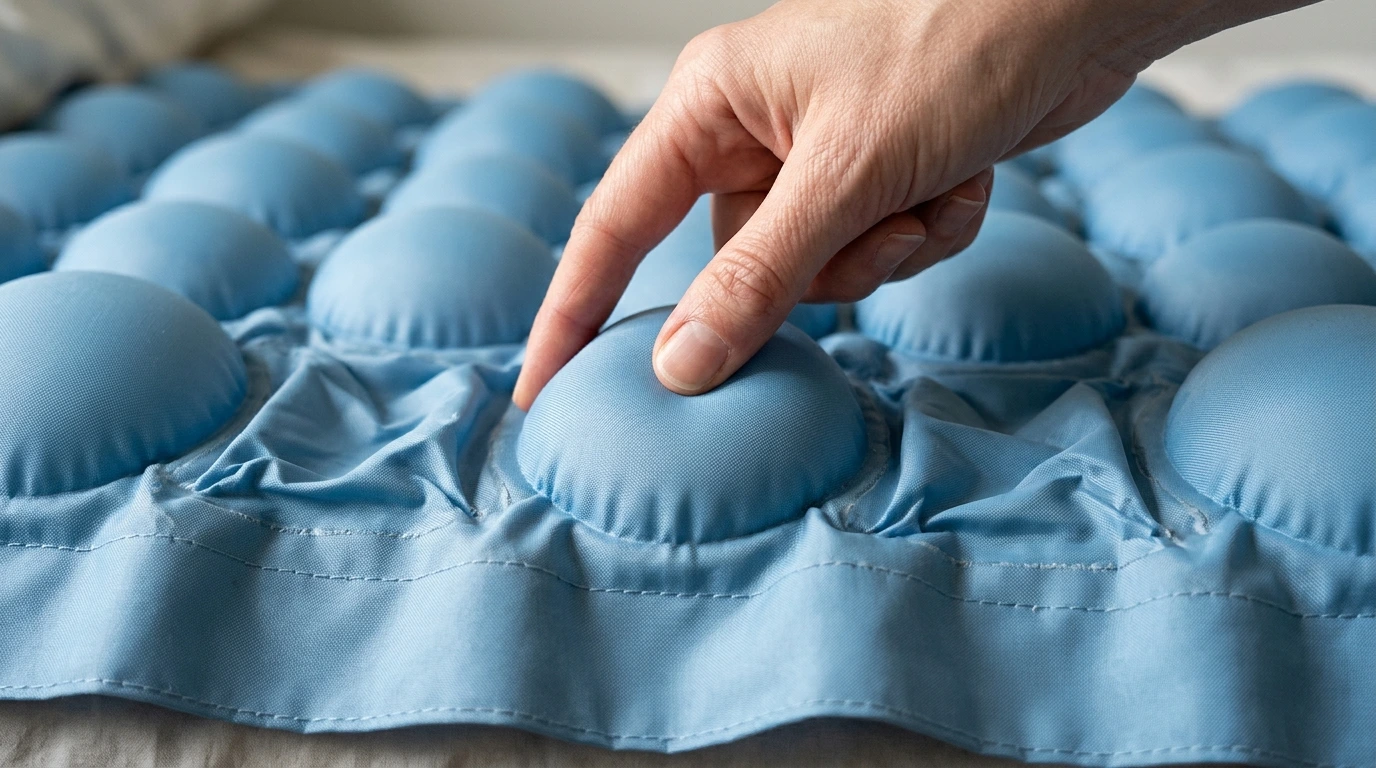
| Part | What it does |
| Air cells or bubbles | Rows of chambers that take turns supporting the body |
| Electric pump | Inflates alternate cells on a cycle of roughly 10 to 12 minutes |
| Pressure knob | Adjusts firmness to the patient’s weight and comfort |
| Alternating cycle | Shifts weight-bearing points continuously so no spot is compressed for long |
| End flaps or straps | Anchor the mattress on top of the existing bed mattress |
The mattress lies on top of the normal bed mattress with a single bedsheet over it, never thick folded blankets, which would concentrate pressure and defeat the alternating effect.
Bubble vs Tubular: Which Type for Which Patient
| Type | Best for | Honest note |
| Bubble type (small egg-like cells) | Prevention, lighter patients, shorter bed rest | Cheapest and most common in Pakistan, roughly Rs 6,500 to 9,000; capacity usually up to about 110 to 135 kg |
| Tubular type (long horizontal tubes) | Heavier patients, existing early sores, long-term bedridden care | Deeper pressure relief, roughly Rs 12,000 and up |
| Foam or gel overlay (no pump) | Patients who move themselves somewhat | Reduces pressure but does not alternate; not equal protection for a fully immobile patient |
For a patient already showing a stage 2 or deeper sore (broken skin, open wound), the mattress supports healing but the wound itself needs a doctor’s or wound-care nurse’s plan; no mattress heals an established deep sore on its own.
What the Mattress Does Not Replace
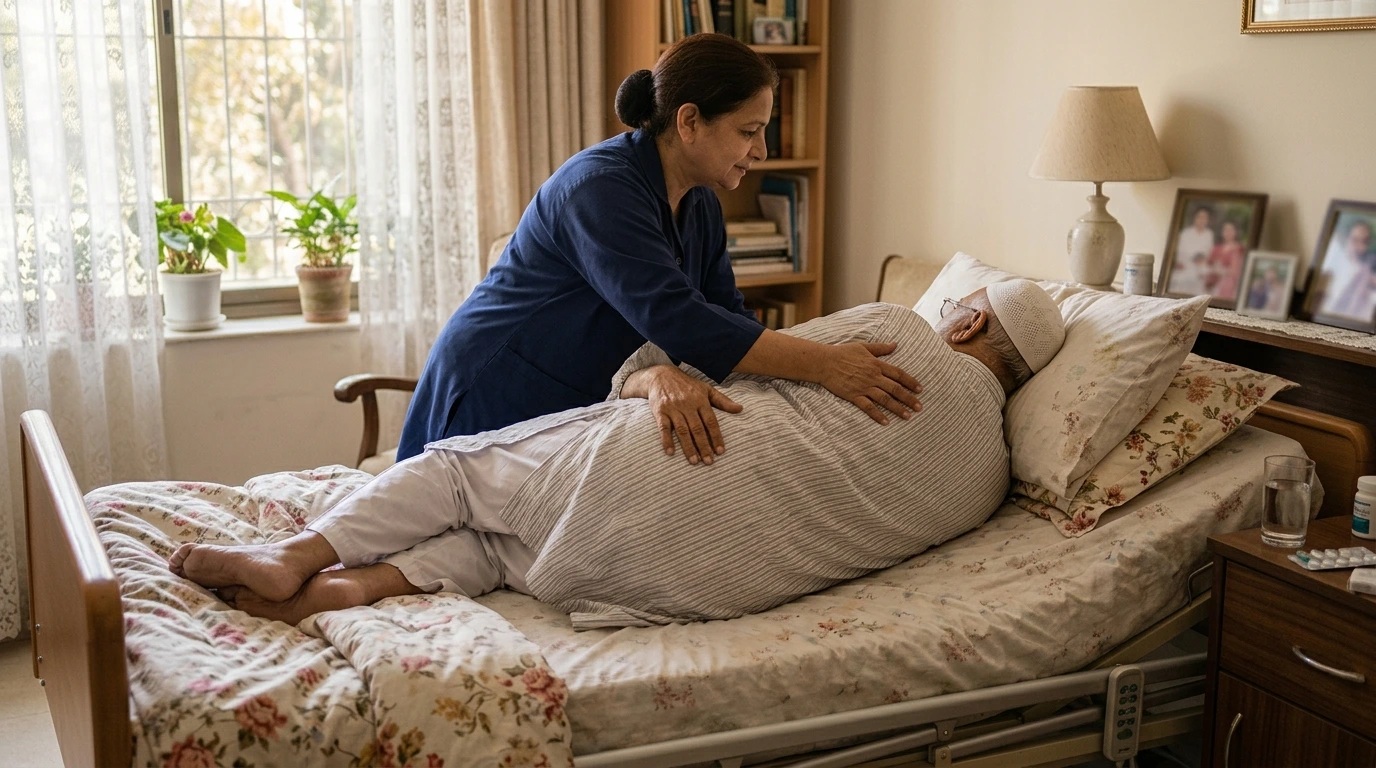
This is the section that protects your patient. The mattress removes prolonged pressure, but bed sores have four causes and pressure is only the biggest one. Moisture from sweat or urine softens skin until it breaks, so bedding must stay dry and the patient clean. Friction and shearing, the dragging of skin against sheets when a patient slides down the bed or is pulled up carelessly, tears skin from the inside; lift, do not drag. Poor nutrition, especially low protein, means skin has no raw material to repair itself. And repositioning remains non-negotiable: turn the patient roughly every 2 hours while awake, even on an air mattress, because heels, the back of the head and skin folds still need relief and inspection. The daily skin check, running eyes and fingertips over every bony point looking for redness that does not fade within a few minutes of pressure being removed, catches a forming sore days before it opens.
Setup, Power Cuts and Everyday Care
Inflate the mattress fully before the patient lies on it, then adjust the pressure knob so that when you slide a flat hand under the patient’s hip area between the deflated cells, there is roughly a hand’s thickness of clearance; too soft lets the body sink to the base, too hard defeats the purpose. The pump runs continuously and draws very little power, but load shedding matters: most home units slowly deflate over hours without power, so during long outages check the mattress firmness and fall back to strict 2-hourly turning until power returns. If a UPS runs fans in the room, the pump’s small load can usually join it. Keep the surface clean with a damp cloth and mild soap, check tubing for kinks, and if one section stops inflating, inspect the tube connections before assuming a puncture. Choosing a unit with an accessible pump, a pressure knob and end flaps that anchor properly saves daily friction, and the options in our bedsore air mattress category list capacity and cycle details for exactly that comparison.
Frequently Asked Questions
How does an air mattress prevent bed sores?
Its air cells inflate and deflate in alternating cycles, moving the body’s pressure points every few minutes. No patch of skin stays compressed long enough for blood flow to be cut off, which is the process that creates a bed sore.
Do I still need to turn the patient if we use an air mattress?
Yes. The mattress greatly reduces risk, but heels, the head and skin folds still need relief, moisture still needs managing, and skin still needs daily inspection. Repositioning roughly every 2 hours remains standard even on an alternating mattress.
What is the price of a bed sore air mattress in Pakistan?
Bubble-type home units generally cost around Rs 6,500 to 9,000, and heavier-duty tubular models roughly Rs 12,000 and above. Prices move with imports, so treat these as ranges.
Can an air mattress heal an existing bed sore?
It supports healing by removing pressure from the wound area, and early redness (stage 1) can recover on it. But an open sore needs a proper wound-care plan from a doctor or nurse; the mattress is one part of treatment, not the treatment.
What happens during load shedding if the pump stops? Most units deflate slowly over several hours. During long outages, check firmness and return to strict 2-hourly repositioning until power is back. A small UPS can run the pump if outages are long and frequent in your area.
