- Your cart is empty
- Continue Shopping


Why Is My Pulse Oximeter Not Showing a Reading?
Quick Answer
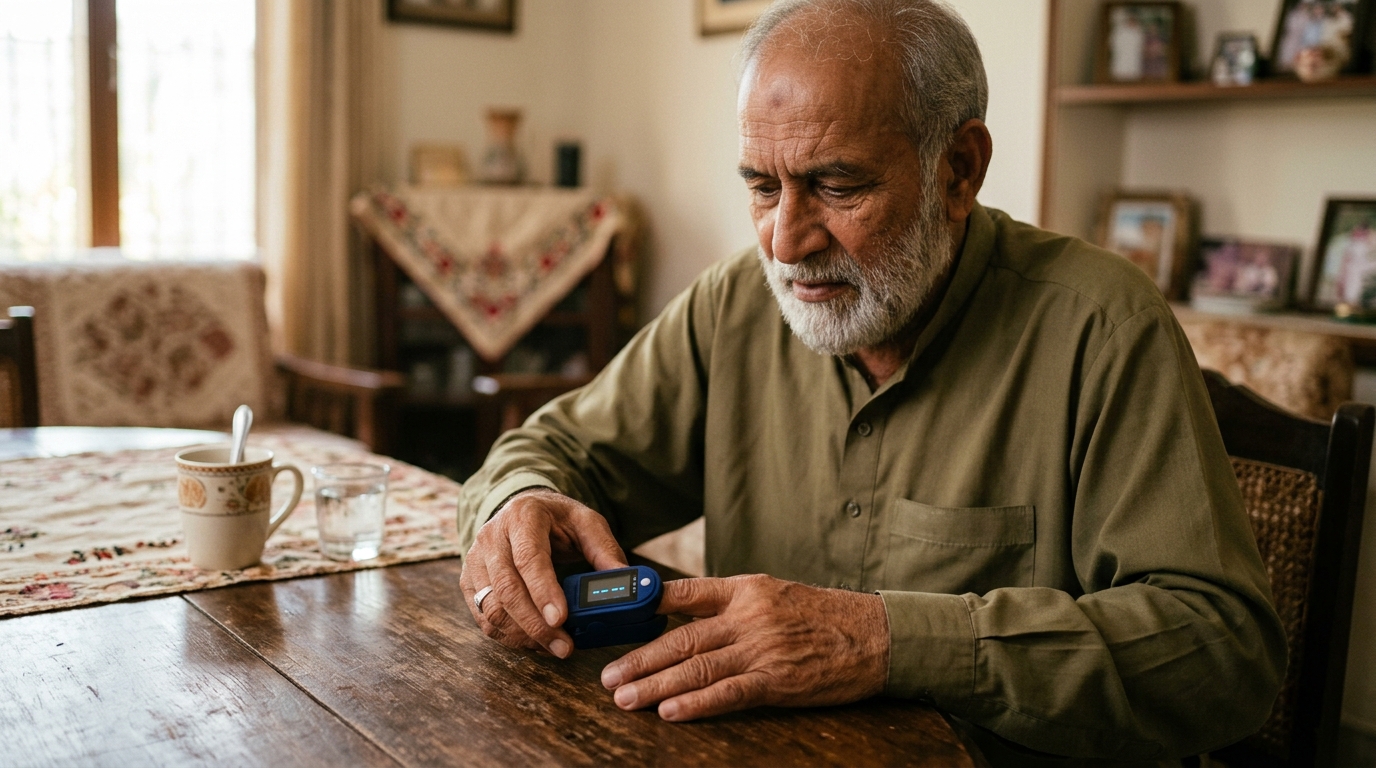
A pulse oximeter that shows no reading usually has a simple cause: cold fingers with poor circulation, nail polish or henna on the nail, a moving or trembling hand, weak batteries, or a dirty sensor window. Warm the hand, remove polish, use the middle finger, sit still for 30 seconds and replace the batteries; this solves the vast majority of cases. If a clean, warm, still finger still gives no reading on multiple fingers, suspect the device. If the patient meanwhile looks breathless or blue lipped, treat the patient, not the gadget, and seek care immediately.
The pulse oximeter earned its place in Pakistani homes during Covid and stayed for asthma, COPD and elderly care. It works by shining red and infrared light through the fingertip and measuring how much the blood absorbs, which is an elegant trick with an underappreciated weakness: it needs to detect a pulse before it can calculate anything. No detectable pulse at the fingertip means no SpO2 number, and the screen shows dashes, zeros or an error. The important insight is that “no reading” is almost always a signal problem at the finger, not a broken machine and not, thankfully, proof of zero oxygen.
That said, an oximeter that fails at the wrong moment causes real panic, and a household that cannot trust its device is worse off than one without it. So this guide works through the causes in the order worth checking them, the difference between no reading and a wrong reading, and the honest signs that the device itself, often a Rs 1,500 to 5,000 fingertip pulse oximeter, has actually reached the end of its life.
Causes in the Order You Should Check Them
| Cause | Why it blocks the reading | Fix |
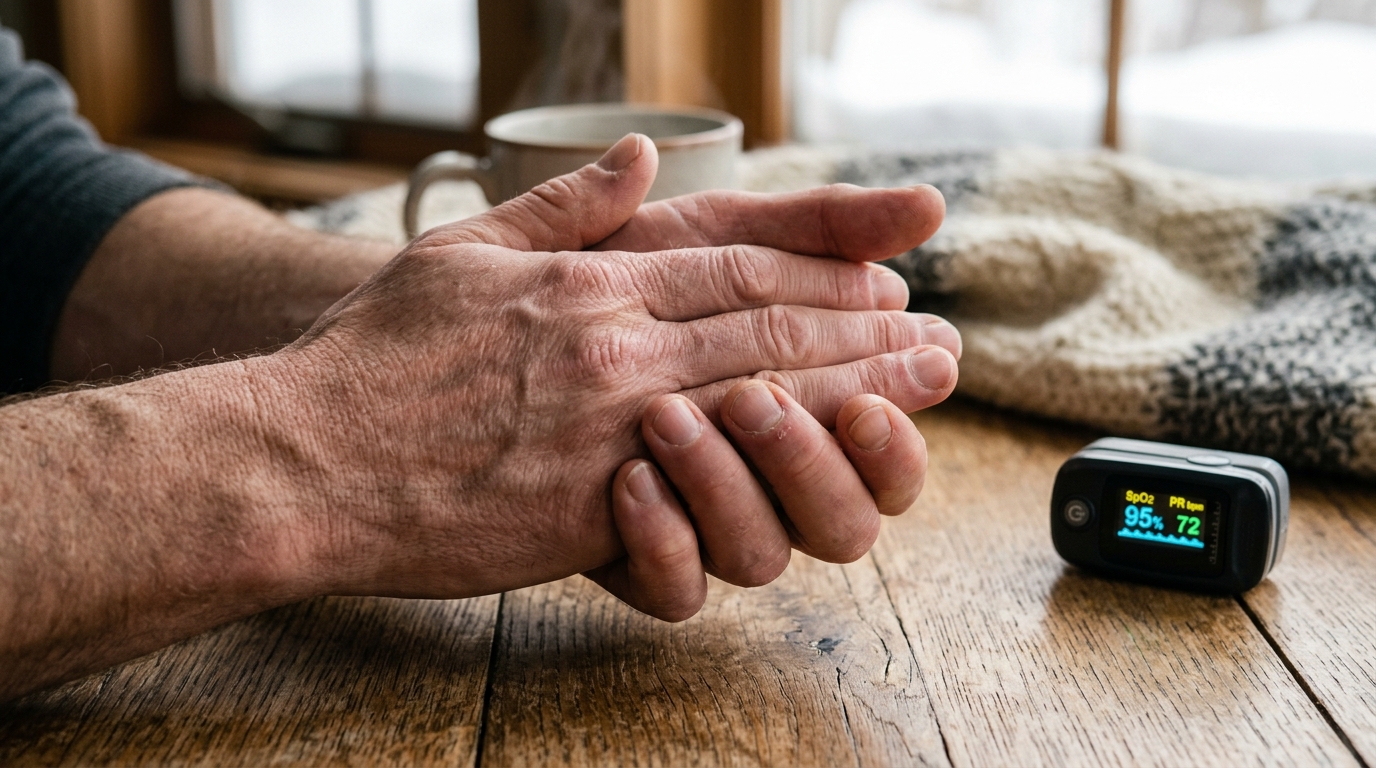
| Cold fingers | Blood vessels shrink, pulse too weak at the tip | Rub and warm hands 1 to 2 minutes, then retry |
| Nail polish, henna, artificial nails | Blocks the light beam | Remove polish, or turn the finger sideways / use another finger |
| Movement or trembling | Signal cannot stabilize | Rest hand on a table, stay still 30 seconds |
| Low batteries | Dim LEDs, weak sensor | Replace both batteries, not just one |
| Wrong finger or loose fit | Sensor not aligned with the nail bed | Use middle or index finger, fully inserted, nail up |
| Dirty sensor window | Dust and oil scatter the light | Wipe inside gently with a slightly damp cloth, dry fully |
| Very weak pulse (illness, low BP) | Genuinely faint signal | Try the ear lobe area devices or see a doctor if unwell |
| Bright sunlight on the device | Outside light floods the sensor | Test indoors or shade the hand |
Work down this list and the mystery usually ends by the third row. Cold hands alone explain most winter no reading complaints in Pakistan.
No Reading vs Wrong Reading: Two Different Problems
No reading means the device cannot find a pulse signal. A wrong reading means it found one and mismeasured, which is sneakier. Suspect a wrong reading when the displayed pulse rate does not match the pulse you feel at the wrist, when SpO2 jumps around wildly, or when a healthy comfortable person shows 85%. Recheck on another finger, another person, and after a full still minute; the device is only trustworthy when the pulse number is steady and matches reality. It also helps to know what the two numbers mean and how the device differs from the measurement itself, which we explained in our guide on the difference between pulse oximeter and pulse oximetry.
A reading between 95 and 100% is normal for a healthy person at rest. 93 to 94% deserves a recheck and attention, and below 92% on a good quality repeated reading, especially with breathlessness, is a reason to seek medical care rather than keep re-testing.
Testing Whether the Device Itself Has Died
Put fresh batteries in, clean the sensor window, and test on a healthy warm adult sitting still. If it reads that person correctly, the device is fine and the earlier problem was the finger or the conditions. If it fails on two or three healthy people, shows a cracked or loose hinge, flickering display, or visibly dim red light inside, the unit is done. Cheap oximeters, dropped oximeters and units stored in hot cars die early, and there is no economical repair; replacement is the answer. Spending a little more on a known brand from a reliable medical supplies source buys a brighter LED, a better sensor and a device that keeps working on the low perfusion fingers of the elderly patients who need it most.
Getting a Reliable Reading Every Time
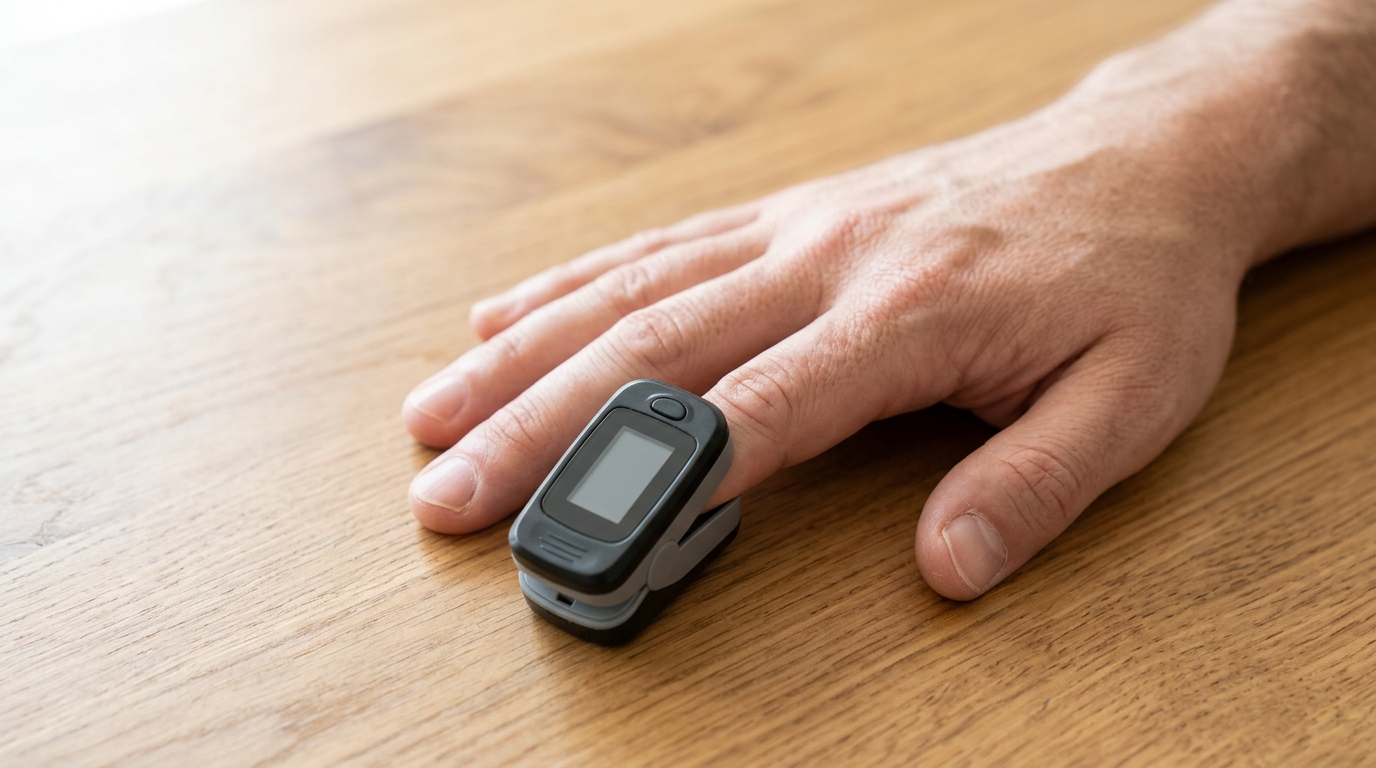
Sit resting for five minutes, warm the hands, place the middle finger fully inside with the nail facing the screen light, rest the hand at heart level on a table, and wait a full 30 to 60 seconds for the number to stabilize before believing it. Read the trend, not one flash. For ongoing conditions, checking at the same times daily and noting the values builds a baseline, and a change from your baseline means far more than any single number. And the rule that overrides every gadget: blue lips, gasping, confusion or severe breathlessness are emergencies regardless of what any screen shows.
Frequently Asked Questions
Why does my pulse oximeter show no reading at all?
Most often cold fingers, nail polish or henna, movement, a loose fit or weak batteries. Warm the hand, clean and reposition on the middle finger, replace batteries and sit still for 30 seconds.
Why does my oximeter show different readings on different fingers?
Small variation of 1 to 2% between fingers is normal because circulation differs. Use the middle or index finger of the warmer hand, and trust the steady value after a full minute.
Can nail polish really affect a pulse oximeter?
Yes. Dark polish, gel nails and henna absorb or block the light the sensor depends on, causing no reading or falsely low values. Remove polish or rotate the finger 90 degrees as a workaround.
What is a normal oximeter reading?
95 to 100% at rest for healthy people. 93 to 94% warrants rechecking and attention. Below 92% repeatedly, especially with breathlessness, needs medical care, not more testing.
How do I know if my pulse oximeter is faulty? With fresh batteries and a clean sensor, test a healthy, warm, still adult. Wildly jumping numbers, a pulse rate that does not match the felt pulse, or failure on multiple healthy people means the device should be replaced.
