- Your cart is empty
- Continue Shopping


Wall Mounted Oxygen Flow Meter: A Complete Buying Guide for Hospitals and Home Care
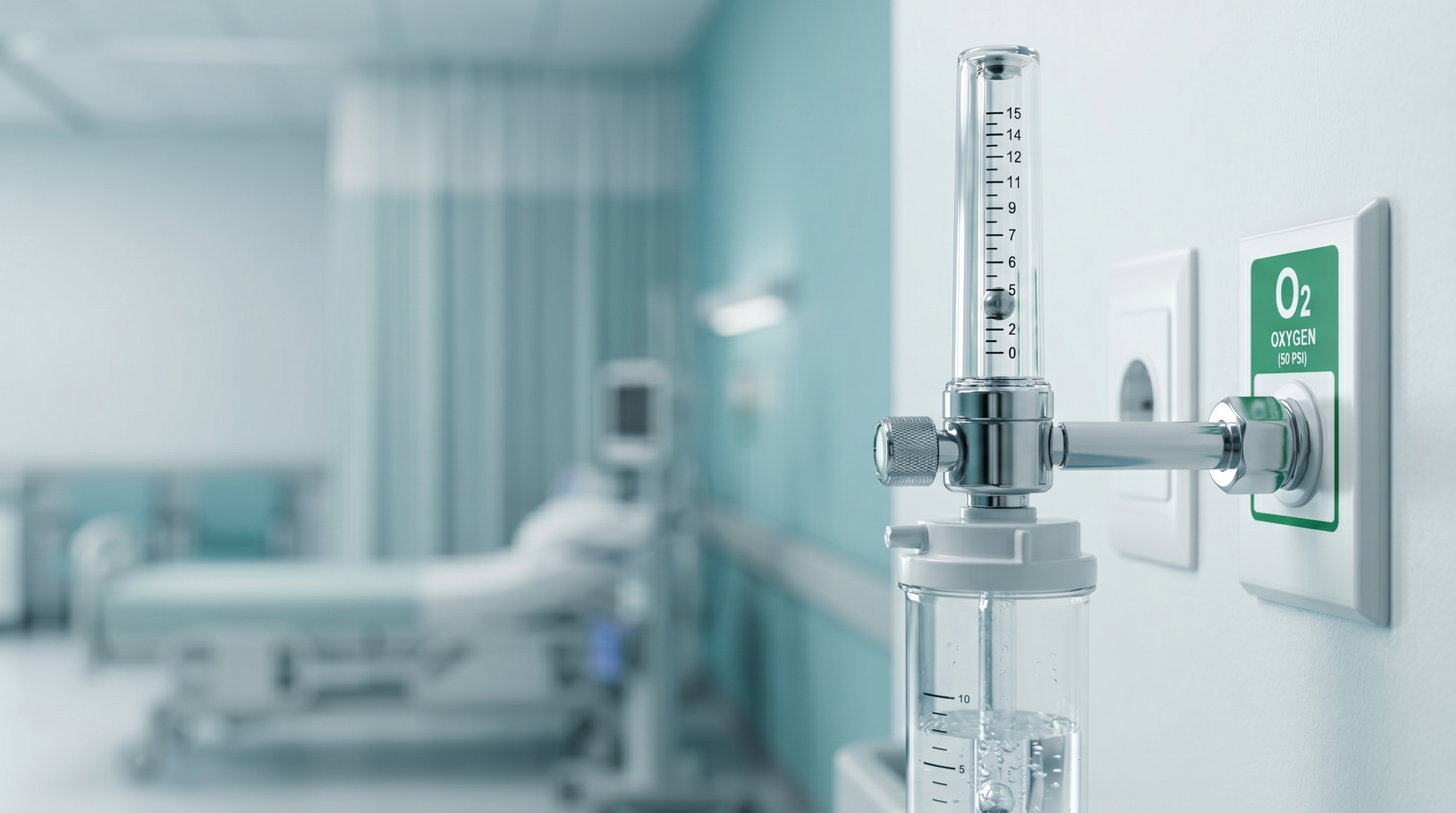
Modern hospitals run on centralised medical gas systems, and the small but critical device that controls how much oxygen actually reaches the patient at each bedside is the flow meter. Whether you are upgrading a hospital ward, equipping a new ICU, or building a serious home oxygen station that connects to piped oxygen, choosing the right wall mounted oxygen flow meter is one of those decisions that quietly determines patient safety every single day. This complete guide walks you through the types of flow meters, the pressure standards used in Pakistan, what affects pricing, and how to make sure the units you install actually meet international medical safety norms rather than failing during the moments that matter most.
What Is a Wall Mounted Oxygen Flow Meter?
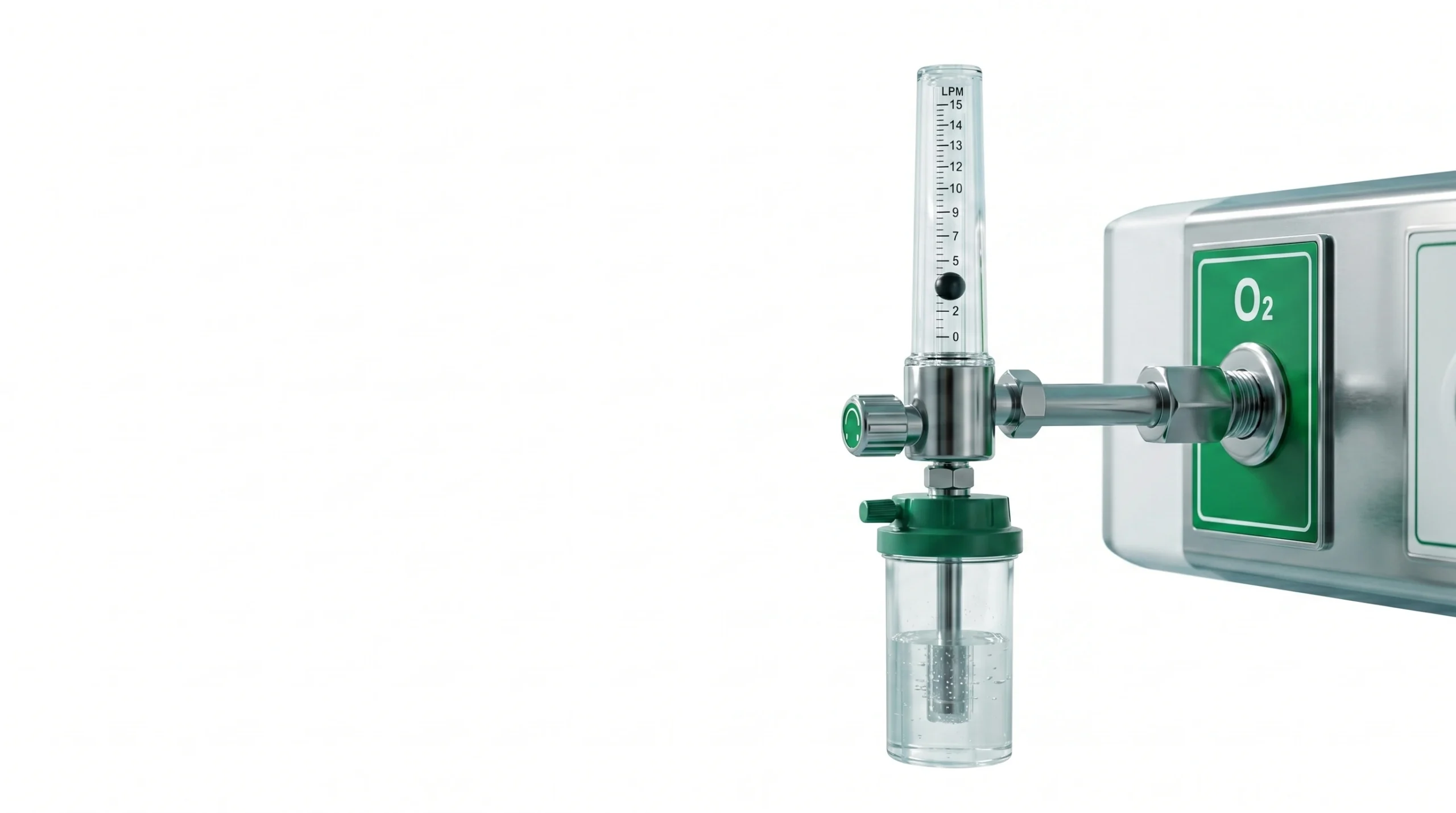
A wall mounted oxygen flow meter connects to a hospital’s central oxygen pipeline at a wall outlet (or to a portable cylinder yoke) and accurately controls the rate of oxygen delivery to the patient, measured in litres per minute. The unit allows the clinician to dial in flow rates between 0 and 15 LPM (or higher in specialty units) and typically includes a humidifier bottle attachment to moisten the oxygen before it reaches the patient. Without an accurate flow meter, you cannot deliver oxygen therapy safely, because too little undertreats the patient and too much can cause oxygen toxicity in vulnerable patients such as premature infants and chronic CO2 retainers.
Why Flow Meter Quality Matters More Than Most Buyers Realise
Flow meters are deceptively simple devices, and that simplicity hides how dangerous a poorly made unit can be. A flow meter that reads 5 LPM but actually delivers 8 LPM creates serious clinical risk. A unit with a stiff control knob leads to clinicians estimating flow visually rather than dialling precisely. A meter with a worn O-ring leaks oxygen wastefully and silently increases hospital running costs. Cheap unbranded units flooding parts of the local market often fail one or more of these basic safety standards, which is why every reputable hospital in Pakistan insists on certified brands with traceable accuracy.
Types of Wall Mounted Oxygen Flow Meters
1. Thorpe Tube (Float-Ball) Flow Meters
The most common design uses a tapered tube and a floating ball or bobbin to indicate flow. They are accurate, intuitive to read at a glance, and proven over decades of clinical use. They must always be mounted vertically for accuracy.
2. Click-Style (Index) Flow Meters
These use a rotary dial with fixed flow positions (typically 1, 2, 3, 4, 5, 8, 10, 15 LPM). They are physically robust and useful in transport scenarios where the meter may move, but they offer less granular control than Thorpe tube units.
3. Digital Flow Meters
Newer units use electronic sensors and digital displays for precise flow control, often with alarms for over-pressure and disconnection. They cost considerably more and require power, but are increasingly popular in critical care environments.
Pressure Standards and Connector Types in Pakistan
Hospital oxygen pipelines in Pakistan generally operate at 4 bar (around 60 PSI) following international NFPA 99 and HTM 02-01 standards. Wall outlets typically use BS 5682 (British Standard) or DISS (US Standard) probes, and the flow meter you purchase must match your existing wall outlet exactly. Mixing connector standards is a serious safety hazard, and adapters should never be improvised. Always confirm with your facility’s biomedical engineering team or a qualified medical gas technician before ordering.
Average Wall Mounted Oxygen Flow Meter Price in Pakistan (2026)
Entry-level Chinese-manufactured Thorpe tube flow meters with humidifier bottle currently start around PKR 4,500 in Pakistan. Mid-tier units from established brands range from PKR 9,000 to PKR 22,000 and offer better accuracy, smoother knob control, and longer service life. Premium European brands like Heyer, Spencer, and Drager fall between PKR 28,000 and PKR 75,000 and are the standard choice for ICU, NICU, and operating theatre installations where accuracy is non-negotiable. Replacement humidifier bottles, gaskets, and inlet probes are ongoing consumables.
Cylinder vs Wall Pipeline: Choosing Between Flow Meters and Regulators
Not every facility has piped oxygen at every bedside. For ambulances, smaller clinics, home patients, and emergency backup systems, oxygen is delivered from portable cylinders, and the device that controls flow in this scenario is an oxygen regulator with built-in flow meter rather than a wall-mounted unit. The cylinder regulator handles two jobs in one device: it steps down the high cylinder pressure (typically 15 MPa) to a safe working pressure of around 0.2 to 0.3 MPa, and then the integrated flow meter lets the operator dial in 0 to 15 LPM of oxygen delivery to the patient. Most regulators also include a humidifier bottle and a safety pressure relief valve. For Pakistani households building a complete home oxygen setup, having both a quality concentrator for daily use and a cylinder with regulator as backup for power outages gives the patient genuine safety redundancy. The cylinder regulator is also the device of choice for transport, emergency response bags, and any situation where mains electricity cannot be guaranteed.
How to Choose the Right Wall Mounted Oxygen Flow Meter
Match the Connector to Your Outlet Standard
This is the single most important compatibility check. Confirm whether your facility uses BS, DISS, German DIN, or French AFNOR standard probes before placing any order.
Choose the Correct Flow Range
Adult patients typically need 0 to 15 LPM. Pediatric and NICU settings need a low-flow meter with finer control between 0 and 3 LPM. Using an adult-range meter for a neonate is dangerous because small dial movements cause large flow changes.
Verify Manufacturing Standards
Look for ISO 13485 certification, EN ISO 15002 compliance for flow accuracy, and CE marking. These are not just marketing badges but verifiable indicators that the unit has been tested against international medical device standards.
Check Humidifier Bottle Compatibility
Most flow meters come with a thread that accepts standard humidifier bottles, but specialty units sometimes use proprietary threads that lock you into expensive replacements. Confirm before purchase.
Common Mistakes Buyers Make
The most common mistake is ordering by price alone and ending up with mismatched connectors, forcing the maintenance team to use unsafe adapters. The second mistake is overlooking calibration and assuming the meter will stay accurate forever. Flow meters should be flow-tested annually as part of routine biomedical equipment maintenance, and any unit reading more than 5 percent off the set value should be removed from service immediately.
Final Thoughts on Buying Wall Mounted Oxygen Flow Meters
The flow meter is the small device that determines whether your oxygen therapy actually delivers the prescribed dose, and it deserves more attention than the typical purchasing decision gives it. Choose certified brands, confirm connector compatibility, and build annual calibration into your facility’s maintenance cycle. Before finalising your order, it is worth browsing the full oxygen regulators and flow meters collection available locally, since seeing wall-mounted units, cylinder regulators, low-flow pediatric meters, and humidifier accessories in one place often clarifies which combination genuinely fits your facility’s workflow. From single-bed home setups to multi-ward hospital projects, having the right delivery hardware is what turns an oxygen supply into actual patient therapy. Invest in quality once, build a maintenance routine, and your facility will deliver safe, accurate oxygen therapy for years to come.
Frequently Asked Questions (FAQs)
Q1: What is the price of a wall mounted oxygen flow meter in Pakistan?
Entry-level Chinese-manufactured Thorpe tube flow meters with humidifier bottle start around PKR 4,500. Mid-tier units cost PKR 9,000 to PKR 22,000, while premium European brands like Heyer, Spencer, and Drager range from PKR 28,000 to PKR 75,000.
Q2: What is the normal oxygen flow range for patients?
Most adult patients require 1 to 15 LPM depending on their condition. Pediatric patients usually need 0.5 to 3 LPM. Always follow the prescribed flow rate from the treating physician rather than estimating based on patient comfort alone.
Q3: What is the difference between an oxygen flow meter and a regulator?
A regulator reduces high cylinder pressure to safe working pressure, while a flow meter measures and controls the rate of oxygen delivery in litres per minute. Cylinder units typically combine both functions; wall-mounted units only need a flow meter since pipeline pressure is already regulated.
Q4: How often should oxygen flow meters be calibrated?
Wall-mounted flow meters should be flow-tested at least annually as part of routine biomedical equipment maintenance. Any unit reading more than 5 percent off the set value should be removed from service immediately and replaced or recalibrated.
Q5: Can I use the same flow meter on a cylinder and a wall outlet?
No. Cylinder regulators and wall-mounted flow meters use different connectors and pressure standards. Always purchase the correct device for your oxygen source. Mixing connector standards or using improvised adapters is a serious safety hazard.
