- Your cart is empty
- Continue Shopping


How Medical CNC Machining Is Revolutionizing Modern Medical Device Manufacturing
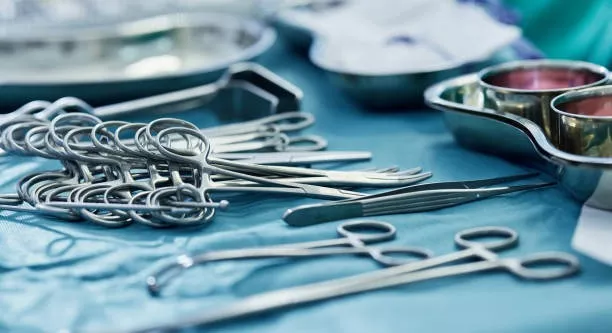
Introduction: A New Age of Medical Making.
The devices that are in use in hospitals, clinics, and research laboratories are unable to fail: surgical equipment, orthopedic parts, radiographic housings, dental parts, and many others. Such products require a tolerance of microns and defect free surfaces. Such accuracy does not happen by chance, but is the consequence of manufacturing innovation. The core of that innovation is the emphasis on precision engineering that is mainly achieved with the application of technology like medical CNC machining.
Table of Contents
The medical industry is driving towards the direction of least invasive surgeries, customized implants and speed of product development. Conventional subtractive production was not sufficiently able to keep pace. Nowadays, automation, computer control, advanced tooling and a mix of hybrid methods has changed the design and construction of devices. This article discusses how medical CNC machining, in combination with other related practices like 3d printing medical applications, is transforming the current situation in care.
What Is Medical CNC Machining and Why It Matters.
Computer Numerical Control (CNC) uses computer-controlled tool paths to cut, drill, turn or mill material into a finished shape. The applications in healthcare are more critical since these components are in direct touch with the human body or life-supporting machines. That is the reason medical CNC machining is not CNC with tightening of tolerances; but it is a well-trained precise procedure with rigid validation, documentation, and quality regimes.
Talking about medical machining, people mean high-tech procedures that are employed to create implants, orthopedic modules, endoscopic tools, drug-delivery system housings, and diagnostic devices parts of great precision. Components must be traceable, biocompatible and surface finished according to its purpose. In addition to the dimensional accuracy, cleanliness and material integrity are very essential since the human body does not take any contamination.
Materials that are widely used in the manufacture of CNC Medical.
Both safety and performance begin with the choice of materials. Medical projects that are often chosen to undergo CNC machining are titanium, stainless steel, cobalt-chromium alloys, PEEK, Ultem, and medical-grade aluminum. These materials have been provided with integration of corrosion resistance, strength to weight ratio and biocompatibility.

Since the CNC systems can accurately machine hard metals and high-performance plastics, engineers are able to implement shapes that previously appeared impractical micro-featured shapes, thin-walled shapes, and contoured geometries. This advantage is among the factors that have made CNC machining of medical devices to be an unavoidable requirement to the manufacturers of implants, bone screws, trauma plates, dental abutements, and minimally invasive surgical instruments.
The Connection between CNC and patient safety.
Reliability is not just a marketing statement but is also an ethical obligation. The machines manufactured in the process of medical device machining have to work out to the last drop within the operating room and within the human body. CNC technology also leads to safety as it is repeatable. Traceable programs and controlled parameters allow hundreds or thousands of the same components to be produced.
Medical device CNC machining in quality-controlled settings (assessed to ISO 13485 or meeting the demands of FDA QSR) incorporates inspection processes including coordinate measurement machines (CMM), in-process probing and statistical process control. This feedback check reduces variability and enables clinicians to have confidence in the tools they are using.
Testing to Production: Haste as a Competitive Advantage.
Innovation in healthcare proceeds at high speed. An idea is turned into a prototype, which is then a clinical study device, and an eventual commercial product. The market leadership can be determined by the period of time between those stages. Under medical CNC machining services, an engineer can switch to the physical component of a digital model in a few days as opposed to months.
It is characterized by short runs and very rapid cycles of iteration. Protests or housing implants are modified according to surgeon feedback and then launched on a full scale. This flexibility also reduces the cost of development which is an advantage to both medical device startups and the old manufacturers.
Patient-Specific Solutions and the emergence of Custom Implants.
Each patient is an individual – bone density, anatomy, lifestyle, and healing power differ greatly. Surgeons move toward increasingly using tailored implants instead of using a one-fits-all kind of solution. This is where CNC medical technologies are superior. CNC machining enables designed geometries that are customized to patient scans at a high level of tolerances.
Additive manufacturing is used to compound complex shapes in most working processes, CNC finishes functional surfaces, including joint surfaces and threaded interfaces, and mating features. This hybrid prototype explains how CNC machining of the medical sector fits well with the current personalized medicine.
The Place of 3D Printing next to CNC machining.
Additive technology is not an opponent; it is a partner. 3d printing medical usage comprises porous structure of the implant to promote the integration of the bone, lightweight lattice designs, and anatomical models used in surgical planning. However, often printed components must be finished with tight tolerances, or drilled or just surfaced.
This is the last refinement that CNC machines provide with precision, illustrating how machining medical components and the additive process of the two can result in better results. Successful manufacturers do not pick an individual technology, instead they combine them in an intelligent manner.
Types of Medical Devices Produced with CNC Technology
The list expands every year, but major groups include:
- orthopedic implants and fixation hardware
- surgical and laparoscopic tools
- dental prosthetics and abutments
- cardiovascular device components
- diagnostic housings and fixtures
- neurosurgical instruments
Every of these types requires CNC-machined products to the medical systems since the doctors require reliable and sterilizable ergonomically designed instruments.
The most important advantages of xcmachining CNC Technology in the manufacture of health devices.

Surface Finishing and Sterilization.
The use of surgical equipment must have smooth ends so that they do not ruin tissues. The implants might require micro-textured surfaces to stimulate the process of the osseointegration. On these grounds, post-processing is included in the processing of CNC machining of medical. Components are prepared in terms of medical readiness by bead blasting, electropolishing, passivation, tumbling, and ultrasonic cleaning.
Each final procedure should be checked to prevent the leftovers or structural deformation. Through restricted settings and rigorous documentation, the risk of cross-contamination is reduced.
Finding a collaborator on Medical CNC Work.
- Not every machine shop is the same. The most excellent medical CNC machining services providers have a combination of:
- certified quality systems
- recorded process controls.
- purified working conditions.
- material traceability
Comparison Table: CNC Machining vs. 3D Printing in Medical Manufacturing
| Factor | medical CNC machining | 3d printing medical applications |
| Dimensional Tolerance | Excellent, micron-level | Moderate to good |
| Ideal Production Volume | Low to high | Low to medium |
| Complexity of Geometry | High, subtractive limits apply | Very high |
| Surface Finish | Superior after finishing | Often requires post-processing |
| Typical Uses | Implants, instruments, precision housings | Porous implants, models, complex internal structures |
Difficulties and Future Projections.
CNC machining of medical devices has problems in spite of its advantages. The shortage of skilled labor, increased prices on raw-materials as well as increasing regulation demands regular investments. These barriers are being overcome through automation, real-time monitoring or digital twins.
In the future, the concept of AI-aided in optimizing tool paths, closed-loop metrology, and hybrid additive-subtractive will advance the role of medical device medical CNC machining in the future of healthcare manufacturing.
The way CNC helps in regulatory compliance.
Regulators are concerned with documentation and uniformity and not only performance. Such expectations are easily supported by CNC environments since programs, tooling, revisions and inspection data can be traced. This is what substantiates the argument medical machining as a fundamental principle of compliant manufacturing systems, particularly where it is used with risk-management systems like ISO 14971.
Sustainability and Environmental factors.
There is an emerging visibility of healthcare sustainability. Gouging in medical parts machining involves efficient tool paths, tool life through recycling coolant, and efficient nesting, which minimize waste of the material. In the meantime, long term implants and devices imply a reduction in the number of replacements, which indirectly reduces the harm to the environment.
In conclusion: Accuracy That Makes a Difference.
Finally, behind all artificial hips, all ligaments that have been sewn, all equally small operations, there is advanced engineering. Medical computer-controlled machining has become one of the backbone technologies that allow doctors to cure patients with enhanced confidence, reduced invasiveness, and quality results. Since the development of digital design, high-end materials, and hybrid working processes persists, CNC-based production will further enhance its influence in future care development.
Frequently Asked Questions (FAQs)
- The meaning of medical CNC machining?
It is a manufacturing that is controlled as CNC with a specific operation in medical devices and instruments in a stringent quality and regulation level.
- What are the typical parts of the medical industry that are manufactured with CNC machining?
Some of the standard parts are implants, bone plates, fixation screws, dental parts, surgical instrument, housings, and precision diagnostic parts.
- Will CNC be ousted by 3D printing in the medical field?
No. 3d printing medical applications do not replace CNC. Additive produces complex shapes, whereas CNC provides final tolerances and surfaces.
- Why is it interesting to use materials such as titanium in machining medical devices?
Titanium is also biocompatible, corrosion resistant, strong and lightweight- perfect in implants and surgical instruments.
- The question is how to choose a medical CNC machining service provider?
Search the ISO 13485 certification, solid documentation, proven processes, engineering, and experience with regulatory requirements.
