- Your cart is empty
- Continue Shopping


Digital Thermometer Price in Pakistan: Complete Buying Guide
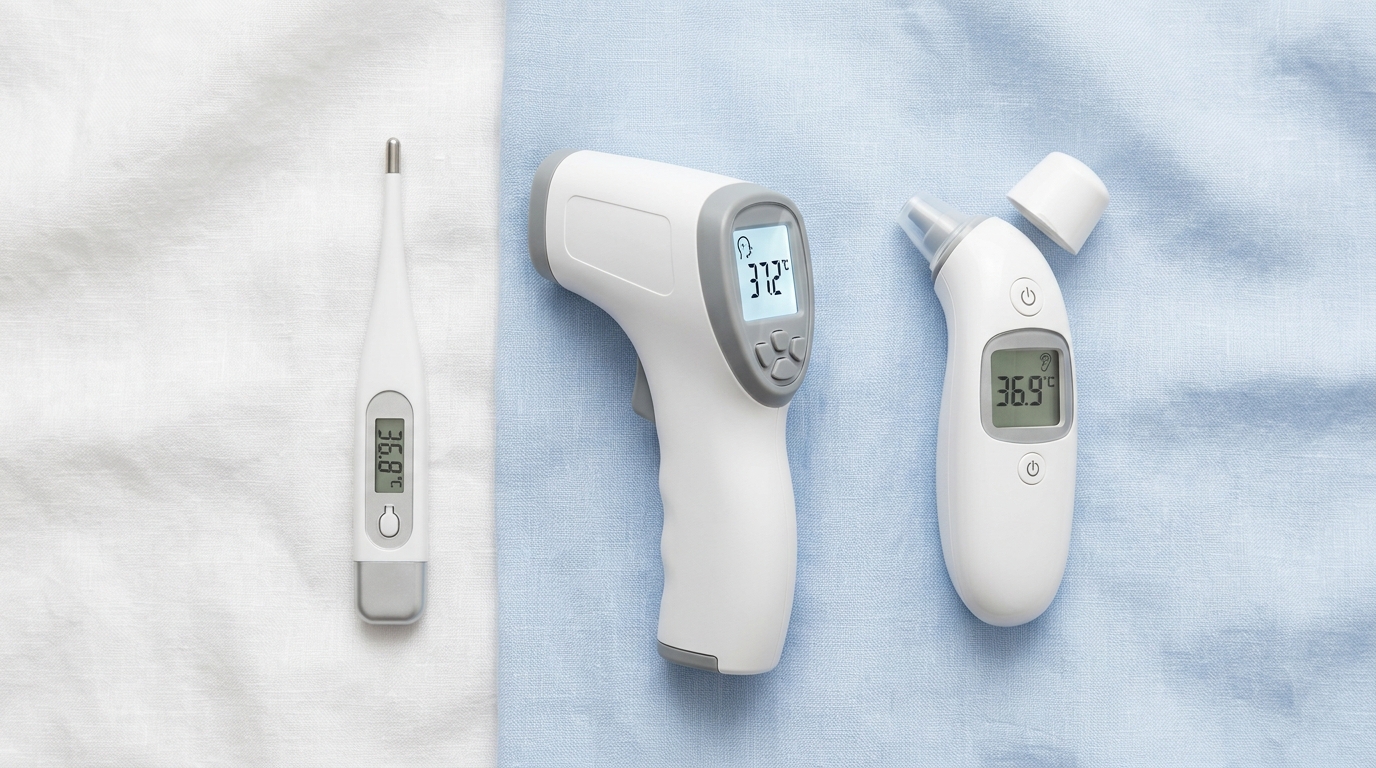
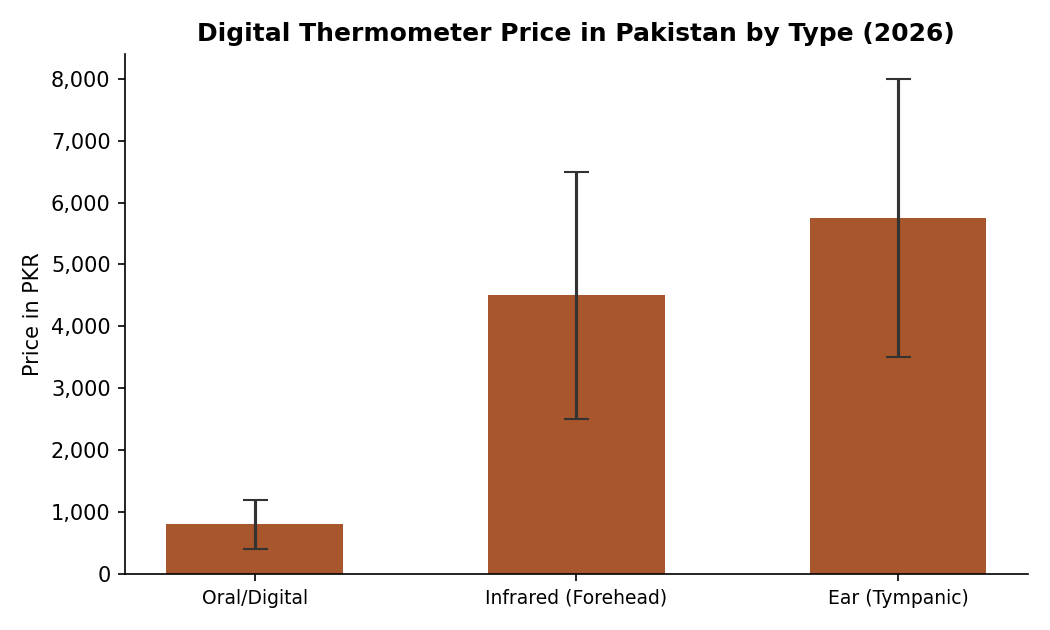
| Quick Answer Basic digital oral thermometers in Pakistan cost between PKR 400 and 1,200. Infrared forehead thermometers range from about PKR 2,500 to 6,500, and ear or tympanic thermometers cost between PKR 3,500 and 8,000. For babies and young children, infrared models are usually the most practical choice because they do not require holding still. |
A reliable thermometer is one of the cheapest but most useful things to keep at home, especially with children who catch fevers often as the weather changes across Pakistan. Before comparing types, it is worth checking the current range in the Digital Thermometer category to see what is actually in stock at each price point.
Most households end up owning more than one thermometer over the years, usually starting with a cheap oral probe and adding an infrared model later once a baby arrives or an elderly parent moves in. Knowing the real price gap between types before that second purchase helps avoid paying a premium for convenience features that may not even matter for how the thermometer will actually be used at home.
Digital Thermometer Price Ranges in Pakistan by Type
| Type | Price Range (PKR) | Reading Time | Accuracy Notes |
| Oral or Digital Probe | 400 to 1,200 | 30 to 60 seconds | Most accurate for home use when used correctly |
| Infrared Forehead | 2,500 to 6,500 | 1 to 3 seconds | Fast, but sensitive to distance and sweat |
| Ear or Tympanic | 3,500 to 8,000 | 1 to 2 seconds | Accurate but technique dependent, not ideal under 6 months |
As one example, the Omron Digital Thermometer sits toward the lower end of the oral thermometer range and is a common first choice for new parents, while the Certeza Non Contact Infrared Thermometer FT 710 is a fair example of what a mid range infrared model actually includes.
Oral, Infrared and Ear Thermometers Compared
An oral thermometer is the cheapest option and, when used correctly, generally gives the most accurate reading for home use, though it requires the patient to hold still for close to a minute. Infrared forehead thermometers are fast and easy on a sleeping or uncooperative child, but the reading can shift by half a degree or more depending on room temperature and sweat on the skin. Ear or tympanic thermometers are quick and fairly accurate, but earwax or an incorrect angle throws the reading off, and most pediatricians do not recommend them for infants under 6 months.
The fastest thermometer is not automatically the most accurate one. If a reading looks unusually high or low for how the patient actually feels, it is worth confirming with a second method rather than assuming the device is wrong or right.
How to Get an Accurate Reading Every Time
Technique matters as much as the device itself. For an oral reading, the thermometer tip should sit under the tongue with the mouth closed for the full cycle, not removed early because it beeps sooner than expected on a cheaper model. For infrared forehead readings, the device should be held at the exact distance stated in the manual, usually a few centimeters, and swept slowly rather than pointed at a single spot, with sweat wiped away first since moisture skews the reading low. For ear thermometers, gently pulling the ear back and slightly up before inserting the probe straightens the ear canal enough to get a consistent reading, which is the step most people skip.
Accuracy Differences Between Types
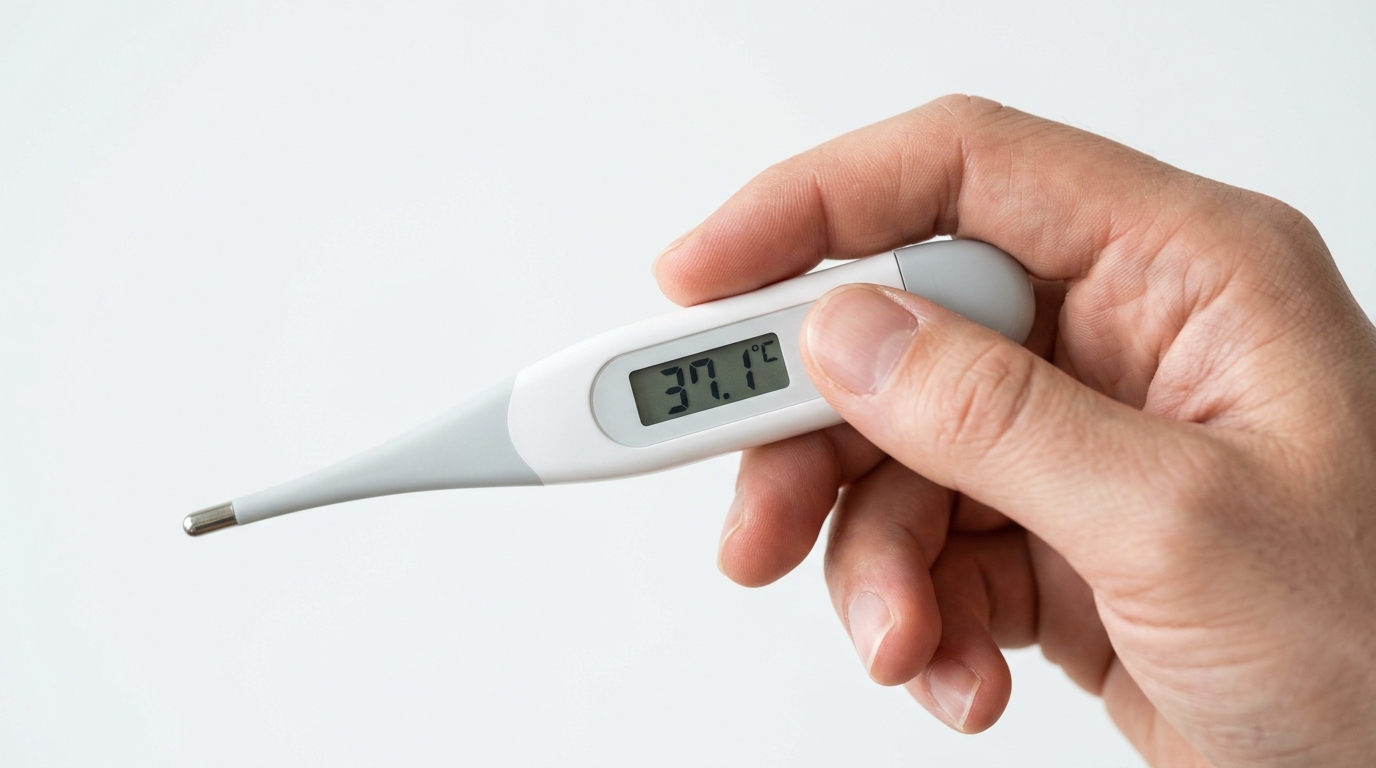
Oral thermometers typically have a margin of error around plus or minus 0.1 degrees Celsius when used properly. Infrared forehead models generally run closer to plus or minus 0.2 to 0.3 degrees, mainly due to environmental factors rather than the sensor itself. Ear thermometers usually fall around plus or minus 0.2 degrees but depend heavily on correct ear canal positioning, which is harder to get right in a squirming toddler than in a cooperative adult.
If you are already stocking up on home monitoring devices, it is worth checking the Glucometer range at the same time, since many households buy both together for general health tracking, along with the ENT diagnostic kits section if anyone in the family also needs basic ear or throat checks at home.
Best Type for Babies vs Adults
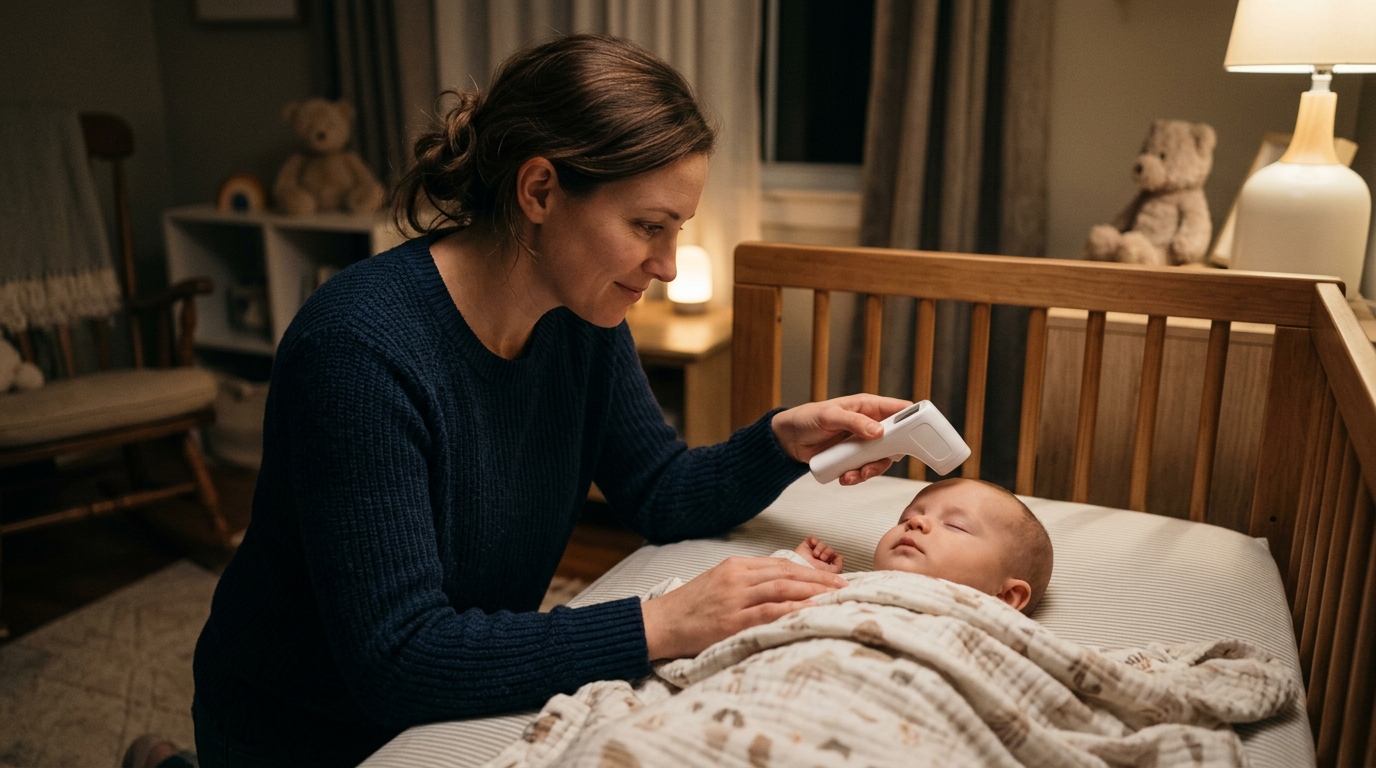
For newborns and infants under 3 months, doctors generally recommend a simple digital oral or underarm reading rather than infrared, since accuracy for very young children matters more than convenience at that stage. Between 3 months and 3 years, an infrared forehead or ear thermometer is usually fine for quick checks, with an oral reading as backup if a result looks borderline. For adults and older children, a basic oral thermometer is generally accurate enough and remains by far the cheapest option on the market.
Common Buying Mistakes to Avoid
A frequent mistake is buying the cheapest infrared thermometer available without checking whether it has been calibrated for medical use, since some low cost imported units are actually designed for measuring surface or object temperature rather than the human body, which produces misleading readings. Another mistake is assuming a single thermometer works equally well for every family member, when in practice a household with both a newborn and elderly parents often needs at least two types to get reliable readings for both ends of that range. It is also worth checking battery type before buying, since some infrared models use uncommon batteries that are harder to find locally when they eventually run out.
Digital vs Mercury Thermometers: Why the Switch Happened
Older households in Pakistan may still have a mercury glass thermometer tucked away, and it is worth knowing why most doctors now advise against them. Mercury thermometers take several minutes to give a reading, are fragile enough to break during normal handling, and release toxic mercury vapor if they do break, which is a genuine hazard in a home with children or pets. Digital thermometers solved all three problems at once, reading in seconds, surviving an accidental drop far more often, and carrying no toxic material, which is the main reason mercury thermometers have largely disappeared from pharmacy shelves even though they were once considered the gold standard for accuracy.
When a Fever Reading Needs Medical Attention
A thermometer only tells you a number, and what to do with that number depends on age and how the person is otherwise behaving, so this is a general pattern rather than medical advice for any specific case. In infants under 3 months, most pediatricians want to know about any fever at all, since young babies can become seriously unwell quickly. In older children and adults, a fever that stays high for more than two to three days, or comes with symptoms like difficulty breathing, a stiff neck, or unusual drowsiness, is generally treated as a reason to see a doctor promptly rather than wait it out at home. Keeping a simple log of readings and the time they were taken makes that conversation with a doctor faster and more useful if it becomes necessary.
Caring for Your Thermometer So Readings Stay Reliable
Digital thermometers drift out of calibration over time, especially if dropped or stored somewhere hot, such as inside a car during summer. Wiping the probe with an alcohol swab before and after each use keeps it hygienic for shared family use, and storing it in its original case protects the tip from damage that can throw off future readings. If you ever suspect a thermometer is reading incorrectly, checking it against a second device, or against a known reference like an ice water bath which should read close to zero degrees Celsius, is a quick way to confirm before relying on it for an important decision.
For a wider look at essential health monitoring devices for the home, browse the full Home Care Products range.
Frequently Asked Questions
What is the average digital thermometer price in Pakistan in 2026?
Basic oral thermometers cost as little as PKR 400 to 1,200, while infrared and ear thermometers typically run PKR 2,500 to 8,000 depending on the brand.
Which thermometer is most accurate for babies?
For newborns and infants under 3 months, doctors generally recommend a simple digital oral or underarm reading rather than infrared, since infrared accuracy drops in very young children.
Are infrared thermometers reliable?
They are reliable enough for everyday fever checks when used correctly, but readings can vary if the room is cold, the forehead is sweaty, or the device is held at the wrong distance.
How often should a digital thermometer be replaced?
A well maintained digital thermometer can last several years, though it is worth checking it against a second thermometer if readings start looking inconsistent.
Can one thermometer be used for the whole family? Yes, as long as it is cleaned with alcohol wipes between uses, though many families keep a dedicated one for infants for hygiene and convenience.
