- Your cart is empty
- Continue Shopping


EEG Machine Price Comparison: Portable vs Hospital-Grade EEG Systems
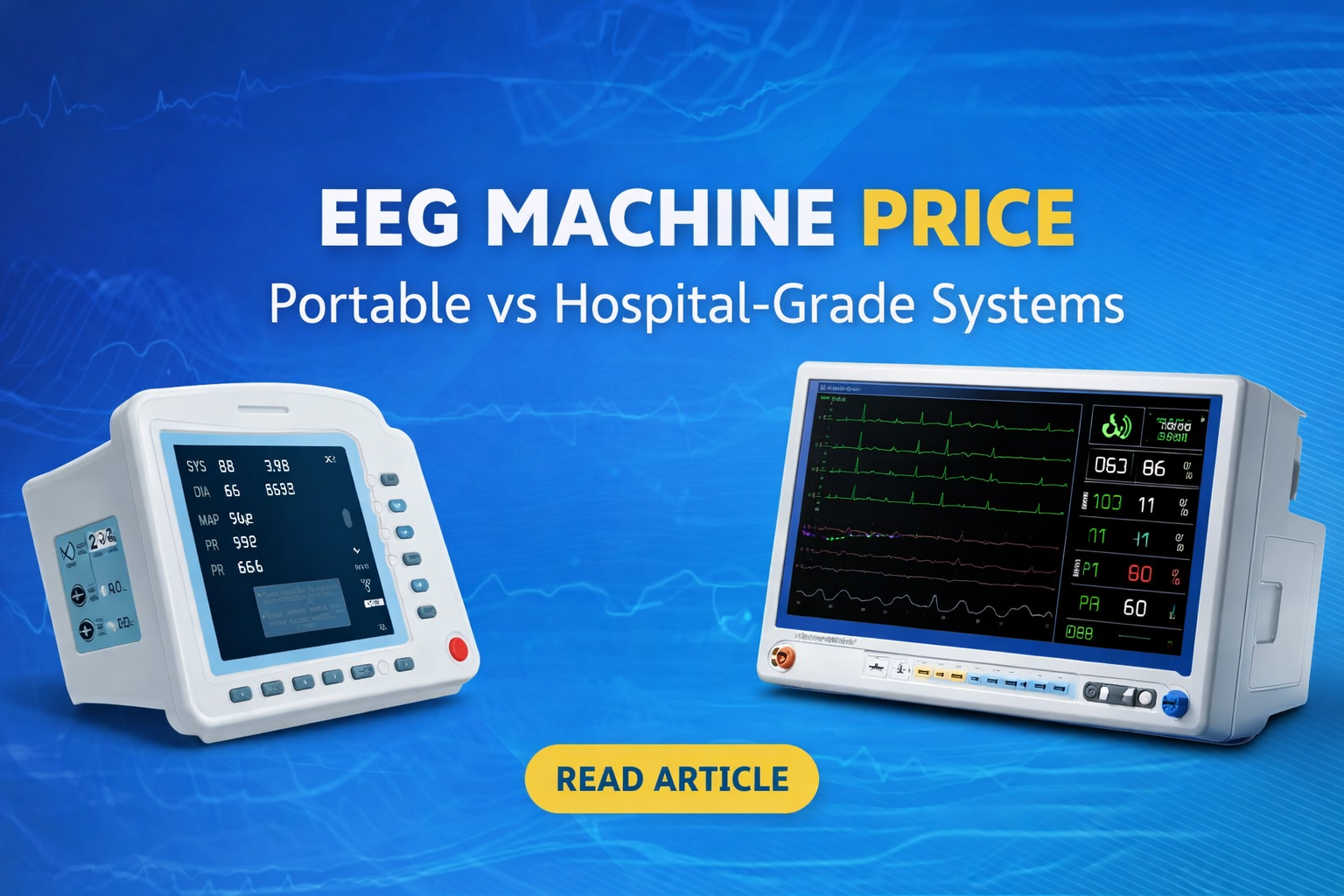
Electroencephalography has quietly become one of the most relied-upon diagnostic tools in neurology. From seizure detection to sleep disorder evaluation, EEG machines help clinicians observe brain activity with precision. Yet for buyers in 2026, one question continues to dominate procurement discussions: EEG Machine Price. More specifically, how does pricing differ between portable EEG units and full hospital-grade systems?
This article breaks down the real cost differences, performance trade-offs, and long-term value of both categories, with a special focus on EEG Machine Price in Pakistan. Whether you manage a diagnostic lab, hospital, or private clinic, this guide will help you choose wisely.
Why EEG Machine Pricing Varies So Widely
At first glance, EEG machines may appear similar. Electrodes, cables, software, and displays exist in almost every model. However, the internal technology, durability, signal accuracy, and scalability are where costs diverge sharply.
The EEG Machine Price is influenced not only by hardware but also by how and where the machine will be used. A portable EEG designed for home monitoring has very different design priorities than a hospital-grade EEG built for continuous ICU operation.
Understanding Portable EEG Systems
Portable EEG machines are compact, lightweight devices intended for mobility. They are commonly used in outpatient clinics, emergency response units, home studies, and small diagnostic centers.
These systems prioritize ease of transport and simplified operation rather than high-volume data handling.
Common Use Cases for Portable EEGs
- Home-based EEG monitoring
- Small neurology clinics
- Rural healthcare facilities
- Short-duration EEG studies
Because of their limited channel capacity and compact design, portable systems usually come with a lower EEG Machine Price in Pakistan.
Cost Characteristics of Portable EEG Machines
Portable EEG machines typically fall into the lower to mid-range pricing segment. Their affordability makes them attractive for startups and clinics with limited budgets.
However, cost savings often come with trade-offs:
- Fewer EEG channels
- Limited long-term recording capability
- Basic analysis software
That said, for routine diagnostics, a portable EEG can be more than sufficient. The reduced EEG Machine Price allows clinics to enter neurological diagnostics without heavy capital investment.
Hospital-Grade EEG Systems Explained
Hospital-grade EEG systems are engineered for intensive clinical environments. These machines are larger, more robust, and designed for continuous operation across multiple departments.
They are commonly used in:
- Tertiary hospitals
- Neurology departments
- Epilepsy monitoring units
- Teaching and research institutions
Because of their complexity, hospital EEG systems naturally command a higher EEG Machine Price.
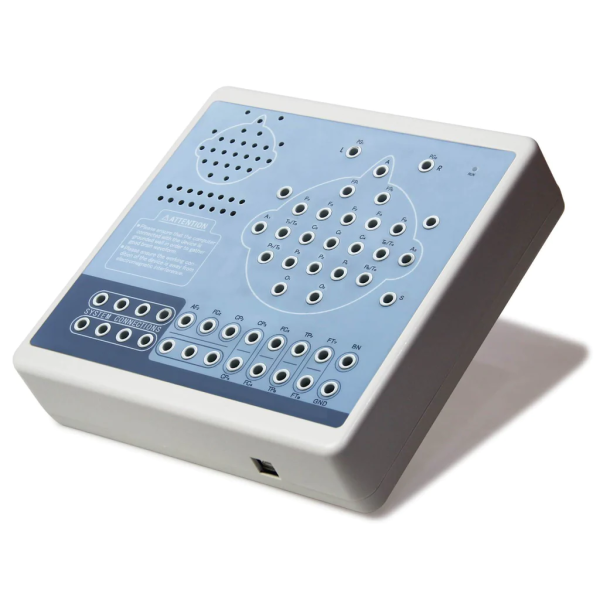
EEG Machine 24 Channel Contec Medical
24 Channel Contec Medical EEG Machine for Accurate Diagnosis
Shop Now
Why Hospital-Grade EEG Machines Cost More
The higher EEG Machine Price in Pakistan for hospital systems is not arbitrary. These machines are built with advanced components and certified for long-term clinical use.
Key contributors to higher pricing include:
- 32 to 64+ channel support
- Advanced noise-reduction technology
- Long-term EEG recording (24–72 hours)
- Central monitoring integration
Hospitals value reliability over initial cost, which explains why hospital-grade systems remain in demand despite higher prices.
Signal Accuracy and Its Impact on EEG Machine Price
One major difference between portable and hospital-grade EEGs lies in signal quality. Portable machines are designed to function in controlled or semi-controlled environments. Hospital EEG systems, however, must perform accurately amid electrical interference and patient movement.
Better shielding, higher-grade amplifiers, and superior filters significantly raise EEG Machine Price, but they also improve diagnostic confidence.
Software Capabilities: A Hidden Cost Factor
EEG software has become just as important as hardware. Portable EEG machines often include basic visualization tools, while hospital systems support advanced analysis and reporting.
Hospital-grade EEG software typically offers:
- Automated seizure detection
- Sleep stage classification
- Data synchronization with hospital systems
- AI-assisted pattern recognition
These licensed software features add to the overall EEG Machine Price, especially when annual updates are included.
Portability vs Performance: The Core Trade-Off
The choice between portable and hospital-grade EEG machines ultimately comes down to priorities.
Portable EEG advantages:
- Lower EEG Machine Price
- Easy transport
- Quick setup
Hospital EEG advantages:
- Higher diagnostic accuracy
- Long-term monitoring
- Better scalability
There is no “one-size-fits-all” solution. The right choice depends on patient volume, case complexity, and future expansion plans.
Maintenance and Long-Term Ownership Costs
Initial EEG Machine Price is only part of the equation. Maintenance, accessories, and servicing play a major role in total cost of ownership.
Hospital-grade systems:
- Require professional calibration
- Use specialized electrodes
- Need trained technicians
Portable EEG machines, on the other hand, are easier to maintain and cheaper to service. For smaller facilities in Pakistan, this difference can strongly influence buying decisions.
EEG Machine Price in Pakistan: Market Reality
In Pakistan, pricing is affected by import duties, currency fluctuation, and availability of technical support. Portable EEG systems are generally easier to source and install, making them more common in private clinics.
Hospital-grade systems, while expensive, are typically purchased through authorized suppliers such as medicalsuppliespk, ensuring compliance with clinical standards and reliable after-sales support.
Choosing the Right EEG Machine for Your Facility
Before comparing prices, healthcare providers should evaluate their actual needs.
Consider these questions:
- How many EEG studies will be performed monthly?
- Is long-term monitoring required?
- Will the system be used for teaching or research?
A lower EEG Machine Price may look attractive, but underpowered equipment can limit growth and diagnostic accuracy.
Portable EEGs for Expanding Access to Care
One advantage of portable EEG machines is their role in expanding neurological care to underserved areas. Clinics that previously could not afford EEG diagnostics can now offer basic services at a manageable EEG Machine Price in Pakistan.
This shift has improved early diagnosis and referral efficiency across many regions.
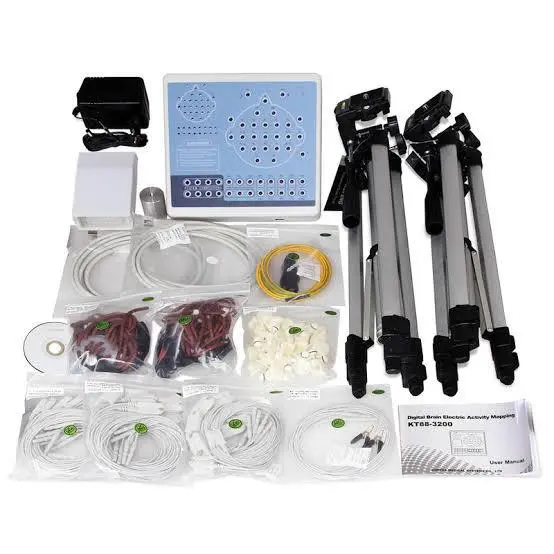
EEG Machine, KT 88 (32 Channel) Contec Medical
24 Channel Contec Medical EEG Machine for Accurate Diagnosis
Shop Now
